
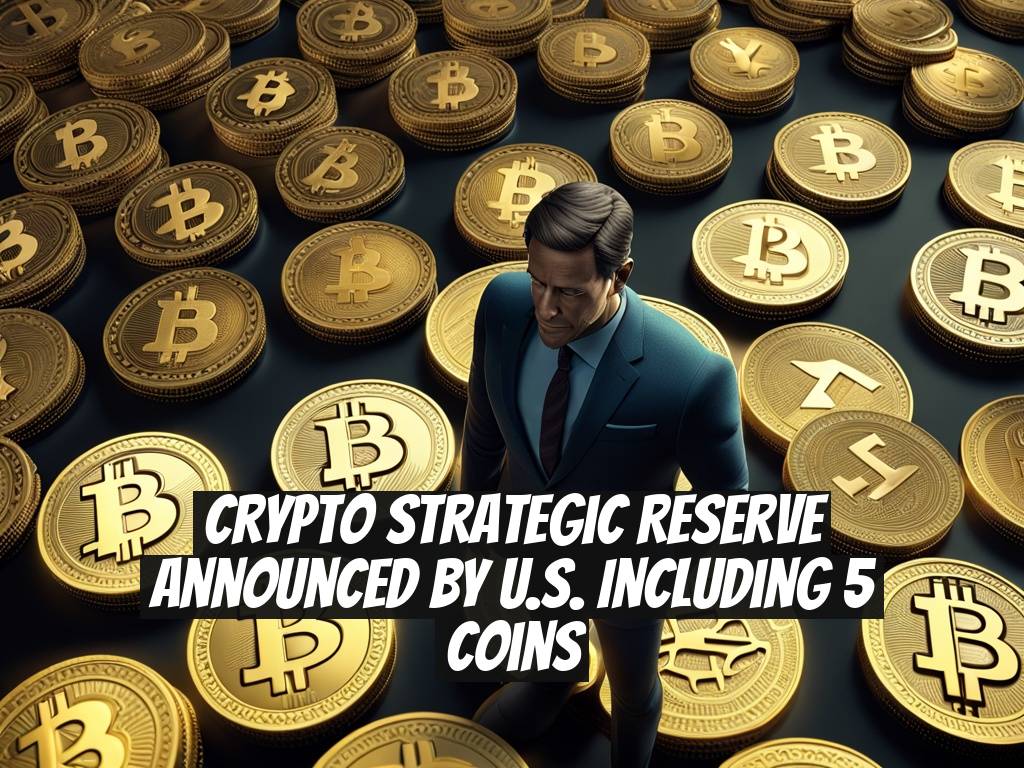
What Does Trump’s Crypto Strategic Reserve Mean for the Market? ?
Alright, pull up a chair, grab a cuppa, and let’s dive into the intriguing world of crypto-especially with all that buzz around Donald Trump’s announcement of a "crypto strategic reserve." Now, before you roll your eyes or think this is just political fodder, let me explain why this could be a big deal for the cryptocurrency markets.
Key Takeaways:
- Trump’s "crypto strategic reserve" potentially includes several major altcoins.
- Crypto markets showed bullish behavior, with Bitcoin nearing $95,000 and Cardano surging above $1.
- Questions remain on funding, asset allocation, and long-term market impacts.
Subscribe to our Social Media for Exclusive Crypto News and Insights 24/7!
So, here’s the crux: the idea is that the U.S. will hold a reserve of cryptocurrencies which reportedly includes Bitcoin (BTC), Ethereum (ETH), XRP, Solana (SOL), and Cardano (ADA). Now, of course, this announcement threw the markets into a frenzy-especially Bitcoin, which is like the elder statesman of crypto, inching close to that coveted $95,000 mark. But Cardano making strides past $1? That’s something worth cheering about!
But let’s break this down a bit. Why did this announcement spark such excitement? It’s the sheer notion that a government-yes, you read that right-might be investing in cryptocurrencies. That’s a bit akin to your nan trying out TikTok; it’s unexpected yet wildly entertaining.
Will This Cost Taxpayers Money? ?
One of the first questions that popped up was about taxpayers. The current administration is all about slashing spending. So, can we expect American taxpayers’ money to be at play here? The news hints at the notion that this crypto reserve could be funded through seized assets, potentially avoiding any costs to you and me.
However, people are rightly skeptical about using public money for crypto investments, especially altcoins like ADA and SOL that many may not be familiar with. If these investments go south, you can bet taxpayers will raise hell. And let’s be honest, the general consensus is that sittin’ on a pile of lost altcoins isn’t a great look for government fiscal responsibility.
Why XRPs, SOL, and ADA? ?️

So, XRP, SOL, and ADA-why these coins? On the surface, it seems like a push for American cryptocurrencies, but there’s a catch. Cardano is Swiss-based! Now, you have to wonder, is there a political angle where alliances are in play, or is it just a case of picking popular names?
Some critics have raised eyebrows, questioning the decentralization of these altcoins. They argue that compared to Bitcoin, these cryptocurrencies might feel, well, a tad inferior. I’ll be honest though; trying to ignore the influence of Bitcoin is like pretending a cat doesn’t exist in a room full of dog lovers.
What Will the Allocation Look Like? ️
On to allocation. This is where it gets juicy. Allocating these assets will significantly impact their value. Based on market caps at the moment of writing, we could be looking at Bitcoin representing a whopping 77% of this reserve, with ETH at around 11.5%, and the others making up a much smaller fraction. Translation? If Bitcoin sneezes, the rest might need a tissue!
A proper allocation strategy will need careful consideration. The wrong balance could mean rapid surges or a dramatic plunge; it’s a tightrope walk for sure! For potential investors like yourself, staying on top of allocation news is vital-especially if traders start acting like it’s a crypto free-for-all!
What Other ‘Valuable Cryptocurrencies’ Will Be Included? ?
Now, let’s chat about other cryptocurrencies. The expectation is that more cryptos will be featured, but the question is which ones? I mean, including stablecoins would be a bit pointless, right? They’re pegged to the dollar, after all. Could we see wildcards thrown in, like Dogecoin, best known for its amusing memes? Knowing this administration’s penchant for unpredictability, nothing should be ruled out.
Will This Need Congressional Approval? ?️
This might sound trivial, but it’s a biggie. The reserve will likely face Congressional scrutiny, as it should. Bipartisan support exists for crypto regulation nowadays, but volatile altcoins could rattle the cage. In the grand scheme, could this serve as a negotiation tool for Trump’s administration, offering up proposals to shift back to a Bitcoin-only reserve? Who knows? It’s a political chess game that could have significant implications for the market.
Will Other Countries Follow Suit? ?
Lastly, if the U.S. rolls out this reserve, what about other nations? While major economies might take note, many of them might still give those altcoins a wide berth. After all, what’s good for one government isn’t necessarily good for another-especially concerning oh, I don’t know, something as wildly unpredictable as cryptocurrency.
In conclusion, amidst all this talk about Bitcoin’s flavorful ascent and the rest doing their own dance, here’s a thought to ponder: What happens to the crypto landscape when a government jumps headfirst into such waters? Could we be witnessing a new era in finance, or are we headed straight for a rollercoaster ride of highs and lows? I’d love to hear your thoughts on this!






