
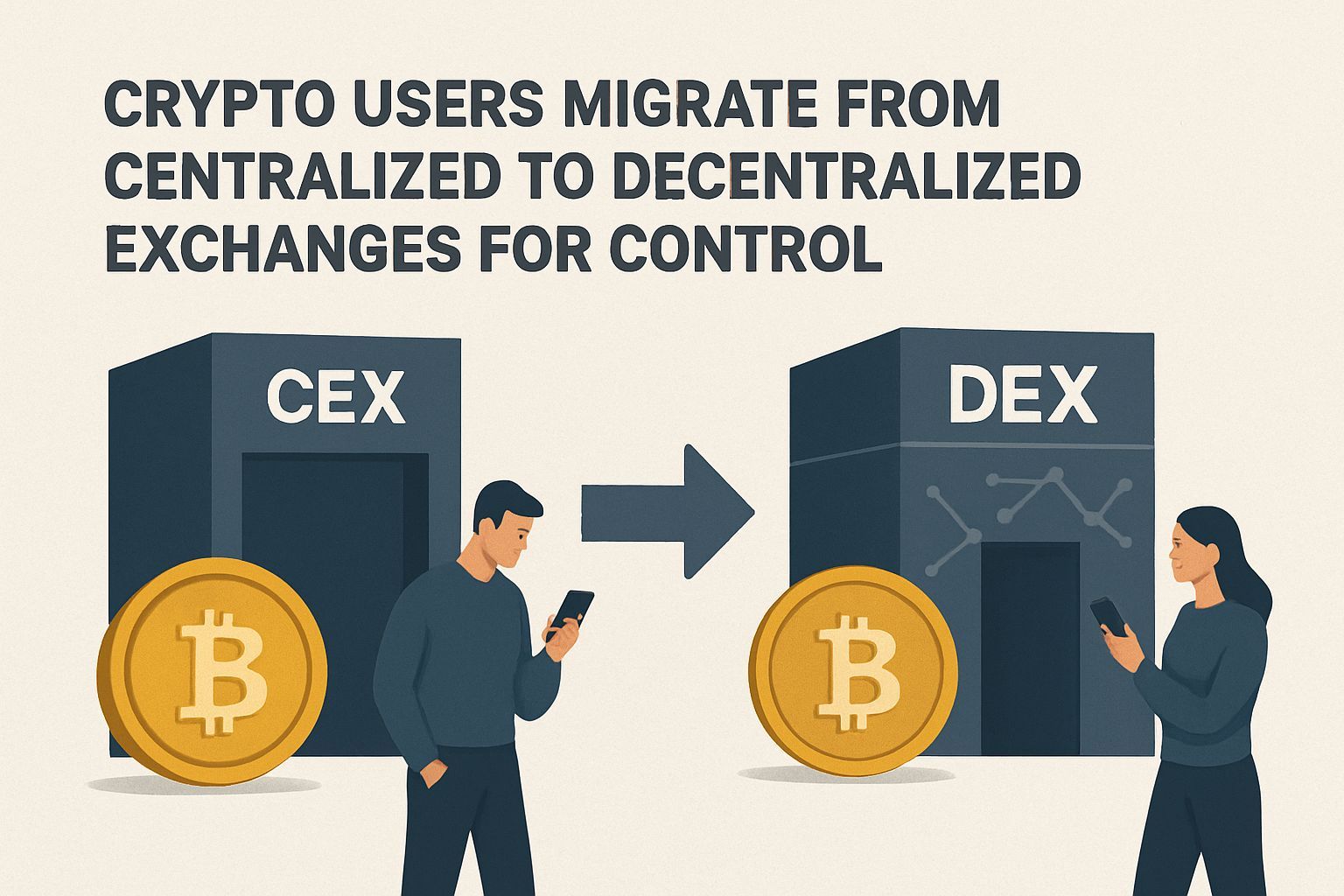
Why Crypto Traders Are Ditching Centralized Exchanges for Decentralized Control
Crypto users are migrating from centralized exchanges to decentralized exchanges for control, security, and transparency. The shift isn’t just a trend - it’s a fundamental rethinking of how people want to interact with their digital assets. No more handing over private keys, no more waiting for withdrawals, and no more praying your exchange doesn’t get hacked. It’s about taking back ownership, and honestly, it’s about time.
Key Takeaways
- Decentralized exchanges (DEXs) now handle nearly 22% of all crypto trading volume, up from under 10% just 18 months ago [1].
- Centralized exchanges still dominate, but trust is eroding after repeated hacks and regulatory crackdowns.
- The hybrid model is emerging as a bridge, combining speed with self-custody.
- On-chain analytics show a surge in DEX liquidity, especially in niche and emerging markets.
- Institutional adoption is accelerating, but retail is leading the charge for control.
Subscribe to our Social Media for Exclusive Crypto News and Insights 24/7!
? The Great Migration: Why Control Matters Now More Than Ever
Let’s be real: centralized exchanges (CEXs) have been the go-to for years. They’re easy, fast, and offer deep liquidity. But every time a headline screams “$500M stolen from Exchange X,” it’s a gut punch. Back in 2022, I held ADA through a 60% dump. It was brutal. But that taught me one thing - if you don’t control your keys, you don’t control your crypto.
Now, with over $2.47 billion stolen from crypto services in the first half of 2025 alone, people are waking up. The appeal of decentralized exchanges isn’t just about avoiding hacks - it’s about autonomy. You’re not just a user; you’re a participant in the ecosystem.
? The Numbers Don’t Lie: DEXs Are Eating CEX Lunch
Check this out: DEX trading volume has more than doubled in 18 months, jumping from 9.3% to nearly 21.7% of all crypto trades by mid-2025 [1]. That’s not a blip - it’s a seismic shift. And it’s not just spot trading. DEX derivatives volume has surged from 4.78% to 8%, showing that even sophisticated traders are moving on-chain.
Here’s a snapshot from CoinMarketCap’s latest data (as of November 2025):
| Exchange Type | % of Total Volume | Notable Platforms |
|---|---|---|
| Centralized | 78.3% | Binance, Coinbase, Bitget |
| Decentralized | 21.7% | Uniswap, PancakeSwap, dYdX |
And if you look at TradingView’s ADX (Average Directional Index) for major DEX tokens, you’ll see a steady uptrend. The momentum is real. ETH didn’t just drop - it swan-dived into support, but DEX volumes kept climbing. That’s resilience.
? Why CEXs Are Losing Their Grip
Centralized exchanges are still the kings of liquidity. Binance alone processes nearly 40% of global spot trading volumes, with daily trades hitting $16 billion and over 280 million users [1]. But here’s the catch: every time a whale moves, the whole market feels it. Liquidation cascades, like the one in March 2024 when BTC dropped 20% in 24 hours, expose the fragility of centralized systems.
A trader I spoke to said this looked eerily like 2021’s blow-off top. “The whales ain’t sleeping, fam. They’re rotating,” he said, watching the order books on Binance and Coinbase. But with DEXs, there’s no single point of failure. No one can freeze your funds. No one can rug-pull your liquidity.
? The Rise of Hybrid Exchanges: Best of Both Worlds?

Hybrid exchanges are the new kids on the block, combining the speed of CEXs with the security of DEXs. Troniex Technologies, for example, is pushing a hybrid model that lets businesses offer fast trading and strict compliance, while still giving users control over their assets [1]. It’s like having your cake and eating it too.
But here’s the kicker: hybrid models are still in their infancy. They’re trying to balance speed, user control, and security. And while they’re promising, they’re not yet the norm. Most users are still choosing pure DEXs for the ultimate in self-custody.
? Market Mechanics: How DEXs Are Changing the Game
DEXs operate on blockchains, using smart contracts to facilitate peer-to-peer trading. Instead of a traditional order book, many DEXs use Automated Market Maker (AMM) systems. Liquidity pools, funded by users, allow trades to happen directly between wallets. All transactions are recorded on-chain, so everything’s transparent.
But it’s not all roses. DEXs typically offer lower liquidity than CEXs, and transaction fees depend on network activity. Still, the benefits - transparency, censorship resistance, and direct control - are too big to ignore.
? Real-World Impact: Case Studies and On-Chain Insights
Let’s look at a real example. In early 2025, a major CEX suffered a hack, losing $300M in user funds. The fallout was immediate: withdrawals froze, panic spread, and the exchange’s token crashed 40%. Meanwhile, DEX volumes spiked as users scrambled to move their assets on-chain.
On-chain analytics from Artemis and Coinmetrics show a surge in DEX liquidity, especially in newly minted or niche markets. Stablecoins, tokenized real-world assets, and even meme coins are finding a home on DEXs. Block space is getting cheaper, and the infrastructure is maturing.
? What’s Next? The Future of Crypto Exchanges
The long-term battleground isn’t just between CEXs and DEXs - it’s about how crypto venues will challenge traditional exchanges for custody, liquidity, and price discovery. As Grayscale Research puts it, “the question is no longer whether DEXs will matter, but how quickly their transparent, programmable infrastructure will redefine what ‘an exchange’ means in the next decade” [2].
Institutional adoption is accelerating, but retail is leading the charge for control. Exchange-traded products (ETPs) are unlocking institutional capital, but the real revolution is happening on-chain.
Frequently Asked Questions: Crypto Users Migrate from Centralized to Decentralized Exchanges for Control
Q1: What does it mean to migrate from centralized to decentralized exchanges?
A1: It means moving your trading activity from platforms controlled by a company (like Binance or Coinbase) to platforms built on blockchains where you retain control of your private keys and assets.
Q2: Why are decentralized exchanges considered more secure?
A2: DEXs don’t hold your funds; you do. This reduces the risk of hacks and theft, since there’s no central pool of assets for attackers to target.
Q3: Are decentralized exchanges slower or more expensive than centralized ones?
A3: Sometimes, yes. DEXs rely on blockchain networks, so transaction speed and fees depend on network congestion. But improvements in blockchain tech are making DEXs faster and cheaper.
Q4: Can I trade all the same assets on a decentralized exchange?
A4: Most major cryptocurrencies are available on DEXs, but some niche or newly listed tokens might only be on centralized exchanges initially.
Q5: What are the risks of using a decentralized exchange?
A5: Risks include lower liquidity for some assets, potential smart contract bugs, and the need for technical know-how to manage your own wallet and keys.
Q6: How do hybrid exchanges work?
A6: Hybrid exchanges combine the speed and liquidity of centralized platforms with the security and self-custody of decentralized ones, often using off-chain order matching and on-chain settlement.
decentralized exchange
centralized exchange
crypto exchange security
- https://www.troniextechnologies.com/blog/cryptocurrency-exchange-market-trends
- https://research.grayscale.com/reports/dex-appeal-the-rise-of-decentralized-exchanges
- https://www.youhodler.com/blog/crypto-exchange-guide-2025
- https://www.tokenmetrics.com/blog/risk-using-centralized-exchanges-2025-security-analysis?1aa987e3_page=7&2fa28604_page=6&617b332e_page=11&74e29fd5_page=2
- https://a16zcrypto.com/posts/article/state-of-crypto-report-2025/
- https://aws.amazon.com/blogs/web3/migrate-centralized-crypto-exchange-workloads-to-aws-part-1/






