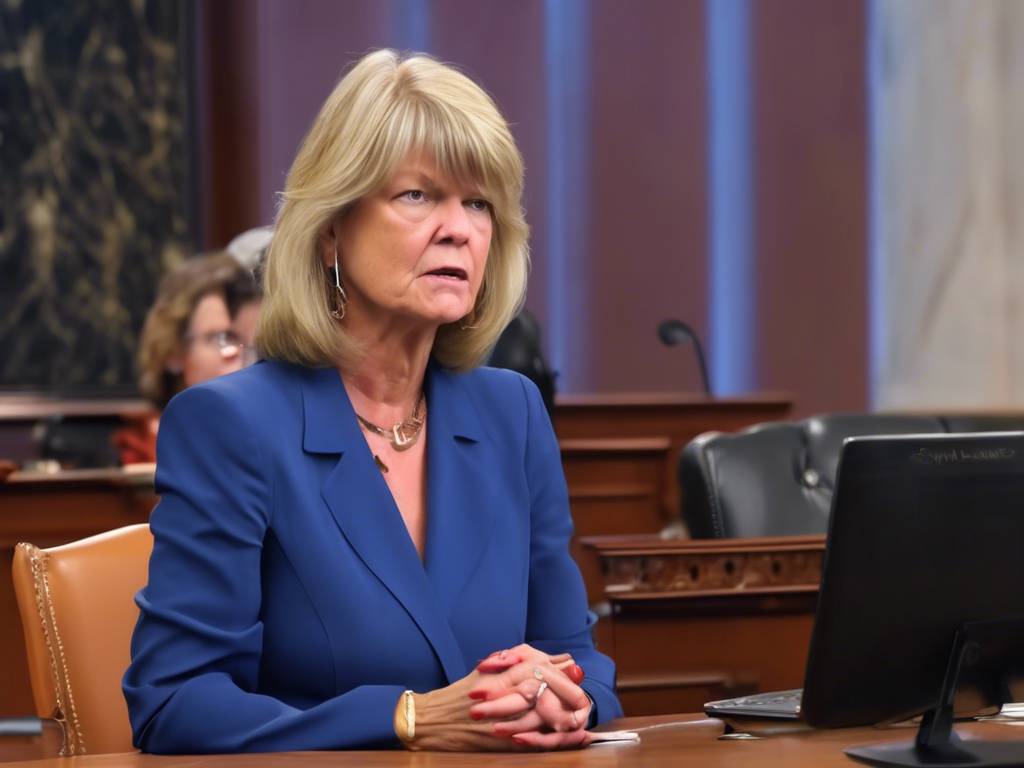
United States Sen. Cynthia Lummis Condemns DOJ’s Stance on Non-Custodial Wallets
Senator Cynthia Lummis (R-WY) recently expressed deep concern about the Department of Justice’s (DOJ) position on non-custodial software, which she believes could impact individual property rights and the rule of law. Lummis criticized the DOJ’s interpretation of non-custodial software as a potential violation of existing Treasury guidance, stating that it threatens Americans’ fundamental property rights. She also accused the Biden Administration of criminalizing essential aspects of the Bitcoin network and decentralized finance.
Senator Lummis Defends Non-Custodial Software
Senator Lummis emphasized the importance of upholding an individual’s rights to control their private keys and run their own node, arguing that this autonomy is essential for crypto users. She vowed to advocate for the protection of these rights against what she perceives as an overly aggressive approach by the DOJ.
Subscribe to our Social Media for Exclusive Crypto News and Insights 24/7!
Following the DOJ’s recent actions against developers in the crypto space, including cases against Samourai Wallet and Tornado Cash, Lummis took to Twitter to voice her concerns. She highlighted the potential implications of the DOJ’s stance on non-custodial software and its impact on the broader crypto community.
- Senator Lummis criticized the Department of Justice’s position on non-custodial software
- She accused the DOJ of threatening fundamental property rights
- Lummis pledged to fight for individuals’ rights to control their own keys and nodes
- The Senator expressed concerns about criminalizing core aspects of the Bitcoin network
- She highlighted recent cases where developers faced criminal charges
- Lummis emphasized the importance of protecting individual autonomy in the crypto space
Crypto Community Pushes Back

The crypto community has also voiced strong opposition to the DOJ’s interpretation of money transmission laws as it pertains to wallet developers who do not have direct control over user assets. Groups like Coin Center have condemned the DOJ’s stance, arguing that it represents a significant overreach and contradicts existing financial regulations and guidance.
Coin Center’s director of research, Peter Van Valkenburgh, criticized the DOJ’s position, suggesting that it would effectively classify every cryptocurrency wallet and smart contract as engaging in money transmission. The group has filed an amicus brief in support of Roman Storm, the developer of Tornado Cash, asserting that the publication of the project’s code is protected under the First Amendment.
- The crypto community has opposed the Department of Justice’s interpretation of money transmission laws
- Groups like Coin Center have criticized the DOJ’s stance as overreaching
- Coin Center filed an amicus brief in defense of Roman Storm
- Peter Van Valkenburgh criticized the implications of the DOJ’s position
- He argued that the interpretation would impact all cryptocurrency wallets and developers
- Coin Center contended that the publication of Tornado Cash’s code is constitutionally protected
Hot Take: Upholding Privacy and Autonomy in Crypto
In an ever-evolving regulatory landscape, it is crucial for policymakers and law enforcement agencies to balance the need for oversight and compliance with the preservation of innovation and individual rights. Non-custodial wallets play a vital role in providing users with increased privacy and control over their digital assets, and efforts to regulate or criminalize this technology could have far-reaching consequences for the broader crypto ecosystem.
As debates around cryptocurrency regulation continue, it is essential for stakeholders to engage in constructive dialogue to find solutions that protect user rights while addressing legitimate concerns around financial crime and consumer protection.
Sources:
- Senator Cynthia Lummis Tweet
- Reply Brief in the Case Against Tornado Cash Developer
- Coin Center Statement on DOJ’s Stance