
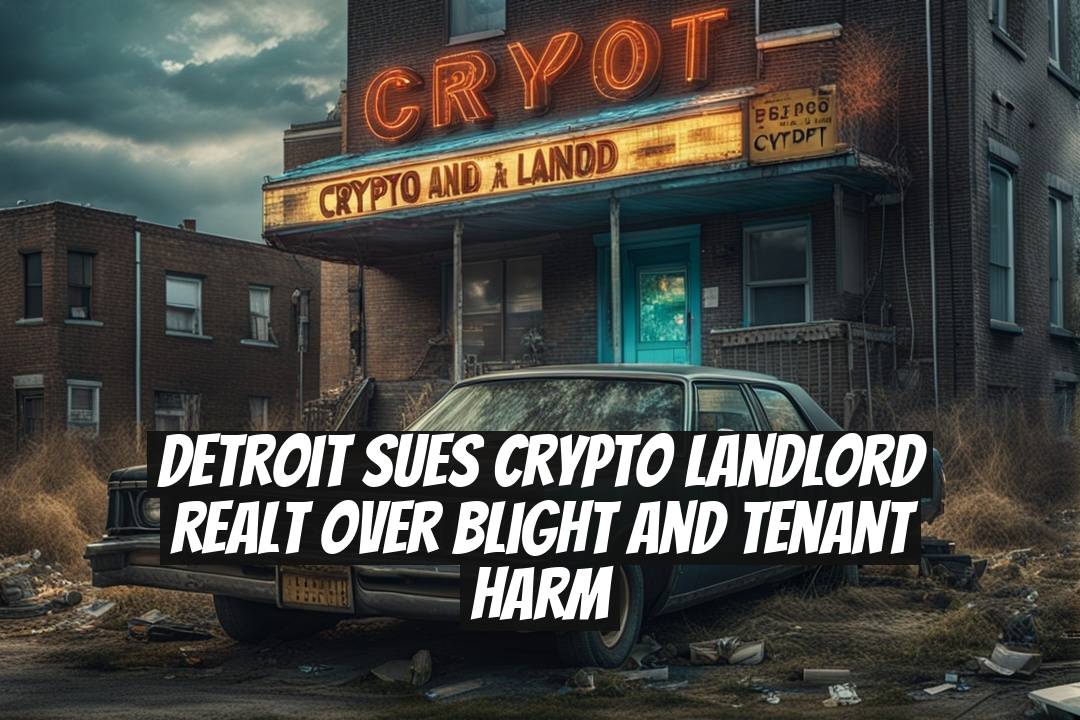
Can blockchain innovation truly align with responsible real estate management?
When Detroit, a city renowned for its resilience yet challenged by housing issues, files a record nuisance lawsuit against the crypto-based real estate company RealT, it sends ripples through both the real estate and cryptocurrency markets. This landmark legal action is not just about blaming a landlord; it’s about scrutinizing a novel crypto-driven investment model raising questions about accountability, tenant welfare, and the future of blockchain’s role in real-world asset management.
Key Takeaways:
- Detroit sued RealToken (aka RealT) for neglect and unsafe conditions in over 400 rental properties.
- RealT’s model allows fractional crypto investing, creating complex ownership and accountability issues.
- The lawsuit claims nearly $500,000 in code violations and alleges the firm evades responsibility via multiple LLCs.
- Tenants report severe maintenance failures and difficulty contacting management.
- This case highlights critical regulatory and operational risks facing crypto-based real estate ventures.
- Practical advice for investors includes due diligence on property management and legal exposure.
- The outcome may reshape investor confidence and regulatory approaches in crypto real estate markets.
Subscribe to our Social Media for Exclusive Crypto News and Insights 24/7!
?️ What’s Going Down? Detroit’s Massive Lawsuit Against RealT and Its Impact
Detroit’s lawsuit targets RealToken, a crypto-powered real estate platform, accusing it of maintaining more than 400 homes with hazardous conditions, accumulating approximately $500,000 in code violations due to neglect and unsafe living environments[1][3]. This is now Detroit’s largest-ever nuisance abatement lawsuit against a real estate operator.
The crux of the problem is RealT’s novel model: it breaks down property ownership into blockchain tokens, allowing hundreds of crypto investors to own tiny fractions of the same house. Imagine 100 people owning one house, but no clear single accountable landlord - which becomes a nightmare for city officials and tenants when things go wrong.
City Council member Angela Whitfield Calloway bluntly put it: tenants-often among the city’s most vulnerable-are living without housing dignity, facing unsafe homes with leaky roofs, unresponsive management, and crumbling structures[1].
Sylvia Young, a tenant in one of RealT’s properties, said her roof is leaking and parts of the house are falling apart but her pleas have gone unheard[1]. This paints a grim picture: while token holders worldwide may benefit from fractional rents and appreciation, the actual people living in these homes suffer the consequences.
️ Why This Lawsuit Matters to the Crypto Market

At first glance, tokenizing real estate seems like a win-win: it democratizes property investments, lowers barriers to entry, and leverages blockchain’s transparency. But Detroit’s case exposes sizable operational and regulatory gaps, particularly in:
- Accountability: RealT’s strategy to operate properties through 165 LLCs complicates who is legally responsible[1].
- Management quality: Token holders are often distant investors unable to enforce property upkeep.
- Tenant protection: Blockchain ownership doesn’t replace local landlord-tenant laws-those must still be enforced.
For cryptocurrencies, this lawsuit shines a spotlight on the challenges decentralized asset ownership faces in real estate - an area with tight regulations and direct impacts on human lives.
For existing and prospective crypto real estate investors, this case serves as a wake-up call:
- Tokenized real estate is not immune to traditional landlord liabilities.
- Governance models must include mechanisms ensuring tenant protections and maintenance responsibilities.
- Legal frameworks will likely evolve to clamp down on entities abusing crypto’s complexity to sidestep accountability.
? What Does This Mean for Investors and the Future of Tokenized Real Estate?

As a crypto analyst, here’s my take: the RealT lawsuit underlines how innovation without robust governance and compliance frameworks can backfire badly.
Tokenized property platforms must balance blockchain efficiency with real-world property management realities. With large-scale cases like Detroit’s, we could see:
- Increased regulatory scrutiny of crypto real estate ventures.
- Efforts to mandate transparent and accountable property management governance.
- Potential loss of investor trust if platforms don’t ensure tenant wellbeing.
Real estate investors looking to venture into crypto tokens must arm themselves with knowledge beyond the allure of blockchain tech. Here’s what you should keep in mind:
- Investigate property management quality: Who handles tenant repairs and legal compliance?
- Understand the legal structure: Multiple LLCs might mean complex liability but also potential for evasion.
- Monitor regulatory trends: Lawsuits like Detroit’s may inspire tougher regulations on crypto real estate.
- Demand tenant protection protocols: Platforms must demonstrate how tenant rights and safety are upheld.
Practical Tips for Crypto Property Investors ?️

- Always perform due diligence on how the platform handles property maintenance and tenant issues.
- Check if the company has a local management team dedicated to upkeep and legal compliance.
- Review recent legal news involving the platform to gauge risk exposure.
- Diversify investments; don’t put all funds into one real estate token platform without strong governance.
- Stay updated on changes to state or local laws governing rental properties owned via cryptocurrencies.
? My Personal Insights: A Blockchain Future That Cares
The RealT lawsuit is a moment of reckoning. It’s easy to get excited about owning fractions of homes through tokens, but housing isn’t just about asset value-it’s about people’s lives and dignity.
The crypto real estate sector must evolve from being a speculative playground to a responsible ecosystem where innovation meets accountability. Blockchain tech can and should be the tool that enhances transparency and streamlines ownership. But it can’t replace the human element of caregiving in property management.
For investors, the lesson is clear: think beyond token prices, think about governance, maintenance, and legal exposure. RealT’s Detroit saga shouldn’t scare away innovation but should fuel it to be better structured - for tenants, investors, and communities alike.
Could blockchain-based real estate become a force for good, or will cases like Detroit’s reveal whether the tech can truly stand up to real-world responsibilities?
Explore more about this evolving topic here:
Detroit Sues Crypto Landlord
RealT Lawsuit
Crypto Real Estate Investment
Sources:
[1] https://www.clickondetroit.com/news/local/2025/07/02/city-of-detroit-files-record-nuisance-lawsuit-against-crypto-based-real-estate-firm/
[2] https://www.sfgate.com/realestate/article/thousands-of-detroit-renters-fall-prey-to-crypto-20160211.php
[3] https://www.crainsdetroit.com/real-estate/detroit-sues-real-token-over-poor-conditions-hundreds-rentals






