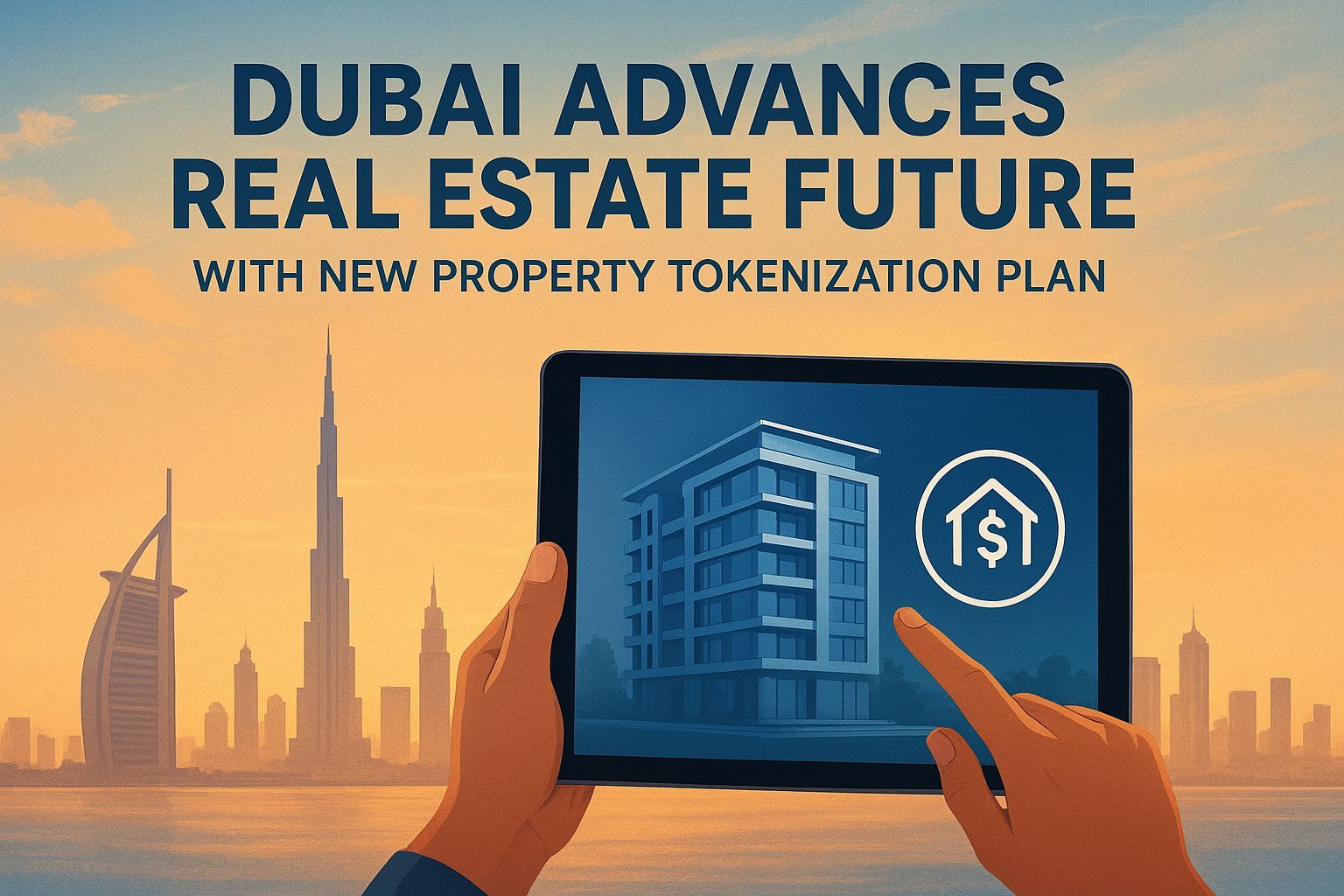
Dubai’s $16 Billion Real Estate Bet: How Blockchain is Reshaping Property Markets
When Tokenization Stops Being Theory and Starts Being Your Portfolio
Dubai just flipped the switch on something that’s been stuck in pilot hell for years: a functioning, regulated secondary market for tokenized real estate. And honestly? It’s the kind of infrastructure move that typically happens quietly, but it’s massive for anyone paying attention to where institutional capital flows next.
The Dubai Land Department (DLD) and Ctrl Alt just activated a live trading platform for real estate-backed digital tokens, with approximately $5 million worth of fractional property assets now available for controlled trading.[1][3] We’re talking about 7.8 million tokens linked to ten Dubai properties, all synchronized to the XRP Ledger and backed by official title deeds connected directly to Dubai’s land registry.[1] This isn’t some speculative crypto play-every transaction gets recorded on-chain and synced with government records. That’s the compliance layer most tokenization projects have been fumbling for years.
Subscribe to our Social Media for Exclusive Crypto News and Insights 24/7!
Key Takeaways
- Live secondary market: $5 million in Dubai property tokens are now trading on a regulated platform with Ripple Custody backing the settlement
- Roadmap to scale: DLD plans to tokenize $16 billion in real estate by 2033, starting with mid-market residential in 2026 and infrastructure projects by 2027
- Infrastructure matters: Transactions run through approved distribution platforms, recorded on XRP Ledger, and synchronized with official land registries-solving the compliance puzzle most projects can’t crack
- Liquidity challenges remain: An EY report flagged that uneven regulation across jurisdictions and thin secondary market depth are still constraints, but proponents believe regulated venues will normalize tokenized real estate as an institutional asset class
The Slow Burn That’s Actually Paying Off
Here’s the thing about Dubai’s approach: they didn’t rush this. Back in 2023, the DLD outlined an ambitious roadmap to tokenize 7% of Dubai’s property market by 2033-that’s roughly $16 billion in assets.[1] That’s one of the most audacious public-sector blockchain programs you’ll see in real estate. Most governments are still debating whether crypto exists; Dubai’s literally building infrastructure to trade property fractions on it.
The fractional ownership model is straightforward enough: investors buy tokens representing specific percentage stakes in underlying properties.[2] But what makes this different from every failed tokenization experiment you’ve seen is the regulated trading piece. All transactions happen through approved platforms with full regulatory oversight, and the blockchain transparency of the XRP Ledger provides immutable records that authorities can actually access.[2]
Think about what this solves. You’re a sovereign wealth fund in Singapore interested in Dubai commercial real estate, but you don’t want to tie up capital in full property acquisitions or deal with traditional settlement timelines. Now? You can purchase token fractions, trade them on a compliant platform, and have everything synchronized with Dubai’s official land registry in near real-time. No intermediaries scratching their cut. No three-week settlement windows. This is infrastructure solving a real problem.
The Roadmap: What’s Coming Next
The DLD isn’t stopping at luxury residential properties. The future roadmap is actually staggered and logical-which is refreshing:[2]
- 2026: Mid-market residential properties join the tokenization ecosystem
- 2027: Infrastructure projects get added to the mix
- Cross-border interoperability: Dubai’s exploring how to let international investors trade Dubai property tokens on global digital asset exchanges
This phased approach matters because it’s testing market infrastructure and compliance frameworks as it scales.[3] They’re not betting the house on day one; they’re building a foundation that can actually support institutional flows.
The Real Constraint Everyone’s Glossing Over

Here’s where I’ll be honest: an EY report flagged something critical-uneven regulation across jurisdictions and thin secondary market depth still constrain liquidity.[1] Translation? You can have all the blockchain infrastructure in the world, but if there’s no buyer for your token when you need to exit, you’re sitting on an illiquid position. That’s the wall every tokenization project hits.
But the argument from proponents is compelling: as more regulated venues open (like this Dubai platform), tokenized real estate could actually become a mainstream asset class for both institutional and retail investors.[1] You’re watching the infrastructure become the liquidity. Once that flywheel starts, things move fast.
Why This Matters for Crypto Markets

This is institutional adoption playing the long game. The DLD, working with the Virtual Assets Regulatory Authority (VARA), Dubai Future Foundation, and the Central Bank of the UAE, is essentially saying: “Blockchain works for property ownership when you build proper custody, compliance, and registry synchronization.”[4] That’s a regulatory green light that doesn’t get headlines but shapes capital flows.
The XRP Ledger’s involvement is telling too. Ripple’s custody solutions are handling the settlement layer, which means you’ve got enterprise-grade infrastructure backing transactions worth millions. This isn’t retail speculation-it’s infrastructure being tested for scale.
What You’re Watching
Dubai’s bet is that as more regulated secondary markets open, the liquidity problem solves itself. They’re not forcing adoption; they’re building the rails and letting market mechanics do the work. Whether that plays out over the next 18 months or takes five years, you’re watching a blueprint for how governments actually use blockchain instead of just talk about it.
The secondary market is live. The XRP Ledger is recording transactions. Dubai’s land registry is synchronized. And the roadmap stretches to $16 billion by 2033.
That’s not theory anymore. That’s infrastructure.