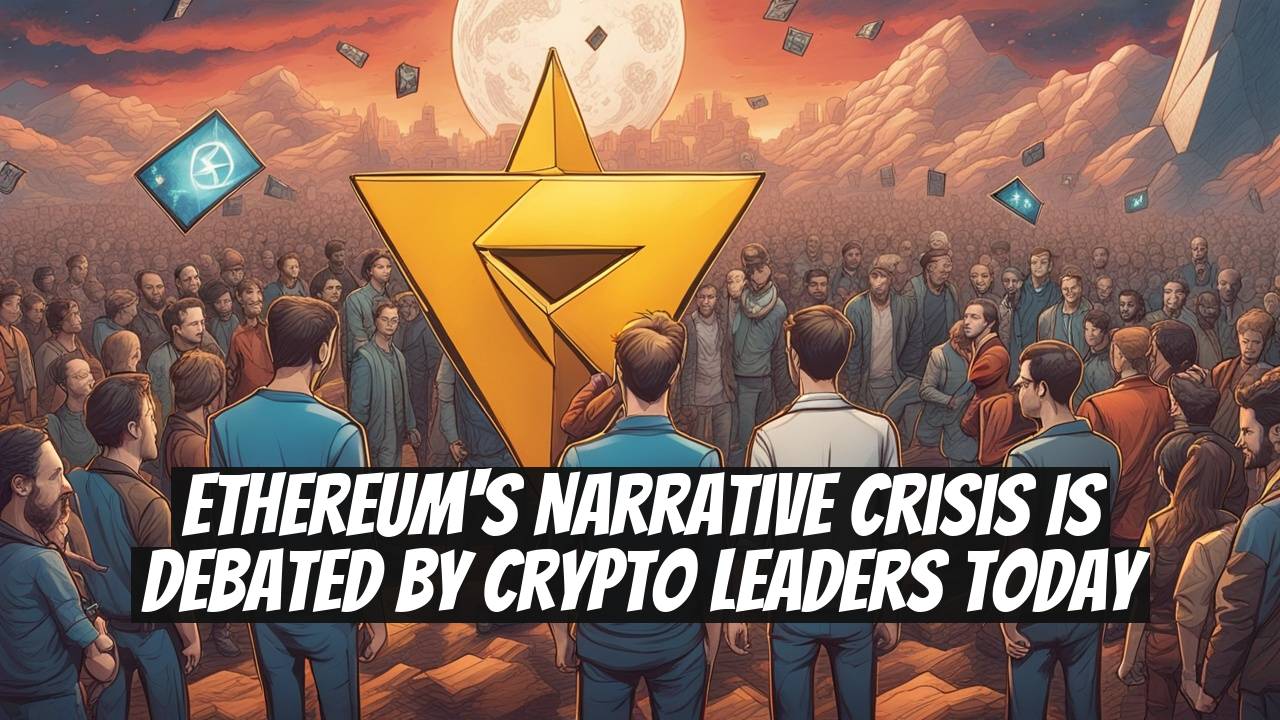
? Ethereum’s Identity Crisis: What Does It Mean for the Crypto World?
Hey there! So, let’s dive into the latest buzz surrounding Ethereum. It’s kind of like a family feud right now-everyone’s arguing about what Ethereum is and should be in the crypto space. This “narrative crisis” is raising eyebrows and questions about its future, and as a young Russian crypto analyst, let me break it down for you in a way that makes sense!
### Key Takeaways
- Ethereum is facing a “narrative crisis” with no unified identity.
- The community is split over its core value proposition-yield vs. store of value.
- Layer-2 networks are pulling revenue away from Ethereum’s Layer-1.
- Competing chains like Solana and BNB are gaining ground with clearer messaging.
- Ethereum’s future will depend on resolving its identity crisis.
### The Great Ethereum Debate ?
Subscribe to our Social Media for Exclusive Crypto News and Insights 24/7!
Imagine you’re at a party, and two friends can’t agree on which movie to watch. One insists on a thrilling action flick (yield), while the other is adamant about a thought-provoking drama (store of value). That’s pretty much what’s happening in Ethereum’s community. Zach Rynes from Chainlink pointed out that the lack of a cohesive economic narrative is leaving investors feeling unsure. It’s like trying to invest in a product with no clear benefits-it just doesn’t inspire confidence!
This division isn’t just a minor hiccup; it’s affecting how the world views Ethereum as a whole. While some were excited about the “ultrasound money” concept (which sounds fancy, right?), it lost traction as Layer-2 platforms like Arbitrum and Optimism started taking a bigger slice of the fee pie. Rynes rightly pointed out that now, Ethereum needs an immense on-chain volume to keep things rolling economically. This is kind of like realizing your favorite coffee shop needs to sell ten times the amount of coffee just to pay rent. Not a sustainable model, huh?
### Ethereum’s Role as a Store of Value ?
On the other side of the debate, Sassal argues that Ethereum needs to embrace its role as a store of value to stay relevant. You know, like the way Bitcoin is viewed as digital gold. However, Ethereum seems to be all over the place, lacking the consistent branding that helps build trust with potential investors. Critics have been vocal too; PlanB, the mastermind behind the Stock-to-Flow model, has labeled Ethereum as a “technocratic governance coin” instead of seeing it as a decentralized asset. This is pretty harsh when you think about it. It’s like seeing your friend’s half-baked cake and wondering why they didn’t put in that extra effort.
Internal squabbles among developers are just adding fuel to this fire. There’s a lot of chatter about the future direction of Ethereum, but without a unified vision, it’s like sailing a ship with no clear destination. Meanwhile, competitors like Solana and BNB are cruising ahead with clear narratives focused on speed, cost efficiency, and user experience. The brightest ideas with the most substantial backing stand a better chance of succeeding.
### What’s Next for Ethereum? ?
Look, Ethereum can’t sit on the sidelines while these changes unfold. If it wants to maintain its crown as the second-largest altcoin by market cap, it needs a strong narrative that resonates with people. This could mean honing its features-like programmability and security-while simplifying its messaging so that investors don’t feel confused. Think of it like cleaning your room; it’ll make it way easier to invite your friends over!
Rynes emphasized that Ethereum must carve out its unique space in the crypto realm. It needs its own compelling story that’s not built on shaky comparisons. Unless Ethereum gets its act together, we might see it become just another interesting case study on how not to navigate the crypto waters.
### Final Thoughts ?
So, the million-dollar question is: Can Ethereum resolve its identity crisis before it gets overshadowed by these leaner, faster competitors? Will they find a way to let people know exactly what they stand for? This question matters because our investments, whether they be monetary or emotional, depend on how confidently we believe in a project.
I’d love to hear your thoughts on this! What do you think Ethereum needs to focus on to get back into the spotlight? Let’s keep the conversation going!