Fed’s Big Swing: Crypto Finally Gets a Banking Lifeline?
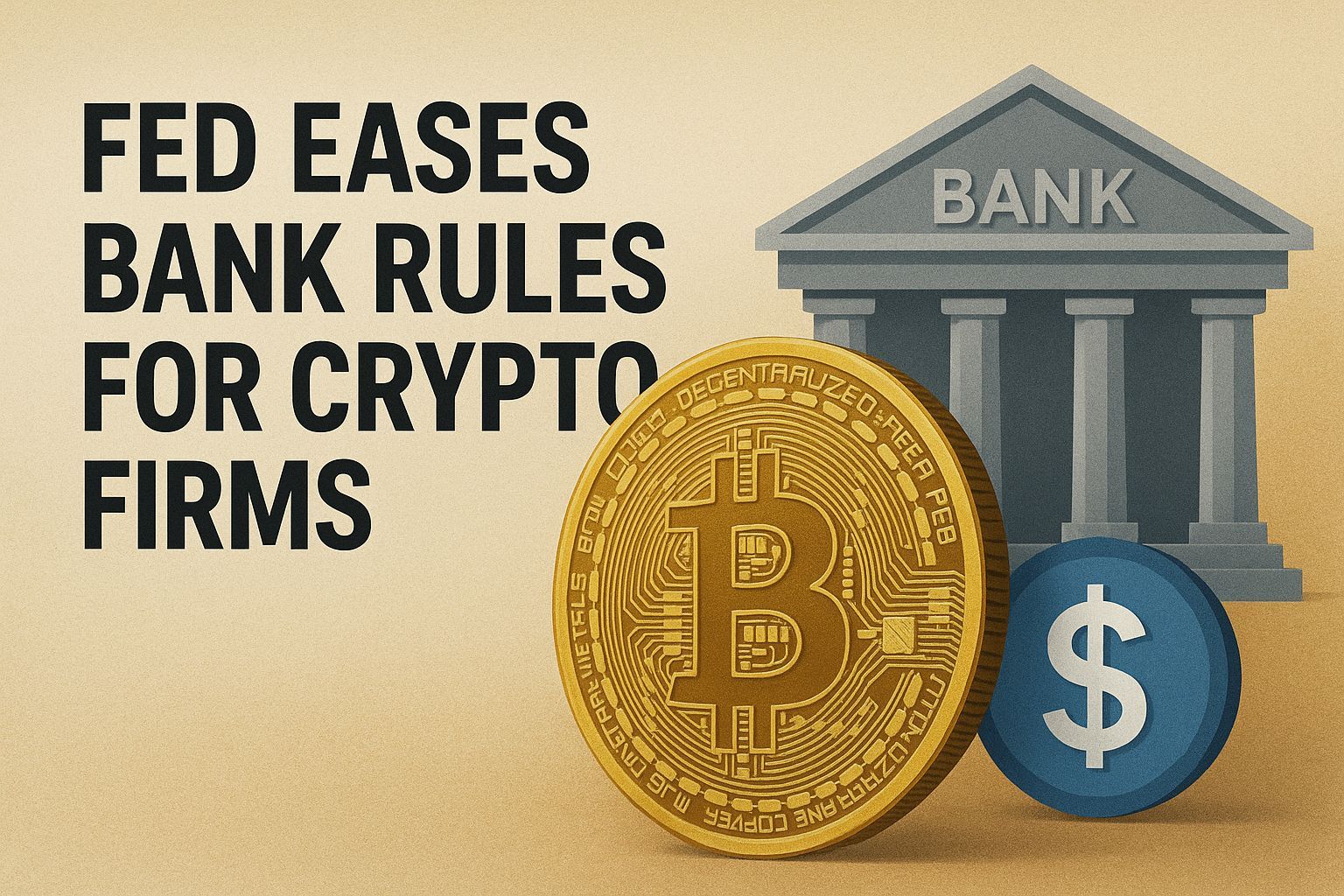
Hey, if you’ve been in crypto long enough, you’ve felt the sting of Fed eases bank rules for crypto firms-or at least, that’s the vibe now. The Federal Reserve just kicked off a 60-day comment period on ditching the “reputation risk” rule that’s been choking banks from serving crypto outfits. No more excuses for debanking. This is huge relief, signaling crypto’s slow march into the big leagues.[1]
Key Takeaways
- Debanking’s on life support: Fed’s proposal kills “reputation risk” as a reason to ghost crypto firms, letting banks focus on real financial risks only.[1]
- Stablecoins get VIP treatment: GENIUS Act locks in a fed framework by mid-2026, with Fed eyeing special accounts for issuers to tap payment rails safely.[2][4]
- Banks warming up: OCC and FDIC are greenlighting crypto custody, tokenized assets, and even riskless principal trades-no more tiptoeing.[3]
- 2026 crystal ball: Expect more clarity on tokenized deposits, 24/7 trading, and CFTC easing collateral rules for BTC and ETH as margin.[4][5]
Subscribe to our Social Media for Exclusive Crypto News and Insights 24/7!
Breaking Down the Debanking Drama
Picture this: Crypto firms begging for basic bank accounts while getting the cold shoulder under “Operation Chokepoint 2.0.” That’s over-or at least, the Fed’s proposing to end it.[1] Banks couldn’t touch crypto clients without supervisors raising eyebrows over “reputation.” Now? Decisions stick to cold, hard financials. Why the flip? Spot BTC ETFs pulled in BlackRock and Fidelity beasts, who need banking pipes for custody and settlements. Without this, institutional cash stays sidelined.[1]
You’ve seen this movie before, right? Regulators play hardball, then crypto matures enough to force their hand. It’s like 2021’s ETF teases, but this time it’s banking access.
Stablecoins: The Real Whale Bait
Stablecoins aren’t just chilling-they’re the bridge. The GENIUS Act? Game-changer. It slaps a full reg framework on payment stablecoins by July 2026, run by OCC, FDIC, Fed, and Treasury. No securities, no commodities-just legit payment tools with reserve and redemption rules.[4][5] Fed’s even floating limited accounts for issuers, plugging them straight into payment rails with zero credit risk.[2]
Analyst take from the Conference Board: This could spark banks to issue their own stablecoins, dodging disruption from fintech upstarts. “Financial institutions seeking to avoid being disrupted… see another way to earn yield.”[2] Whales ain’t sleeping; they’re rotating into yield on reserves. Imagine holding USDT through past depegs-brutal, but this setup teaches resilience with fed backing.
Bank Regs Evolve: OCC and FDIC Join the Party
OCC dropped letters saying national banks can hold digital assets for ops and testing, plus riskless crypto trades.[3] FDIC’s rescinding old no-go guidance on custody. Fed’s clarifying “allowed activities” for new use cases like tokenized deposits.[3] It’s not wild speculation-it’s mechanics shifting.
Deep dive on market ripple: No charts here from CoinMarketCap or TradingView (searches came up regulatory dry), but think dominance cycles. Post-ETF, BTC dom spiked as institutions piled in-now banking ease could cascade into alt liquidity. Remember 2022 liquidations? Whales dumped, cascades wiped $1B+. This? Opposite. Banks custodying means deeper pools, fewer flash crashes.[1][2]
Tokenization and Beyond: 2026’s Hot Potato

SEC’s all in on tokenization. New FAQs hit broker-dealers with crypto custody rules-a measly 2% capital haircut for payment stablecoins.[6] Commissioner Uyeda nailed it: “Tokenization is no longer theoretical… adapt rules for on-chain.”[7] CFTC’s withdrawing strict DLT guidance, letting futures brokers take BTC/ETH as collateral (first 3 months limited).[5]
Rhetorical nudge: Ever watch ETH fake out resistance? This reg thaw says “nope” to that isolation. Brokers can hold tokenized Russell 1000 stocks, Treasuries, ETFs.[5] Micro-story from the trenches: Back in enforcement hell, Coinbase fought SEC over “unregistered securities.” SEC dropped most cases-brutal lesson, but it paved clarity.[2]
Honestly, this caught everyone off guard-in a good way. No blow-off top vibes; more like steady grind.
What’s Next for Your Portfolio?
Short term? Banks test waters, stablecoin volumes tick up. Long game? Full integration. CLARITY Act could divvy CFTC/SEC turf, unlocking exchanges.[5] But it’s comment periods and rulemaking first half ’26.[3] Stay savvy-don’t ape in blind.
- https://coinpedia.org/news/federal-reserve-moves-to-end-crypto-debanking-major-relief-for-industry/
- https://www.conference-board.org/research/ced-policy-backgrounders/the-outlook-for-digital-assets-in-2026
- https://blog.freshfields.us/post/102lymd/2025-bank-regulatory-roundup-and-what-to-look-for-in-2026
- https://www.clearygottlieb.com/news-and-insights/publication-listing/2026-digital-assets-regulatory-update-a-landmark-2025-but-more-developments-on-the-horizon
- https://www.klgates.com/Crypto-in-2026-The-Democratization-of-Digital-Assets-1-29-2026
- https://www.pwc.com/us/en/industries/financial-services/library/our-take/02-20-2026.html
- https://www.paulhastings.com/insights/crypto-policy-tracker/white-house-hosts-second-crypto-meeting-on-stablecoin-yield-sec-highlights-structure-and-tokenization