
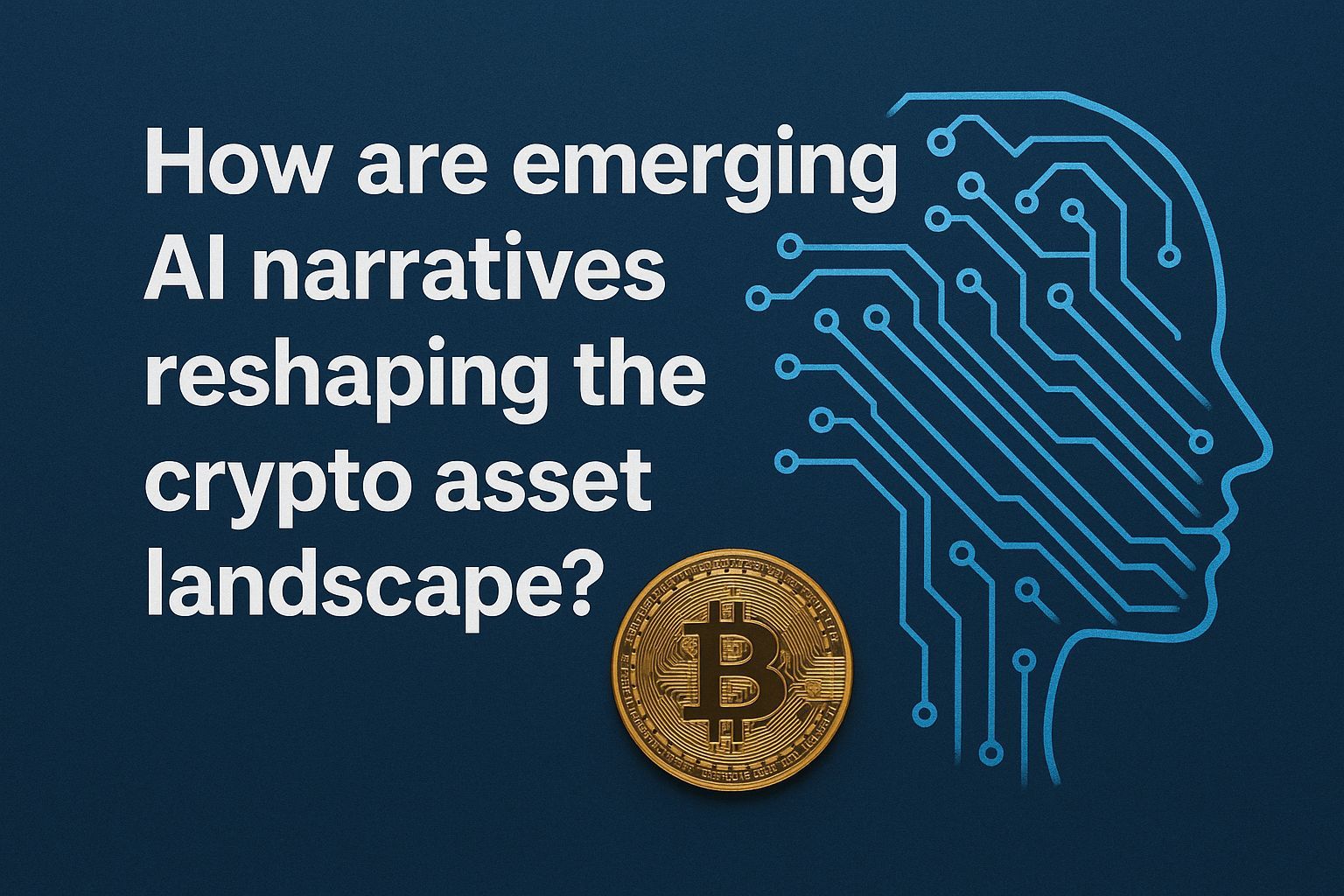
How Emerging AI Narratives Are Reshaping the Crypto Asset Landscape
The Convergence Nobody Saw Coming (But Everyone Should’ve)
The crypto market’s relationship with artificial intelligence isn’t just a trend anymore-it’s a fundamental restructuring of how we think about digital assets, trust, and economic systems. We’re witnessing what Coinbase’s investment research lead David Duong calls "a fundamental shift towards the next stage of technological progress," and honestly, the implications are staggering.[1] AI-powered cryptocurrencies crashed 75% from their 2024 all-time highs, yet the sector’s demise has been "greatly exaggerated." Why? Because what’s emerging from this rubble is something far more transformative than speculative token rallies. It’s about autonomous agents, programmable payments, and a new internet layer that doesn’t need human permission to operate.
Key Takeaways
Subscribe to our Social Media for Exclusive Crypto News and Insights 24/7!
- AI agents are moving from concept to reality: Companies are merging AI and crypto at unprecedented velocity-for every venture capital dollar invested in crypto in 2025, 40 cents went to firms also building AI products, up from 18 cents the year before.[2]
- The trust problem gets solved on-chain: Blockchain is stepping in to verify AI content, trace model outputs, and enforce copyright claims-something traditional systems struggle with.[2]
- $565 million flooded AI crypto startups in 2025: This capital isn’t chasing hype; it’s funding infrastructure that could reshape how digital commerce works.[1]
- Stablecoins are becoming the internet’s dollar: With clearer regulations and enterprise adoption accelerating, we’re moving beyond speculation into actual payment infrastructure.[2]
Why 2026 Is Different-AI Agents Are Actually Shipping
Here’s what’s wild: this isn’t like previous tech boom cycles. Duong emphasizes that "economists are collectively underestimating AI productivity at the moment. AI is increasing the speed and efficiency of our workforce in a way that isn’t being fully captured by official statistics."[1] Translation? The economic boom AI’s triggering in 2026 isn’t on the books yet, which means crypto markets could run much hotter than traditional forecasters expect.
But let’s get specific about what’s actually happening.
The Agent Revolution Is Here
Forget trading bots. We’re talking about autonomous entities that negotiate transactions, verify smart contracts, and coordinate economic activity without human intervention.[2] Companies like Ritual, Fetch.AI, and Grass are building agent-to-agent commerce protocols right now. Coinbase, Solana, and Polygon? They’re racing to integrate AI inference directly into crypto wallets.[2]
What does this mean for you? Imagine an AI wallet that doesn’t just hold your assets-it actively manages them. It spots arbitrage opportunities across exchanges, executes trades milliseconds faster than you can blink, and settles payments in seconds across blockchains. That’s not science fiction anymore. These things are moving from prototypes to pilot programs.[2]
Onchain Development Gets a Speed Injection
Here’s a detail that flew under most people’s radar: AI agents could "allow founders without a technical background to launch businesses in hours or days, rather than months or years."[1] Think about what that means for the DeFi ecosystem. The barrier to entry collapses. You don’t need a team of Solidity experts anymore. You need an idea and an AI agent.
The downstream effect? A flood of new applications, new markets, new economic models-all built on crypto infrastructure. The whales ain’t sleeping on this, fam. They’re rotating capital into teams building these primitives right now.
The Trust Layer Nobody Saw Coming
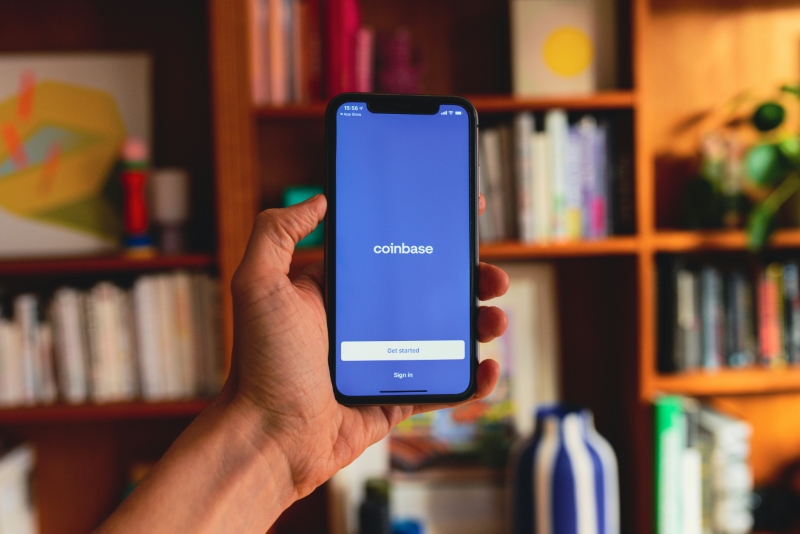
Here’s the philosophical plot twist: crypto solves AI’s biggest problem.[2]
Think about deepfakes. Think about synthetic media. Think about AI-generated content flooding the internet with no provenance whatsoever. Traditional systems have no elegant solution. But blockchain does. Projects like Worldcoin and Provenance Labs are already being deployed to enterprises to sniff out deepfakes and synthetic content.[2] Adobe’s Content Authenticity Initiative is creating toolsets that add credentials to content-a permanent, auditable record of creation and edit history.[2]
Why should you care? Because as AI agents proliferate across the web, the ability to verify what’s real becomes incredibly valuable. And that verification layer? It’s being built on crypto rails.
The Economics Are Getting Weird (In a Good Way)

One of the most fascinating developments is what a16z Crypto calls "programmable and reactive settlement."[3] Here’s the idea: instead of invoices, reconciliation, and batching payments manually, smart contracts can settle a dollar payment globally in seconds. Now add AI agents and you get something genuinely new.
Agents paying each other for data, GPU time, or API calls instantly and permissionlessly. Developers shipping software updates bundled with payment rules, limits, and audit trails-no merchant onboarding, no banks, no friction.[3] Prediction markets that self-settle in real time as events unfold, where odds update and payouts clear globally in seconds without a custodian or exchange.[3]
This is where the conversation moves beyond trading. This is about reconstructing how value flows through digital systems.
The Stablecoin Moment (It’s Real This Time)

Silicon Valley Bank’s analysis nails it: stablecoins are "poised to become the internet’s dollar."[2] Not because of more hype cycles, but because of actual use cases. Enterprise adoption is accelerating. Payments, cross-border settlement, treasury operations-these are billions in revenue waiting to be captured.
The data backs this up: stablecoin transaction volumes surged to $10 billion as of August 2025, up from $6 billion in February.[4] That’s not speculation. That’s adoption. The regulatory clarity from frameworks like the GENIUS Act has removed the uncertainty that kept institutional investors on the sidelines.[4]
When Fortune 500 companies start using stablecoins for international transfers because it’s faster and cheaper, the game changes. And that’s happening now.
Real-World Assets Get Their Moment
Tokenized real-world assets (RWAs) are moving from concept to mainstream.[2] Imagine being able to fractionalize real estate, fine art, or company equity on-chain. Imagine settling those transactions instantly. That’s not future vision-that’s 2026 infrastructure.
The convergence with AI makes this even spicier. AI can evaluate tokenized assets, manage portfolios across multiple blockchains, and execute strategies that would require armies of traditional fund managers. The efficiency gains are almost embarrassing when you look at legacy finance.
DePIN Gets a Second Wind
Decentralized Physical Infrastructure Networks (DePIN) were somewhat forgotten in 2024. But AI is giving them new life.[2] Networks like Akash and io.net are attracting AI compute workloads as miners shift from token incentives to actual revenue. Enterprise cloud buyers are tapping these networks for compute overflow capacity, edge computing, and distributed storage.[2]
Translation: DePIN is becoming utility-driven instead of speculation-driven. That’s the kind of narrative shift that sustains bull runs.
The Dark Side: Cybersecurity Gets Scarier
Let’s not pretend this is all upside. BDO’s fintech predictions highlight a real concern: "We expect to see a continued rise in AI-powered cyberattacks as threat actors use autonomous AI agents to bypass authentication controls and manipulate transaction flows."[4] AI-enabled threats also heighten risks for blockchain systems, making digital currencies more vulnerable to privacy breaches and consensus protocol threats.[4]
This isn’t FUD. It’s the reality of building on the frontier. The same tools enabling autonomous commerce can be weaponized. Fintechs and crypto protocols need to bolster cybersecurity to gain competitive advantage.[4] The ones that don’t? They’ll get exploited.
The IPO Dam Is Breaking
One more thing worth your attention: digital currency companies will continue to be the focus of IPOs and deals in 2026.[4] The regulatory clarity has removed massive uncertainty. Lower interest rates have made capital more accessible. And the exit dam is finally showing signs of breaking. This means liquidity events, secondary market pressure, and institutional capital flowing into crypto infrastructure at scale.
A trader following this space closely told me this feels different from 2021’s blow-off top. Back then, it was retail FOMO. Now it’s venture capital with 30-year Wall Street track records placing multi-hundred-million dollar bets on crypto infrastructure.[5] The whales ain’t sleeping. They’re rotating aggressively.
What This Means for Your Portfolio
The narrative isn’t about "AI coins" pumping anymore. The narrative is about AI reshaping the economic layer of the internet itself-and that layer runs on crypto infrastructure.[1][2][3] Tokens tied to:
- Onchain AI inference and oracle protocols
- Agent-to-agent commerce infrastructure
- DePIN networks serving AI compute workloads
- Stablecoin and RWA tokenization platforms
- Cybersecurity and verification protocols
…these aren’t bets on a technology trend. They’re positions on the structural evolution of how value moves through digital systems.
Honestly, that shift caught everyone off guard. Most traders are still thinking in terms of "AI coins" rallying. But the sophisticated capital is thinking about how AI reshapes the game itself.
AI agents autonomous commerce | blockchain trust verification | stablecoin enterprise adoption
- https://www.dlnews.com/articles/markets/coinbase-why-ai-will-revolutionise-crypto-markets-in-2026-amidst-565-million-startup-boom/
- https://www.svb.com/industry-insights/fintech/2026-crypto-outlook/
- https://a16zcrypto.com/posts/article/big-ideas-things-excited-about-crypto-2026/
- https://www.bdo.com/insights/industries/fintech/2026-fintech-industry-predictions
- https://www.youtube.com/watch?v=wtW6ESSmKKY






