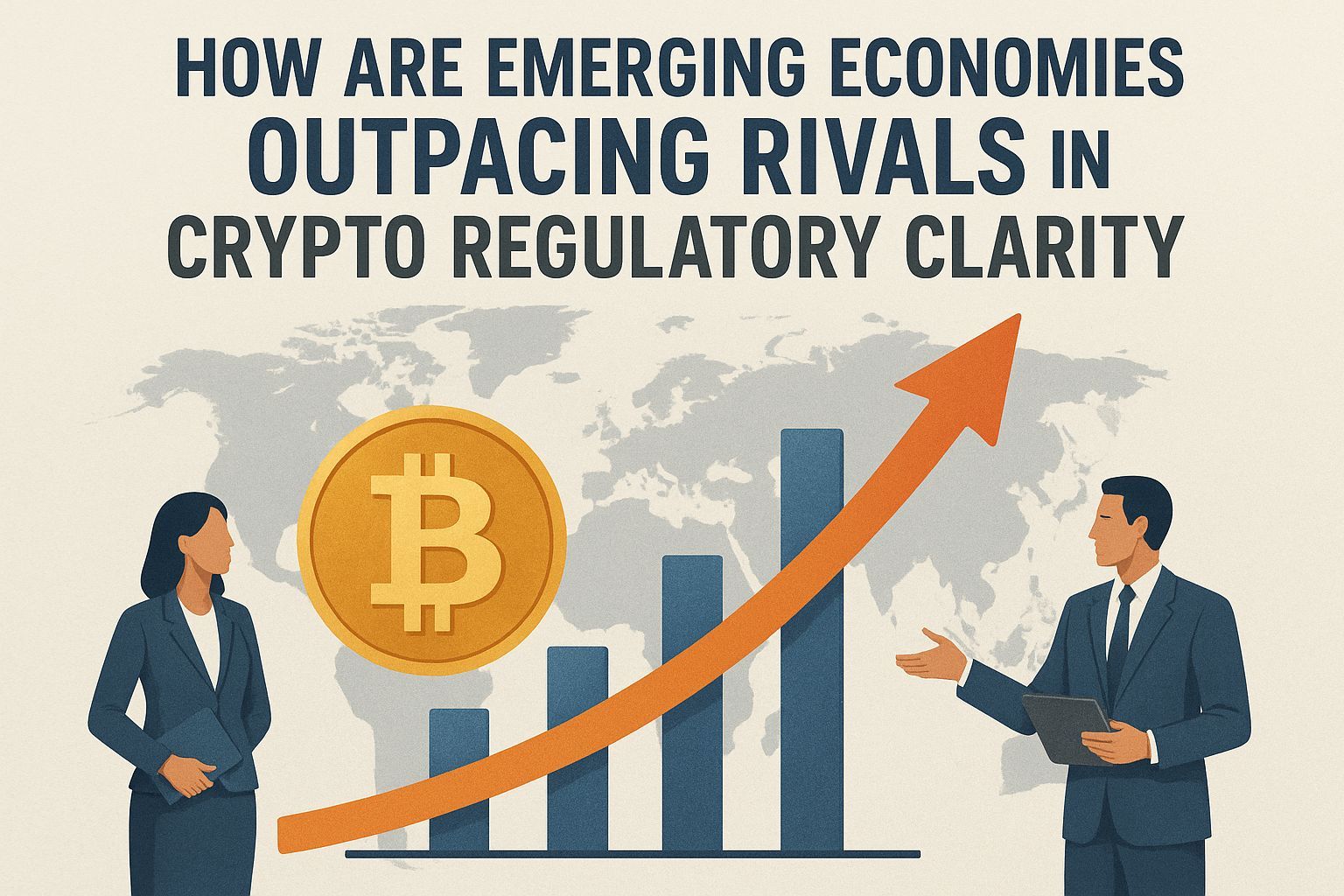
Who’s Really Racing Ahead in the Crypto Reg Game?
Emerging economies aren’t just dipping toes into crypto regulatory clarity-they’re diving headfirst, outmaneuvering sluggish giants like the US with laser-focused frameworks that scream “build here now.” Think Hong Kong dropping stablecoin licenses like hot potatoes, or Brazil syncing crypto with payments rules overnight. It’s not hype; it’s happening, and it’s pulling in the big players while rivals play catch-up.
Key Takeaways
- Hong Kong and Singapore lead the pack with stablecoin regimes that make compliance a breeze, issuing licenses in early 2026 and drawing firms tired of uncertainty[1][2].
- Latin America heats up: Brazil, Chile, and Argentina are weaving crypto into fintech laws, AML standards, and tax reforms faster than you can say “Travel Rule.”[1]
- US and EU lag but lock in: GENIUS Act and MiCA bring clarity, but fragmented rules keep them behind agile emerging hubs chasing “crypto hub” status[2][3][5].
- Global race? It’s on-jurisdictions with quick, clear rules win infrastructure and talent[2].
Subscribe to our Social Media for Exclusive Crypto News and Insights 24/7!
You’ve seen this before, right? Big markets fumbling with “regulation by enforcement” while nimble spots like the UAE or South Korea roll out won-backed stablecoins with audits tighter than a whale’s wallet[2][3]. Honestly, that US piecemeal approach-GENIUS Act here, CFTC rulemaking there-caught everyone off guard, leaving door wide open for others[4][5].
Emerging Asia: The Clarity Kings

Hong Kong isn’t messing around. They’re launching a stablecoin issuer licensing regime under HKMA and FSTB-high-quality reserves, segregated custody, independent audits, the works. Algorithmic stables? Nope, restricted. First licenses drop early 2026, reclaiming hub status[1][2]. Singapore’s already there, Payment Services Act expanded for custodial services and cross-border transfers. It’s like they read the room: firms want rules, not roulette.
South Korea? Chasing won-backed stablecoins with ironclad reserve rules. “Converge on basics: backing, audits, consumer protection,” as one framework puts it[2]. Picture this: whales rotating into these spots because thresholds align-ish on Travel Rule-EU at €1,000, US at $3,000, Singapore its own vibe-but clarity trumps chaos[2].
LatAm’s Fintech Flip: From Chaos to Custody

Brazil’s aligning fiat-pegged assets with foreign-exchange rules-transparency, governance, operational risks, just like payments giants[1]. Argentina’s new admin? Pushing AML supervision, tax clarity, folding crypto into fiscal reforms. No Travel Rule yet, but direction’s pro-business[1].
Chile’s 2023 Fintech Law (Law 21.521) ropes in trading, custody, intermediation-regulated perimeter, boom[1]. Mexico, Colombia? Tightening AML to FATF specs: due diligence, suspicious reporting. It’s brutal for sketchy ops, but a green light for legit plays. Imagine holding through a regional dip, only to see exchanges license up and mobile money integrate-like Nigeria’s doing[1]. That holder in 2022? ADA dumped 60%, brutal, but taught resilience. Same vibe here.
The Big Boys: Catching Up, But Stumbling
US? GENIUS Act (July 2025) sets federal stablecoin standards-1:1 treasuries or cash backing, KYC/AML, monthly disclosures. Takes effect Jan 2027, only banks or approved nonbanks[5]. Senate Ag’s crypto market structure bill adds CFTC/SEC joint rules on exchanges, delisting, leveraged trades-expedited registration in 180 days[4]. Fragmented? Yeah. But Elliptic nails it: “More new entrants after GENIUS progress,” with institutional surge into stablecoins, tokenized assets[3].
EU’s MiCA enforces Travel Rule at €1k, unified but slow-burn[2]. World Economic Forum calls 2025 a trigger: Singapore, UAE first-movers, Hong Kong/Europe/US stablecoin pushes accelerating everyone[6]. PwC whispers cross-border tokenized settlement as 2026 priority[7].
Why Emerging Economies Are Outpacing: The Hub Race
It’s a race for crypto hub status. Clear rules? Firms flock. “Jurisdictions establishing frameworks quickly attract crypto firms that would rather deal with defined rules than uncertainty,” reshaping infrastructure buildouts[2]. UAE, UK, Hong Kong “moving aggressively,” Australia/South Korea hustling to keep up[3]. Australia even exempted stablecoin players from dual licensing late 2025-smart[3].
Cross-border snags? OECD Crypto-Asset Reporting Framework kicks data shares in 2027, no dodging taxes by jurisdiction-shopping[2]. Travel Rule thresholds vary, fragmenting ops, but convergence on principles wins.
Regulatory frameworks prioritize national strategies-innovation sandboxes, cross-jurisdictional pacts like US-UK Taskforce[3]. Blockchain analytics? Promoted for compliance efficiency[3]. Stablecoin rollout fosters institutional use, tokenized finance[3][5].
The whales ain’t sleeping, fam. They’re rotating to clarity. ETH didn’t swan-dive here-it’s thriving on regulated rails. You holding through the next fakeout?
- https://sumsub.com/blog/global-crypto-regulations/
- https://chainstack.com/crypto-regulation-in-2026/amp/
- https://www.elliptic.co/blog/regulatory-and-policy-crypto-trends-to-except-in-2026
- https://www.dwt.com/blogs/financial-services-law-advisor/2026/01/senate-ag-committee-crypto-market-structure-text
- https://www.svb.com/industry-insights/fintech/2026-crypto-outlook/
- https://www.weforum.org/stories/2026/01/digital-economy-inflection-point-what-to-expect-for-digital-assets-in-2026/
- https://www.pwc.de/de/unterlagen/pwc-global-crypto-regulation-report-2026.pdf
- https://www.foley.com/insights/publications/2026/01/crypto-exits-surge-in-2025-momentum-builds-for-an-even-bigger-2026/