Institutional Money Is Quietly Reshaping Crypto-Here’s What the Smart Money Actually Thinks
The Shift Nobody’s Really Talking About
Here’s the thing: while retail traders are sweating every 5% dip, institutional investors are building infrastructure and positioning themselves for what looks like a fundamentally different market cycle[2][4][5]. The narrative’s changed. It’s no longer “crypto versus traditional finance”-it’s “how do we integrate this into our existing operations?” And that matters way more than most people realize.
The data’s pretty clear on this. In 2025 alone, U.S.-listed Bitcoin ETFs (led by BlackRock’s IBIT) and corporate treasury programs collectively represented nearly $44 billion in net spot demand[2]. That’s institutional-grade capital. That’s not gambling money. Yet here’s what’s wild: despite all that inflow, price performance underwhelmed. Which tells you something crucial-supply dynamics have shifted, and these players are thinking in years, not quarters[2].
Subscribe to our Social Media for Exclusive Crypto News and Insights 24/7!
Key Takeaways
- Institutions are entering a different risk paradigm: They’re insulated from volatility that decimates retail[3], and they’re building businesses on-chain, not just trading spots
- ETF flows and corporate treasury moves signal long-term conviction, not short-term momentum chasing[2][4]
- Regulatory clarity is shifting the game: From adversarial to collaborative, which unlocks tokenization opportunities[2]
- The real catalyst isn’t Bitcoin hitting $100k-it’s asset classes like U.S. equities and fixed income moving on-chain[3][4]
- Current market structure is consolidation with healthy fundamentals-no stress signals in DeFi, positioning floors establishing support[1]
The Institutional Playbook: Building, Not Trading
Tom Farley, CEO of Bullish, put it bluntly in a recent interview: institutional investors are “more insulated from crypto market volatility than retail participants”[3]. Think about that for a second. While you’re watching your portfolio swing 8% in a day, these guys are watching volumes. And retail volumes? They’ve dropped precipitously[3].
The shift’s happening in real time. Traditional financial players-major commercial banks, investment banks, asset managers-are coming into crypto with a completely different mindset[3]. They’re not here to trade the next pump. They’re here to build infrastructure for the next decade. Stablecoins represent a genuine foothold in real-world asset tokenization, and that’s just the appetizer[3].
Here’s what institutional positioning actually looks like right now:
BlackRock and Fidelity are commanding the flows. BlackRock’s IBIT continues dominating positive flow days, with Fidelity’s FBTC holding steady in second[1]. This concentration in top-tier issuers isn’t retail chasing-it’s institutional quality bias. These are the players who care about custody, regulatory compliance, and audits.
The funding rates tell a different story than the price action. Elevated open interest around $84 billion creates meaningful liquidation risk, sure, but the real signal’s this: watch for OI stability above $80B[1]. That’s the positioning floor establishing support. Perp and futures mix shifting toward dated contracts would signal increasing institutional participation[1]. Translation: when institutions rotate into longer-dated instruments, they’re signaling conviction.
Why This Market Cycle Feels Different
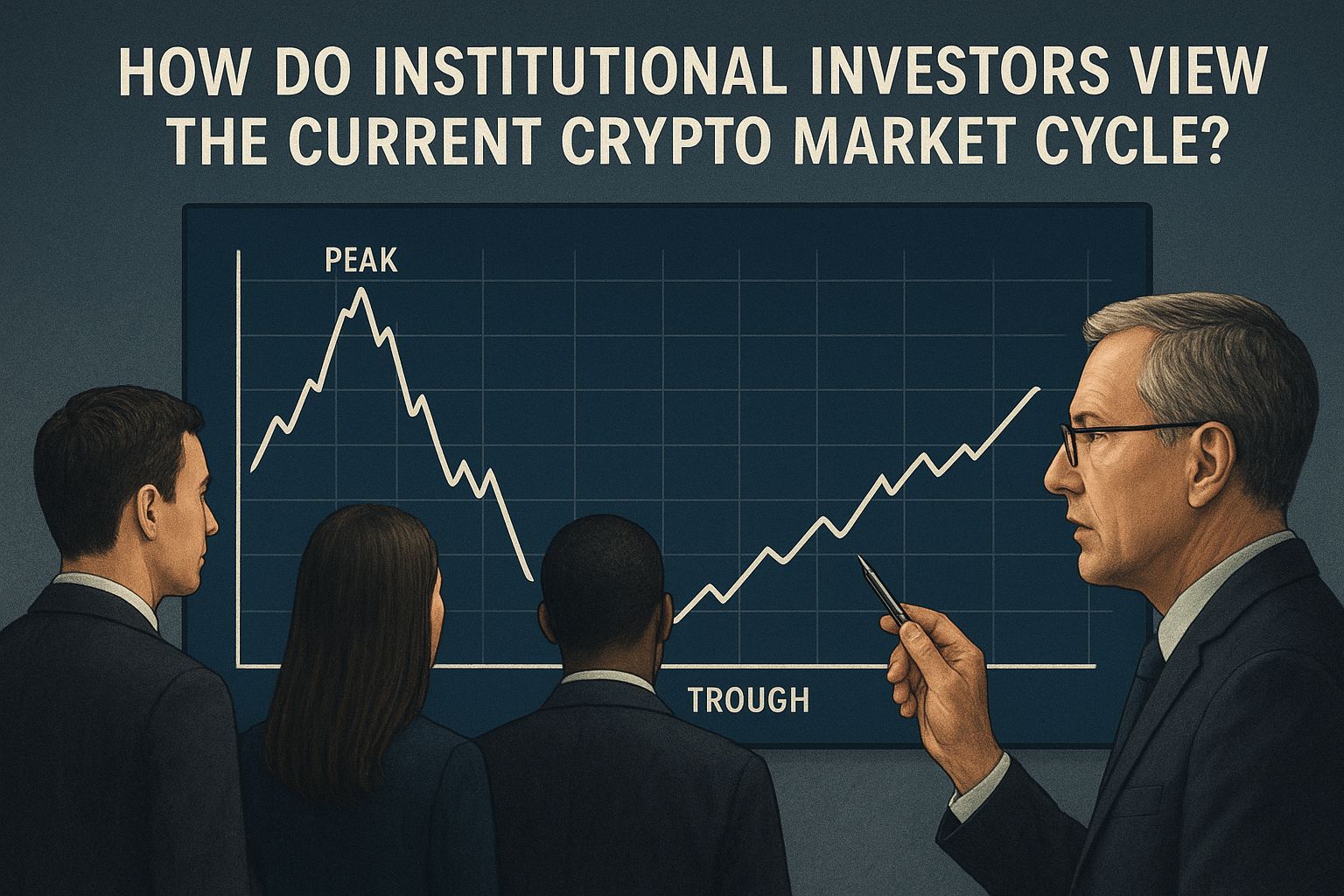
Let’s be real-the four-year cycle narrative everybody’s obsessed with? We might not know if it holds until well into 2026[4]. The November drawdown could be the start of a bear market, or it could just be another bull market correction that resolves in new all-time highs like we’ve seen multiple times this cycle[4].
But here’s what’s genuinely different: the cohort of investors is entirely new[4]. You’re not just seeing crypto natives and retail speculators anymore. You’re seeing traditional money managers, pension funds, and corporations treating Bitcoin like a legitimate treasury asset. Strategy (formerly MicroStrategy) is the most publicized example, but the arbitrage play is spreading-corporations are raising capital and deploying it into Bitcoin because some investors can’t access crypto directly[4].
The macro backdrop’s shifting too. Monetary easing is happening slower than in 2025[2]. Markets expect U.S. policy rates to drift toward the low 3% range by year-end 2026, with a pause in quantitative tightening[2]. That’s supportive but not a catalyst. The real goldilocks outcome? Favorable trade developments, reduction in consumer price inflation, sustained AI investment confidence, and geopolitical de-escalation[2]. Pretty tall order, honestly.
Here’s what institutional players are actually watching:
- USDC inflows turning positive as an institutional re-engagement signal (mints exceeding $1B sustained would be major)[1]
- DeFi credit utilization rising above 40% (that’s a tightening signal)[1]
- Liquidations exceeding $10M (collateral stress)[1]
- TVL acceleration above $60B (DeFi re-engagement confirmation)[1]
Right now? Credit markets are healthy and loose. No stress indicators present[1]. That’s actually bullish architecture beneath the price surface.
The Real Catalyst: Asset Tokenization, Not Just Bitcoin
This is where it gets interesting. Regulatory posture has shifted from adversarial to collaborative, and incumbents are increasingly exploring on-chain distribution[2]. The tokenization of widely held assets-think large-cap U.S. equities, money market funds, fixed income-is already happening. U.S. equities are the first big wave, with money market funds following closely behind[3].
Why does this matter? Because it’s a new source of global demand and on-chain liquidity. It’s the kind of catalytic moment that ICOs and automated market makers (AMMs) represented in prior eras[2]. Imagine pension funds and asset managers suddenly needing to interact with blockchain infrastructure because their core holdings are tokenized. That’s not speculation-that’s infrastructure demand.
One Fidelity analyst noted this succinctly: “We’ve seen traditional money managers and investors begin to buy bitcoin and other digital assets, but I think we’ve only scratched the surface in terms of the possible amount of money that they could bring into this space”[4]. Translation: we’re in the early innings of something much bigger than current price action suggests.
The Consolidation Zone: Technical Backdrop

Bitcoin’s sitting in a consolidation pattern awaiting a catalyst[1]. Key levels matter: $95K resistance, $90K support[1]. The positioning’s healthy without being crowded, but macro volatility from tariff rhetoric could shift sentiment quickly[1].
Here’s the thing about ETF flows-they’ve become inconsistent[1]. The nature of that signal is changing. 2025 ETF inflows were lower than 2024, and corporate treasuries like Strategy can’t issue equity as accretively with compressed premiums to net asset value[2]. So the easy money’s probably already in. The next phase requires something else-either regulatory breakthrough, tokenization catalysts, or macro improvement.
Alt weakness is suggesting a risk-off rotation[1]. When alternatives weaken while Bitcoin consolidates, it’s typically institutions rotating into core exposure. That’s not bearish. That’s actually positioning discipline.
What This Means for Your Portfolio
The crypto market’s entering a new paradigm[4]. It’s not the Wild West anymore. Institutions aren’t going to drive the next 10x-they’re going to drive the next infrastructure. Volatility will continue (they don’t eliminate it, they just absorb it differently), but the direction’s increasingly dictated by real-world asset integration, not retail sentiment.
Here’s what to actually monitor:
- ETF flow consistency-if they stabilize, institutions are committing capital for longer holding periods
- Asset tokenization announcements-especially equities and fixed income moving on-chain
- Corporate balance sheet additions-when Fortune 500 companies start disclosing Bitcoin reserves, that’s capitulation-level institutional conviction
- Regulatory clarity-every clarity signal attracts more traditional finance players
- On-chain lending utilization-if DeFi starts tightening, it signals credit stress percolating through the system
The whales aren’t sleeping, fam. They’re just playing a different game than they were in 2021. And honestly? That’s more stable for long-term holders. It’s just less exciting for day traders.
- https://blog.amberdata.io/institutional-crypto-flows-2026-market-analysis
- https://blog.kraken.com/crypto-education/crypto-markets-in-2026
- https://www.youtube.com/watch?v=0zuUtLNn7_0
- https://www.fidelity.com/learning-center/trading-investing/crypto-outlook
- https://www.coinbase.com/institutional/research-insights/research/market-intelligence/2026-crypto-market-outlook