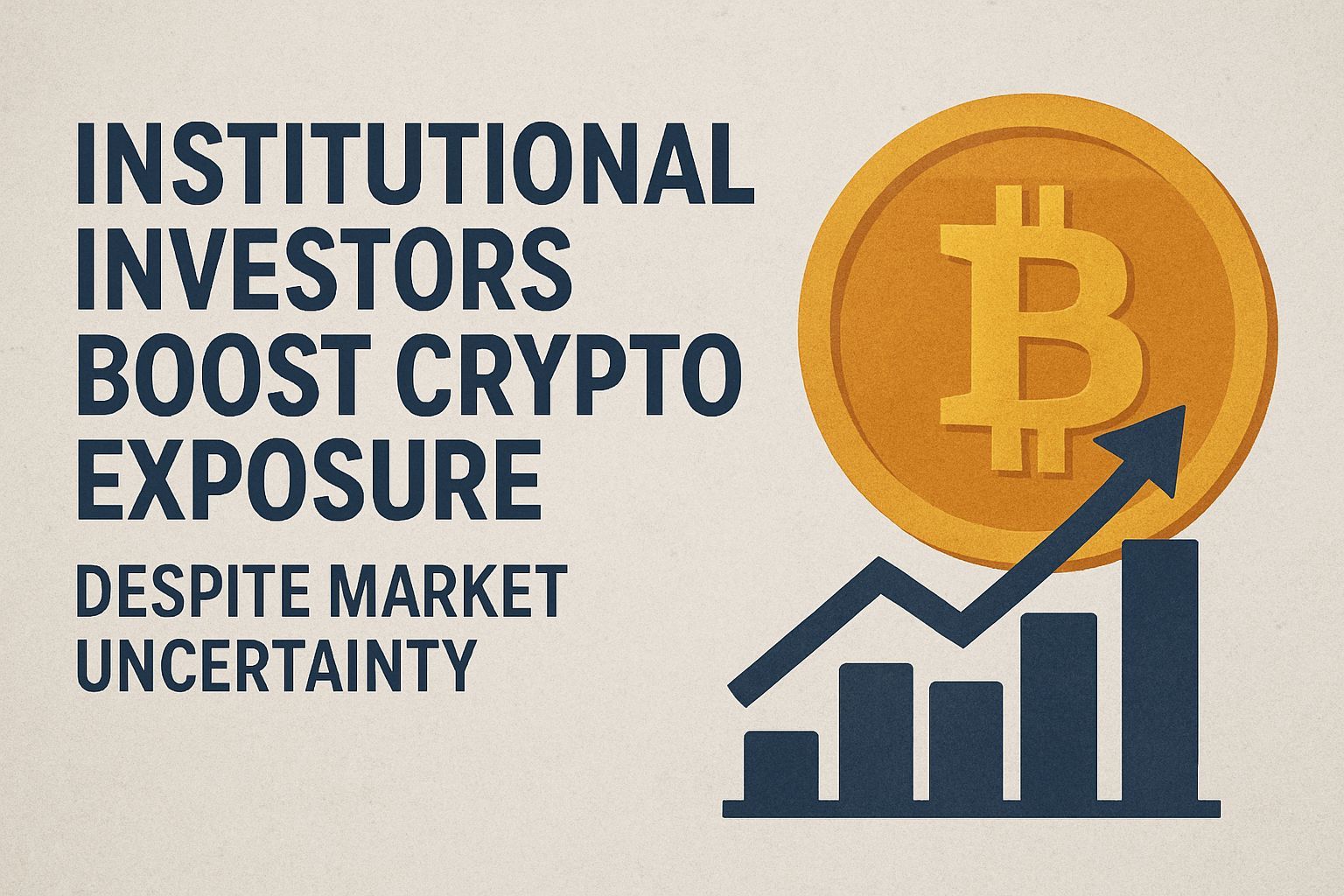
Are Institutions Really Betting Big on Crypto, Even When the Market Feels Like a Rollercoaster?
If you’ve been watching the crypto space lately, you’ve probably noticed something strange: even as headlines scream about market uncertainty, price swings, and regulatory drama, institutional investors are quietly piling into digital assets. Yep, you heard that right. While retail traders might be sweating every dip, the big players-pension funds, asset managers, and global banks-are not just dipping their toes in the water, they’re diving in headfirst. And the numbers don’t lie. Institutional crypto exposure is surging, and it’s happening despite all the noise and naysaying.
Let’s break it down. The latest data from 2025 shows that 65% of institutional investors now report direct exposure to cryptocurrencies, up from just 47% in 2023. That’s a massive jump in just two years. And it’s not just about Bitcoin or Ethereum anymore. We’re talking about a broad embrace of digital assets, including tokenized real estate, private equity, and even DeFi protocols. The crypto ETP market alone has crossed $20 billion, and more than half of institutions expect their digital asset exposure to double within the next three years.
So, what’s really going on here? Why are institutions doubling down on crypto, even when the market feels like it’s on a never-ending rollercoaster?
Subscribe to our Social Media for Exclusive Crypto News and Insights 24/7!
? Key Takeaways
- 65% of institutional investors now have direct crypto exposure (up from 47% in 2023).
- 32% of institutional portfolios allocate 5%-10% to crypto assets.
- 86% of institutions either have exposure to digital assets or plan to invest in 2025.
- 60% plan to increase digital asset allocations within a year.
- Tokenized private markets are the next big wave.
- Market volatility remains the top risk, but institutions are building resilience.
- Regulatory clarity and operational efficiency are major drivers.
? Institutional Investors Boost Crypto Exposure: The Numbers Don’t Lie
Let’s start with the facts. According to a 2025 survey by Coinbase and EY, 86% of institutional investors either already have exposure to digital assets or plan to make allocations in 2025. That’s not just a trend-it’s a seismic shift. And it’s not just about speculation. Institutions are now seeing crypto as a legitimate asset class, one that offers diversification, innovation, and even operational advantages.
But here’s the kicker: 65% of institutions now report direct exposure to cryptocurrencies, and 32% of institutional portfolios allocate between 5% and 10% to crypto assets. That’s not pocket change. We’re talking about real money, real risk, and real conviction. And the momentum is only growing. State Street’s 2025 Digital Assets Outlook found that 60% of institutional investors plan to increase their digital asset allocations within the next year, and more than half expect their exposure to double within three years.
? Why Are Institutions So Confident? The Drivers Behind the Surge

So, what’s driving this surge in institutional crypto exposure? It’s not just about chasing returns. There are several key factors at play:
Regulatory Wins: The introduction of crypto ETPs for Bitcoin and Ethereum has been a game-changer. These products have made it easier for institutions to gain exposure without having to deal with the complexities of custody and security. The crypto ETP market has now crossed $20 billion, a clear sign that regulatory clarity is opening doors.
Tokenization of Private Markets: Institutions are increasingly interested in tokenized private equity, real estate, and fixed income. Tokenization allows for greater liquidity, transparency, and operational efficiency. Over half of respondents in the State Street survey cited improved visibility into asset data as a key advantage.
Operational Efficiency: Nearly one in two institutions expect cost savings of at least 40% from adopting digital asset infrastructure. Faster trading, reduced compliance costs, and streamlined settlement processes are major draws.
Market Maturity: The crypto market is more mature and resilient than ever before. The introduction of regulated products, improved security, and better risk management tools have made it easier for institutions to participate.
? Market Uncertainty: The Elephant in the Room
Now, let’s be real. The crypto market is still volatile. 91% of institutions acknowledge market volatility as their primary risk exposure, and 54% experienced losses exceeding 10% on crypto holdings during market downturns in 2024. Liquidity constraints in altcoin markets affected 38% of institutions, and custodial failures and fraudulent counterparties led to $2.3 billion in losses globally.
But here’s the thing: institutions aren’t blind to these risks. They’re building resilience. 64% of surveyed firms flagged counterparty insolvency as a major exposure, especially after the collapse of two prominent crypto lending platforms in late 2024. And 48% report cross-border regulatory risks, particularly in Asia-Pacific and Latin America.
Yet, despite these challenges, institutions are still moving forward. Why? Because they see the long-term potential. They’re not just betting on price appreciation-they’re betting on innovation, efficiency, and the future of finance.
? What This Means for the Crypto Market

So, what does all this mean for the broader crypto market? A lot.
Increased Liquidity: As more institutions enter the market, liquidity will improve. This will make it easier to trade large positions without moving the market.
Greater Stability: Institutional participation tends to bring more stability. While retail traders might panic during downturns, institutions are more likely to hold through volatility.
Innovation Acceleration: Institutions are driving innovation in areas like tokenization, DeFi, and stablecoins. This will expand the ecosystem and create new opportunities for everyone.
Regulatory Clarity: As institutions demand more regulatory clarity, governments and regulators are likely to respond. This could lead to a more favorable environment for crypto in the long run.
?️ Practical Tips for Investors
If you’re a retail investor, what should you take away from all this?
Diversify: Don’t put all your eggs in one basket. Consider allocating a small portion of your portfolio to crypto, but make sure it’s part of a broader diversification strategy.
Stay Informed: Keep an eye on institutional trends. When big players move, it often signals a shift in the market.
Focus on Fundamentals: Don’t just chase hype. Look for projects with strong fundamentals, real-world use cases, and solid teams.
Manage Risk: Crypto is volatile. Make sure you’re comfortable with the risks before investing.
? Personal Insights: What I See in the Market
As a crypto analyst, I’ve been watching this space for years. And what I see now is different. Institutions aren’t just dabbling-they’re building. They’re investing in infrastructure, developing new products, and pushing for regulatory clarity. This isn’t a bubble. This is the beginning of a new era in finance.
Yes, there will be bumps along the way. There will be losses, regulatory hurdles, and market swings. But the long-term trend is clear: institutional investors are here to stay. And that’s good news for everyone.
? Final Thought: Are You Ready for the Next Wave?
So, here’s my question for you: Are you ready for the next wave of institutional crypto adoption? Because it’s coming. And when it does, the market will never be the same.
institutional crypto exposure
digital asset allocations
tokenized private markets
[1] https://coinlaw.io/institutional-crypto-risk-management-statistics/
[2] https://www.coindesk.com/business/2025/10/09/institutional-investors-expect-tokenization-to-double-digital-asset-exposure-by-2028-state-street-says
[3] https://www.ey.com/content/dam/ey-unified-site/ey-com/en-us/insights/financial-services/documents/ey-growing-enthusiasm-propels-digital-assets-into-the-mainstream.pdf
[4] https://www.halborn.com/blog/post/69-percent-of-institutional-investors-plan-to-grow-digital-asset-exposure
[5] https://investors.statestreet.com/investor-news-events/press-releases/news-details/2025/State-Street-Issues-2025-Digital-Assets-Outlook-Institutions-Double-Down-on-Tokenization/default.aspx
[6] https://etfdb.com/coinshares-crypto-etf-hub/coinshares-channel/regulatory-wins-push-institutional-crypto-use/