
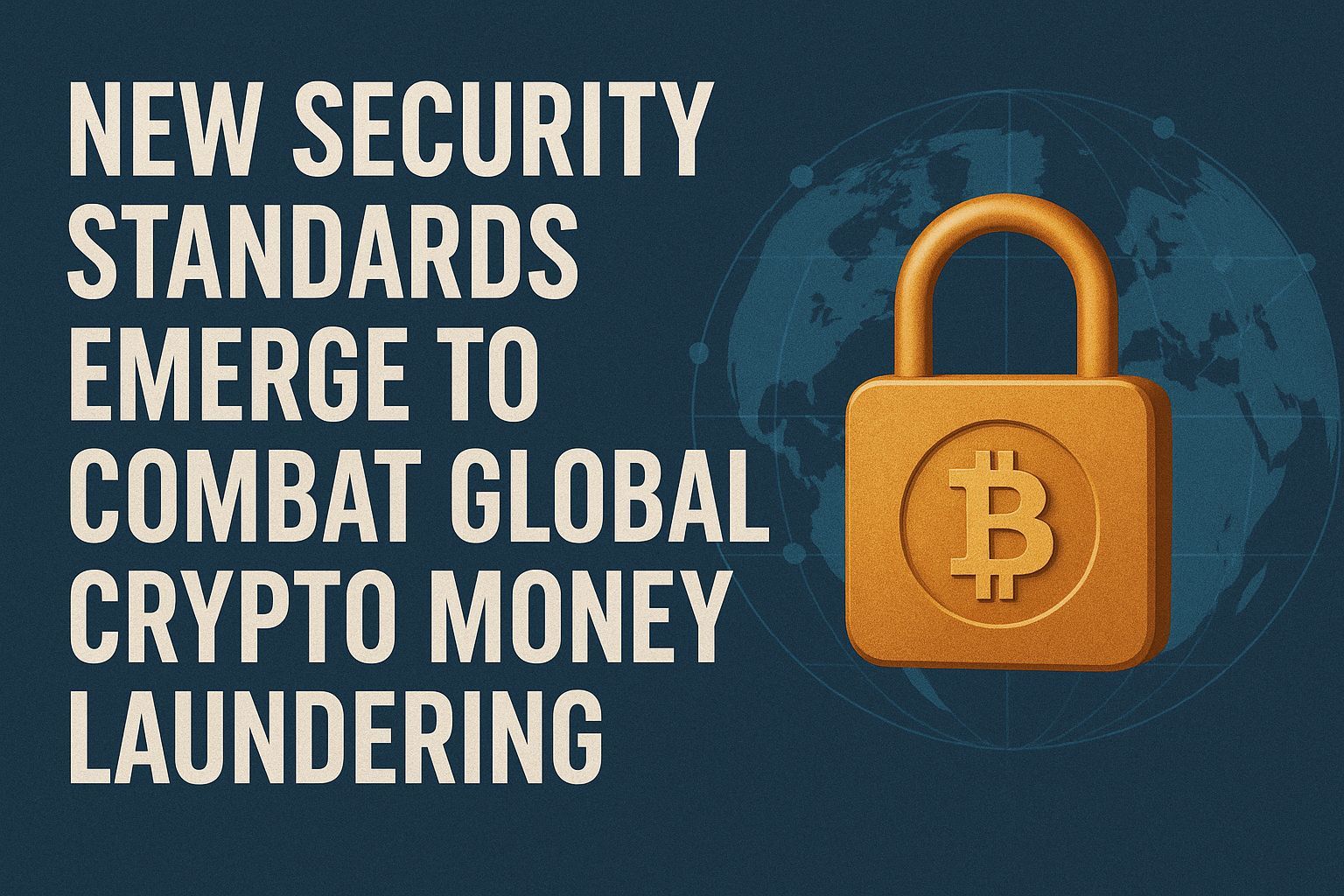
The Global AML Reset: How Crypto Compliance Just Got Real
When Regulators Actually Get Their Act Together
Here’s the thing-crypto’s been living in a regulatory gray zone for way too long. Exchanges operating in multiple jurisdictions without clear guidelines. Platforms getting slapped with massive fines for compliance failures. That era? It’s officially over. In 2025 and into 2026, the world’s financial regulators have woken up and realized something critical: they need standardized, enforceable anti-money laundering frameworks to actually keep illicit funds off blockchain networks at scale.[1][2][3]
This isn’t your grandmother’s regulatory memo. What’s happening right now is a fundamental restructuring of how crypto businesses operate globally-and frankly, it’s creating both massive headaches and unexpected opportunities for the industry.
Key Takeaways: What You Need to Know Right Now
- The federal playbook is finally written. Congress passed the GENIUS Act, establishing clear stablecoin regulation and federal oversight mechanisms that actually define who does what.[1]
- AML compliance costs are ballooning-but so is enforcement. Average fines for AML breaches hit $3.8 million in 2025, with regulators showing zero patience for half-measures.[3]
- Real-time OFAC screening and Travel Rule enforcement have moved from “nice to have” to “non-negotiable.” Platforms missing deadlines are getting demolished in court and by regulators.[4]
- Strategic pivots are reshaping the regulatory landscape. The current administration’s shift toward a “more positive view of digital assets” is creating new pathways for compliant operators while simultaneously tightening the screws on bad actors.[2]
Why 2026 Is the Year Crypto Compliance Actually Matters
For years, crypto compliance was like fixing a car with the engine running. You’d patch one hole, another would spring a leak. But here’s what changed: regulators finally decided the whole industry needed a unified transmission-not 50 different state-by-state setups all running on contradictory rules.
Subscribe to our Social Media for Exclusive Crypto News and Insights 24/7!
The Bank Secrecy Act now treats crypto businesses exactly like traditional money services businesses (MSBs).[1] That means five core pillars of AML compliance: risk-based programs, customer identification and verification, ongoing transaction monitoring, suspicious activity reporting, and OFAC sanctions screening.[1] No gray area. No interpretation contests between your legal team and regulators.
What’s particularly brutal-or beautiful, depending on whose side you’re on-is that this framework has teeth.[2][4] We’re talking about real-time monitoring requirements, monthly or quarterly re-screening of existing customers, and Travel Rule compliance for any transaction exceeding $3,000.[4] The days of “we’ll get around to compliance eventually” are finished.
The Infrastructure That’s Actually Getting Built

Let me paint a picture of what compliance actually looks like now. Imagine you’re running an exchange. A user wants to send $5,000 to another platform. Under the old system? Maybe you’d flag it. Maybe you wouldn’t. Today, you must:[1]
- Verify that customer’s identity (KYC checks)
- Assess their risk profile
- Screen them against OFAC’s Specially Designated Nationals list in real-time
- Collect information about the receiving party on the other platform (Travel Rule)
- Monitor the transaction for suspicious patterns
- Maintain records that can withstand regulatory audits
This isn’t overkill-it’s the baseline. And here’s where it gets interesting: platforms that actually implemented this stuff proactively are now gaining competitive advantages.[2][3] Banks are increasingly willing to work with compliant crypto businesses, and institutional money is starting to flow toward exchanges that take compliance seriously.[5]
The Infrastructure Investment and Jobs Act cranked up the pressure even further, extending Form 1099-B reporting requirements beyond traditional brokers to encompass miners, software developers, and transaction validators.[1] That’s a shocking expansion of who’s considered a “broker” in crypto-and it’s forcing the entire ecosystem to rethink its infrastructure.
The Regulatory Pendulum Swings (But the Standards Stay Firm)

Here’s where the political wind gets interesting. The current administration signaled a “more positive view of digital assets,” appointing crypto-friendly leadership to the CFTC, SEC, and Treasury Department.[2] The SEC dropped enforcement actions against major exchanges, settling with Ripple Labs and walking back charges against Binance.[2]
But-and this is a critical “but”-that political shift doesn’t mean AML standards loosened. If anything, the opposite happened. The GENIUS Act actually hardened the stablecoin regulatory framework, designating federal regulators to oversee non-bank issuers through the Office of the Comptroller of the Currency (OCC).[1] You can’t separate “pro-crypto policy” from “anti-money laundering enforcement.” They’re two sides of the same coin.
Some observers raised alarm bells about this pivot. Senators Elizabeth Warren, Dick Durbin, and Mazie Hirono accused the Justice Department of “giving money launderers and cybercriminals a free pass.”[2] But the reality is more nuanced-regulators are shifting from aggressive enforcement against compliant platforms to laser-focused targeting of actual bad actors and illicit channels (mixers, tumblers, decentralized workarounds).[2]
Where the Real Pressure Points Are

Block, the fintech giant behind Cash App, just discovered this firsthand. New York’s Department of Financial Services hit the company with a $40 million fine and a third-party monitor requirement after finding serious AML breaches.[2] That’s not a slap on the wrist-that’s a message: no platform, no matter how big, is above compliance.[2]
North Dakota and California are doubling down, too. North Dakota mandated that cryptocurrency ATM operators obtain money transmission licenses and build full AML programs.[2] California’s Department of Financial Protection and Innovation proposed similar requirements for Virtual Asset Service Providers (VASPs) as of April 2025.[2]
Here’s what’s wild: we’re seeing a bifurcation emerge. Compliant platforms are actually gaining regulatory clarity and banking relationships. Non-compliant operators? They’re getting hammered. The regulatory playbook has shifted from “we don’t know what to do” to “here’s exactly what you need to do, and we’re watching.”[1]
The Stablecoin Wild Card
Stablecoins are becoming the central nervous system of regulated crypto finance. California’s Digital Finance Assets Law becomes operative on July 1, 2026-fresh regulatory infrastructure designed specifically for this use case.[1] This means more entry points for institutional participation, clearer custody standards, and explicit reserve requirements.[1]
The GENIUS Act designated federal frameworks for U.S.-dollar-denominated stablecoins, creating a licensing track for non-bank issuers supervised by the OCC.[1] Translation: stablecoin issuance just got professionalized. The fly-by-night operations that tried to skate by without proper backing? Done. The ones with real reserves and transparent audits? They’re about to see institutional capital flowing their way.[5]
What “Better Analytics” Actually Means
There’s a quiet revolution happening in blockchain analytics. Regulators and platforms are increasingly deploying sophisticated tools to match on-chain data with off-chain intelligence, building more robust blacklists and identifying indirect risk exposure with precision that didn’t exist three years ago.[5] These tools help compliance teams allocate resources efficiently instead of blasting every transaction through the same screening process.[5]
The effect? Legitimate users get better experiences (fewer false positives, faster verification), while actual criminals find the on-chain environment increasingly hostile. Mixers and tumblers still exist, but they’re becoming more visible, more traceable, and more likely to trigger enforcement action.[5]
The Money Transmission Modernization Act: The Unfinished Business
There’s still one major piece of legislation lurking in the wings: the Money Transmission Modernization Act (MTMA).[4] This could streamline the insane process of getting 50 different state licenses with 50 different requirements. States would still issue their own licenses, but they’d follow the same playbook.[4]
It has bipartisan support, but there’s no clear timeline for passage. For now, that means platforms still need to navigate the state-by-state maze. It’s inefficient, it’s expensive, and honestly, it feels like regulatory theater from a bygone era. But it’s the reality you’re working with if you’re launching in the U.S. in 2026.
The Bottom Line: Compliance as Competitive Advantage
The old crypto ethos of “move fast and break things” doesn’t work when “things” includes money laundering laws. The platforms that built robust AML programs, invested in compliance talent, and embraced regulatory frameworks? They’re winning. They’ve got banking relationships. They’re attracting institutional capital. They’re sleeping better at night knowing their legal risk is managed.
The ones playing games, cutting corners, or waiting for the regulatory heat to pass? Fines are their future. And those fines are getting bigger and more frequent.[3][6]
This is the moment where crypto matured from a Wild West to an industry with actual standards. Whether you love it or hate it, the security infrastructure is here now-and it’s not going anywhere.
- https://www.globallegalinsights.com/practice-areas/blockchain-cryptocurrency-laws-and-regulations/usa/
- https://www.acams.org/en/news/legal-brief-us-crypto-pivot-spells-regulatory-uncertainty
- https://sumsub.com/blog/crypto-aml-guide/
- https://www.signzy.com/blogs/us-crypto-regulations-aml-compliance-general-setup
- https://www.elliptic.co/blog/regulatory-and-policy-crypto-trends-to-except-in-2026
- https://www.bakertilly.com/insights/aml-financial-crimes-compliance-2026-trends






