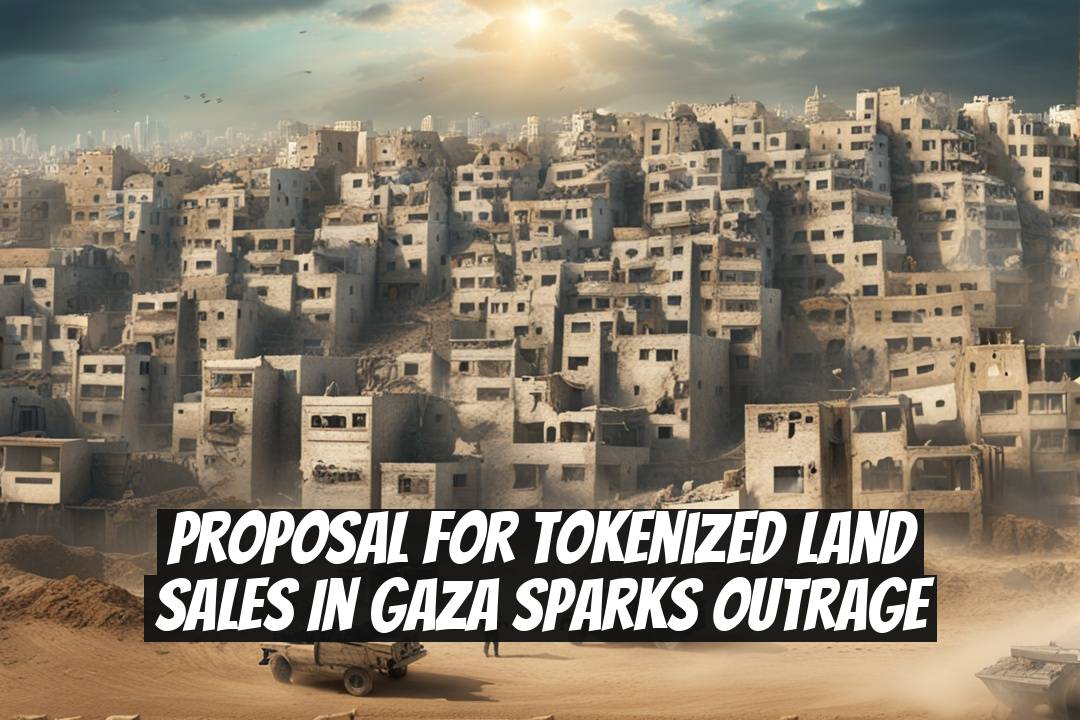
? Tokenized Land Sales in Gaza: A Warped Reality? ?
So, let’s dive into something that’s been stirring quite the pot in the crypto and political realms-the recent proposal for tokenized land sales in Gaza. Now, I know what you’re thinking. "Tokenized land? In a place like Gaza?” It feels surreal, doesn’t it? But here’s where it gets even more intense. The backlash echoes out from every corner; activists are adamant that this plan isn’t just misguided but outright abhorrent. Let’s unpack this together.
Key Takeaways:
- Tokenization Proposal: The plan involves selling Palestinian land through blockchain tokens, backed by the controversial Tony Blair Institute.
- Public Backlash: Palestinian activists are calling it grotesque and evil, voicing deep concerns over human rights.
- Financial Incentives: The proposal suggests incentivizing people to vacate Gaza, offering financial compensation.
- Investment Opportunities: The project aims to attract global investments by creating a “trust” for public land.
- Political Friction: The proposal stirs anger and fear of exploitation amid geopolitical tensions.
Subscribe to our Social Media for Exclusive Crypto News and Insights 24/7!
? The Heart of the Matter: A Humanitarian Crisis

Alright, so here’s where it gets heavy. The proposal, according to reports, involves paying half a million Palestinians to leave their homes for a blockchain-based redevelopment. I mean, it’s gut-wrenching to think about people being offered money to leave their own lives and dreams behind. Dr. Ashok Kumar, a political economist, sums it up neatly: “Palestinians want to live in their home. That is the simple truth.” Can you imagine being in their shoes, confronted with such an unimaginable situation?
? What Makes This Proposal So Disturbing?

Here’s the kicker-the proposal was built around the idea of selling land in a war-torn region as if it were a piece of merchandise. You’ve got the Boston Consulting Group involved in a plan subtly marketed as an innovative solution that overlooks decades of conflict and suffering. Activists have taken to social media, calling out the plan as a flagrant attempt to exploit a humanitarian crisis. Paul Biggar, founder of Tech for Palestine, didn’t hold back, describing it as "stealing all Palestinian land and selling it back to them." How jarring is that?
? Breaking Down the Tokenization Concept

On one hand, the technical concept behind tokenization does present intriguing opportunities, right? Chris Yin, co-founder of Plume Network, explained how the title for the land could be held in a trust and then tokenized. It’s like using blockchain to create a digital representation of physical assets. Pretty cool, in theory?! But here’s the deal-this isn’t your average land deal. The complexities involved in a place where emotions are already running high make this uncharted territory-one that’s likely to end in disaster for everyone involved.
?️️ A Crystal Ball: What to Watch Out For
Let’s take a moment to think practically about how this could impact the crypto market and potential investors. If you’re looking at investment opportunities, a few things to consider:
- Public Sentiment: How communities feel about tokenization might affect its success. If the locals oppose it, it could flop.
- Regulatory Hurdles: The legal landscape of tokenizing real estate in conflict zones is murky at best. Think about the time and effort it would take to navigate that.
- Investor Perception: The optics around these projects could deter average investors who want to engage with brands and initiatives that are more socially responsible.
The ability to manipulate this kind of digital asset in politically sensitive areas may not sit well with potential investors or users who actually care about the ethical implications of what they’re investing in.
? A Future in Flux: Morals vs. Money
As things stand now, the plan feels like a dystopian twist on gentrification-a scenario where the rich come back to buy pieces of a land after wiping out its original inhabitants and then tell them, "Hey, you can live here, just pay us!" It’s not just concerning; it’s a real moral quandary.
There’s a broader question at play here, isn’t there? Can technology, especially something as innovative as blockchain, ever be a force for good in a situation that’s so wrought with moral complexities? Or does the very notion of financializing land in such a fraught area come off as appalling opportunism?
? Final Thoughts: What Next?
In the end, the proposal for tokenized land sales in Gaza is a stark reminder of the intersection of technology, finance, and humanitarian crises. We’re in a world where the David versus Goliath narratives are redefined daily, and the playing field is anything but level. Blockchains promise to revolutionize industries, but should they really be applied in the context of people’s homes and histories?
As this story unfolds, I’d love to hear your thoughts: Is there a way for crypto and blockchain to positively impact suffering regions, or do we simply risk turning battlegrounds into commodities?