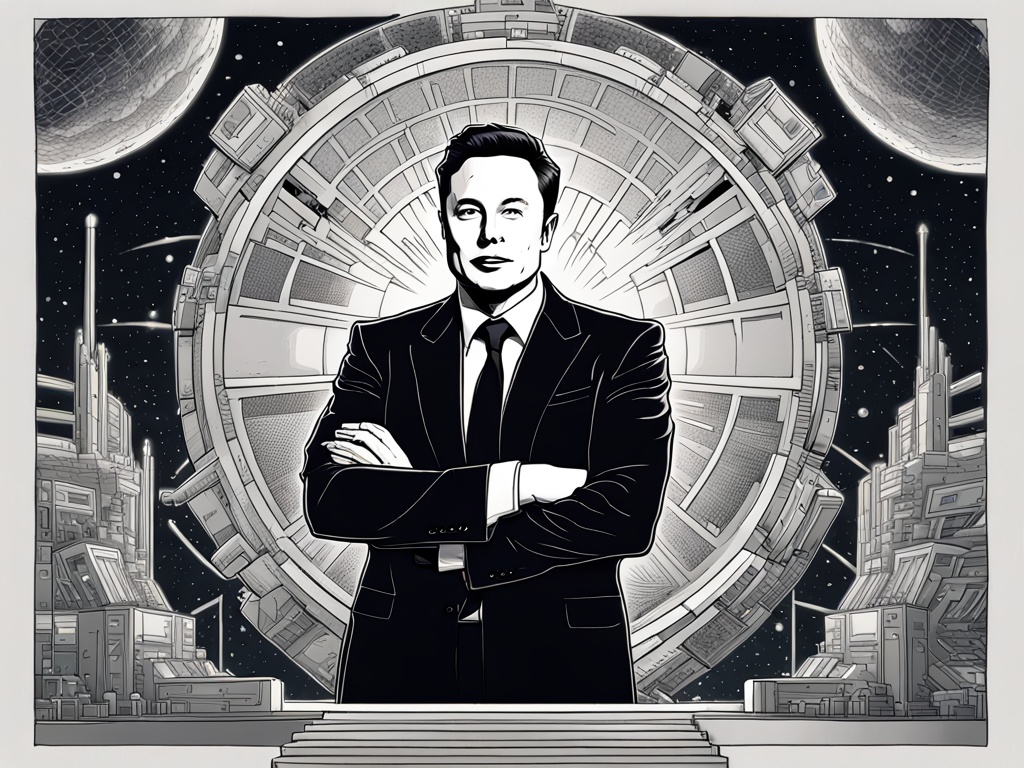
Exploring Elon Musk’s Vision for Enhanced Government Transparency through Blockchain Technology
Elon Musk, a figure renowned for his innovative ideas, has highlighted the potential of blockchain to enhance accountability and efficiency within the United States (USA) governmental framework. His assertions aim to merge technological advancements with administrative processes, envisioning a future where financial operations within the public sector are both transparent and responsible. This discussion will delve into the backdrop, potential benefits, and challenges associated with Musk’s intriguing proposition.
Elon Musk’s Ambitious Vision for Greater Transparency in Governance
Blockchain technology, initially developed to support cryptocurrencies like Bitcoin, has shown significant adaptability across various sectors including decentralized finance and supply chain management. Now, Musk proposes utilizing this technology to revamp the way public funds are allocated and monitored in the United States.
Subscribe to our Social Media for Exclusive Crypto News and Insights 24/7!
In a recent public forum, Musk shared insights on the possibility of decentralizing financial governance systems, aiming to address traditional inefficiencies present within current governmental expenditure methods. He argues that this shift could not only minimize wasteful spending but also usher in an unprecedented level of transparency.
Musk’s forward-thinking proposal is rooted in practical observations regarding existing governmental fiscal structures, which tend to be centralized, outdated, and often lack the clarity that blockchain could provide. He perceives a significant opportunity for reform in how public finances are handled and scrutinized over time.
Government expenditure necessitates a high degree of transparency and oversight; however, traditional methods frequently fall short in accountability. Blockchain serves as a decentralized and immutable ledger that can deliver a verifiable public record of funds utilized. Here’s how its implementation could be transformative:
- Transparent Transactions: Every dollar allocated by the government could be tracked in real-time, actively reducing opportunities for fraud and misconduct.
- Reduction of Intermediaries: A decentralized system can eliminate multiple bureaucratic tiers, thereby lowering the risk of human errors and diminishing administrative expenses.
- Automated Audits: Smart contracts, which are coded on blockchain networks, can ensure that funds are utilized as intended with accessible public reporting.
These examples not only showcase how blockchain can simplify government financial operations but also indicate a potential paradigm shift in the dynamics between citizens and public entities.
Navigating Technological and Legislative Hurdles

Despite its promise, integrating blockchain technology within the U.S. government faces significant hurdles. Chief among these is that the technology is not yet sufficiently established within the public sector to support infrastructure changes at the federal level.
While blockchain has proven its effectiveness in private transactions, scaling its implementation requires extensive development efforts, training, and management capabilities.
From a legislative perspective, adopting a decentralized system could lead to potential regulatory complications. Key questions arise: Who will oversee this blockchain framework? How can security be ensured from both a technological standpoint and in terms of data protection?
Add to this, energy consumption issues. Although newer blockchain models have made strides to reduce ecological impacts, established protocols like Proof of Work remain heavily energy-demanding. Thus, the government needs to choose solutions wisely, balancing technological efficiency with environmental sustainability.
Beyond technological issues, ethical dilemmas surface. Blockchain inherently represents decentralization; however, a central authority’s involvement in regulating it raises contradictions. While Musk advocates for this technological approach, his vision entails complex considerations regarding governance in the public sector.
The Potential Influence on American Democracy
If embraced effectively, blockchain has the capacity to transform the interaction between government and citizens. Such a system could restore institutional authority, addressing the trust deficits that often plague governmental operations.
Americans, typically cautious about public fund utilization, could gain immediate access to platforms demonstrating real-time tracking of expenditures. In an age marked by political strife and claims of mismanagement, a transparent, decentralized governance model could serve as a foundational element to reinforce the social contract between citizens and their elected officials.
Musk’s unique approach positions him as a potential catalyst for this transformative change, although specific methods and frameworks for implementation remain to be clearly articulated.
In conclusion, the application of blockchain technology in governance presents both exciting possibilities and formidable challenges. Its ability to foster transparency and accountability could reshape governmental dynamics for the better.
For further exploration, consider these key phrases:
blockchain technology,
government transparency,
Elon Musk proposal.