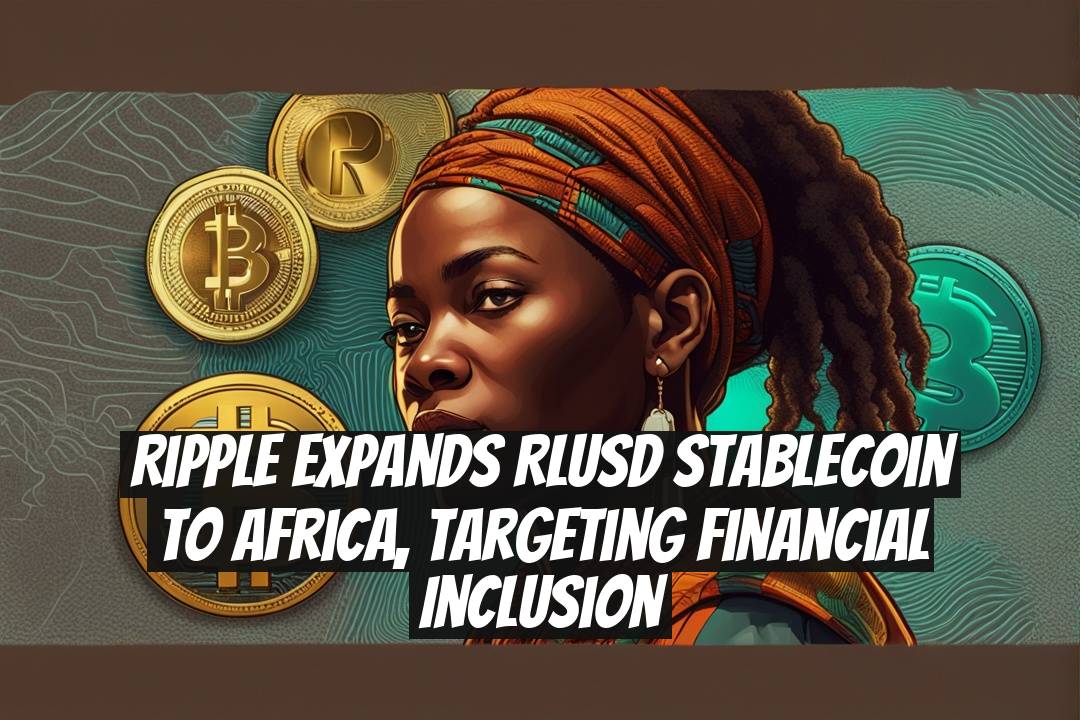
Can Africa Become the Next Hotspot for Stablecoins and Financial Inclusion? Let’s See How Ripple’s RLUSD Might Just Make It Happen!
Ripple’s recent move to expand its RLUSD stablecoin to Africa is stirring up quite the excitement across the crypto world. Imagine a continent often challenged by limited access to banking services suddenly empowered with a regulated, US dollar-backed digital currency that promises faster, cheaper cross-border payments and new financial tools-sounds like a game changer, right? Well, that’s exactly what Ripple aims to do by partnering up with prominent African fintech platforms like Chipper Cash, VALR, and Yellow Card[1][2]. If you’re an investor or crypto enthusiast looking for where the next big wave is happening, strap in-we’re diving deep into what this means for Africa, Ripple, and the global crypto scene.
Key Takeaways: What You Should Know About Ripple’s RLUSD Expansion in Africa ?
- RLUSD is a US dollar-backed stablecoin, launched in late 2024, now boasting over $700 million in supply on Ethereum and the XRP Ledger[1][3].
- Ripple’s partnerships with Chipper Cash, VALR, and Yellow Card bring RLUSD to millions of institutional and retail users across Africa, driving access to compliant cross-border payments, remittances, and treasury operations[2][4].
- The stablecoin aims to challenge the dominance of Tether’s USDT in Africa by offering a regulated, enterprise-grade alternative under New York’s Department of Financial Services oversight[2][5].
- Besides financial inclusion, Ripple is piloting humanitarian projects in Kenya, such as climate-related insurance payouts via blockchain smart contracts, spotlighting real-life impact[3].
- Ripple’s vision extends beyond Africa, projecting massive tokenization growth by 2030-a wave RLUSD aims to ride as a foundational digital dollar asset globally[2].
Subscribe to our Social Media for Exclusive Crypto News and Insights 24/7!
? Ripple Places a Solid Bet on Africa’s Financial Future with RLUSD Stablecoin

Africa’s economic landscape is unique-home to a booming population with a rapidly growing mobile user base but still hampered by limited traditional banking infrastructure. This combination creates a fertile ground for digital financial solutions, especially those which can tackle high remittance costs and currency volatility.
RLUSD steps into this scene as a regulated stablecoin, offering businesses and institutions a stable, transparent asset tied to the US dollar, perfect for cross-border settlements, liquidity management, and even tokenizing real-world assets like commodities and securities[1][2].
By teaming up with Chipper Cash, a well-known pan-African payment platform, Ripple enables RLUSD to be used directly for fast, affordable cross-border payments-a long-needed solution for Africa’s remittance market, which trends toward more than $50 billion annually[4]. VALR and Yellow Card strengthen this by integrating RLUSD into exchanges and payment infrastructures across multiple African countries, massively widening RLUSD’s reach.
Jack McDonald, Ripple’s stablecoins SVP, remarks on RLUSD becoming “the go-to solution for treasury operations and remittances” due to its compliance and global usability[1]. And this push isn’t just about business; it’s a real step toward financial inclusion in regions where millions remain unbanked.
? Practical Tips for Investors Eyeing Ripple’s African Expansion
Watch RLUSD adoption via Chipper Cash and VALR: As these platforms integrate RLUSD into their user experience, transaction volume and liquidity will surge, signaling healthy stablecoin uptake.
Monitor regulatory developments: Ripple’s New York DFS-regulated RLUSD positions it well against other less-regulated stablecoins like USDT in Africa; regulatory acceptance is a big plus for long-term viability.
Look out for humanitarian and DeFi pilots: Ripple’s collaboration with Mercy Corps Ventures in Kenya on blockchain-based climate insurance could open new business lines for RLUSD, potentially increasing demand.
Consider Ripple’s ecosystem growth: The expansion includes integration in Ripple Payments for cross-border transfer solutions, so RLUSD can serve as a backbone for international money movement involving African markets.
? What This Means for the Crypto Market: A Ripple/Wave or a Tidal Shift?
The stablecoin market is crowded, with Tether’s USDT dominating global-and particularly African-transactions, processing over half the continent’s stablecoin volume[2]. But RLUSD’s emergence as a compliance-first, enterprise-grade digital dollar offers a compelling alternative, especially attractive to institutions wary of regulatory uncertainty.
By focusing on regulatory robustness, Ripple may significantly elevate institutional trust in the stablecoin space and carve a niche as Africa’s go-to digital dollar. Furthermore, RLUSD’s presence on major exchanges like Kraken, Gemini, and Bitstamp enhances its liquidity and worldwide accessibility, which creates a feedback loop encouraging global investors and businesses to interact with Africa’s growing economies in new ways[2][3].
Ripple’s prediction that 10% of global assets could be tokenized by 2030 underscores the importance of stablecoins like RLUSD as foundational building blocks of future finance. Africa, with its large unbanked population and emergent digital economy, could become a testing ground setting precedents for global adoption.
? Personal Thoughts: Why I Find Ripple’s RLUSD Push in Africa Intriguing
From my perspective, Ripple’s strategy is both timely and forward-thinking. Stablecoins, when properly regulated and integrated, have enormous potential to bridge gaps where traditional finance falls short. Africa exemplifies this gap vividly.
What excited me most is RLUSD’s blend of compliance (operating under New York’s DFS), institutional focus, and local partnerships-this triangle creates a strong foundation for trust, which is the ultimate currency in fintech. Plus, Ripple’s humanitarian angle in Kenya shows they’re not just chasing profits but linking technology to real people’s resilience and livelihoods.
Sure, the crypto market can be volatile, and Africa’s regulatory environment varies widely, but Ripple’s cautious, partnership-driven approach is a smart way to reduce risk and build a durable ecosystem. For investors, RLUSD’s rollout in Africa offers a front-row seat to possibly one of the most transformative stablecoin adoption stories.
? Final Thoughts: Could Ripple’s RLUSD Be the Catalyst Africa Needs to Leapfrog into the Financial Future?
By delivering a stable, regulated digital dollar via local partners, Ripple’s RLUSD stands poised to redefine how millions in Africa access and use money. As traditional barriers crumble through innovative fintech, the continent might soon host a financial revolution driven by blockchain technology.
What do you think? Could Ripple’s RLUSD stablecoin be the missing piece for true financial inclusion in Africa? Or will competition from incumbents like USDT keep RLUSD as a niche player? It’s a story worth watching closely.
Ripple Expands RLUSD Stablecoin to Africa
RLUSD Stablecoin Africa
Ripple Financial Inclusion
Sources:
[1] https://www.mitrade.com/insights/news/live-news/article-3-1095875-20250904
[2] https://www.benzinga.com/crypto/cryptocurrency/25/09/47502073/ripples-foray-into-africas-stablecoin-market-could-replace-tethers-usdt-with-rlusd
[3] https://thecryptobasic.com/2025/09/04/ripple-expands-rlusd-stablecoin-into-africa/
[4] https://coincentral.com/ripple-drives-digital-dollar-adoption-in-africa-with-rlusd/
[5] https://cryptorank.io/news/feed/2ff72-ripple-expands-rlusd-stablecoin-to-africa-with-fintech-partnerships