
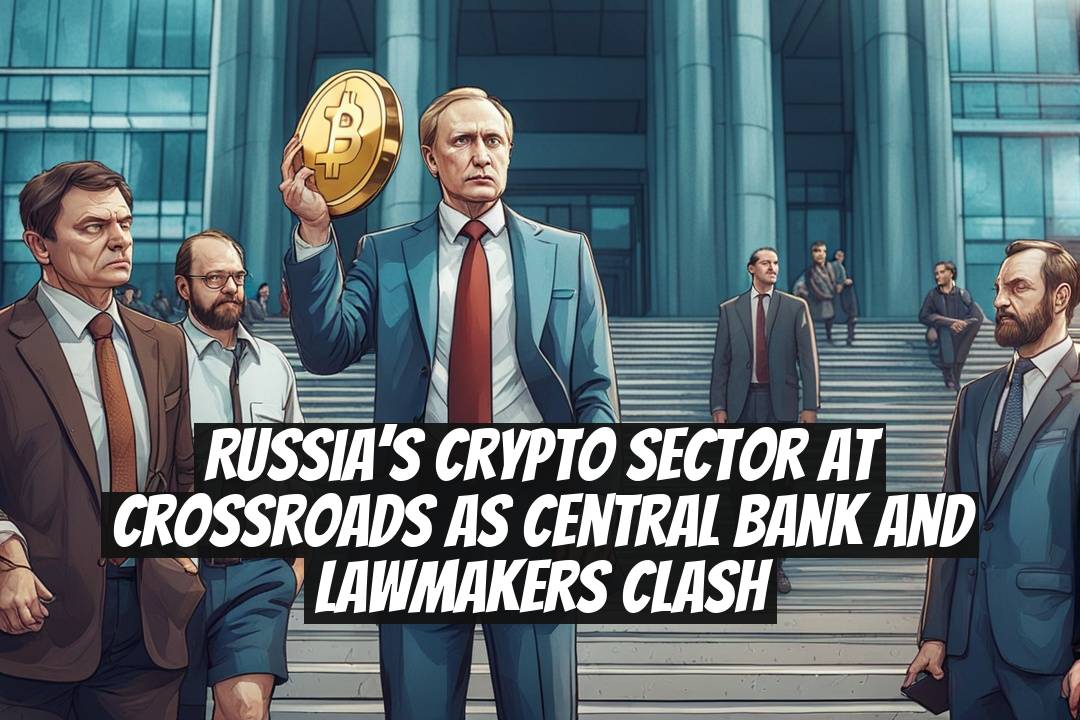
Russia’s Crypto Sector at a Crossroads: When Regulators Play Tug of War
Russia’s crypto scene is like a tightrope walker wobbling between two skyscrapers: on one side, lawmakers pushing to legitimize cryptocurrency exchanges; on the other, the Central Bank (CBR) doubling down on heavy restrictions and crackdowns. This clash isn’t just bureaucratic theater - it impacts billions in trapped crypto assets, influences institutional adoption timelines, and sets the stage for a showdown between innovation and control in Russian digital finance. If you’re eyeing Russia’s crypto market or global crypto regulation trends, this story is a must-watch unfolding drama where the stakes couldn’t be higher.
Key Takeaways
- Russia’s Central Bank continues to enforce strict bans on crypto payments domestically, while the State Duma’s liberal faction fights for fully legalized exchanges with physical presence.
- Over $25 billion in crypto remain stranded as retail crypto transactions face criminalization, yet sanctioned entities use digital assets to bypass Western sanctions abroad.
- The impending launch of the digital ruble in 2026 is a game-changer, laying groundwork for institutional crypto adoption, but tightly linked to CBR’s regulatory control.
- Banks face new capital and loan restrictions related to crypto dealings (max 1% of capital) - no wild west here.
- Expert traders note patterns resembling 2021’s blow-off top as regulatory uncertainty triggers wild price swings and liquidation cascades.
Subscribe to our Social Media for Exclusive Crypto News and Insights 24/7!
? Why Russia’s Crypto Market is Caught in Regulatory Limbo
Picture this: Russia has officially recognized cryptocurrency as property since early 2025. Sounds promising, right? But hold your horses. The tax laws mean that every crypto trade, sale, or mining profit is on the hook for a steep 25% profit tax. Plus, complete mining bans are in place across certain regions like Dagestan and Chechnya until 2031, while energy-hungry areas like Irkutsk face seasonal restrictions due to electricity shortages.[2]
Meanwhile, the Central Bank of Russia is waving a strict nope sign at domestic crypto payments - freezing accounts, penalizing P2P transactions, and keeping firm control over financial institutions. Banks aren’t allowed to throw more than 1% of their capital into crypto transactions, and lending to crypto firms now faces tight scrutiny.[3][5] It’s like telling partygoers they’re welcome, but only in the lobby, not the dance floor.
Conversely, Russia’s State Duma is pushing to legalize crypto exchanges with physical offices inside the country, aiming to drag much of this shadow market into daylight. The goal? To wrestle payments back under law, protect investors, and craft a crypto-friendly ecosystem that can coexist with the digital ruble rollout scheduled for 2026.[1]
? Market Dynamics: When Regulations Meet Trading Behavior

If you’ve been watching the charts behind the scenes, Russia’s crypto market isn’t just influenced by global liquidity but also regulatory temperament. CoinMarketCap data reveals that trading volumes on sanctioned platforms like Bybit and OKX targeting Russian users have surged amid uncertainty, as traders scramble for “safe havens” that comply with new KYC/AML mandates.[1]
A trader I chatted with off-the-record mentioned, “This low-liquidity environment reminds me of 2021’s blow-off top - a perfect storm for liquidation cascades.” And they’re not kidding. Market dominance cycles show Bitcoin’s (BTC) dominance oscillating wildly during these regulatory waves, while altcoins like Ethereum (ETH) keep swan-diving into critical support zones, only to reject key resistance levels repeatedly. The ADX (Average Directional Index) on ETH charts points to loss of momentum, signaling a choppy market primed for sudden crashes.[3]
Remember back in 2022 when ADA dumped 60% and it felt like riding a crypto rollercoaster blindfolded? Russia’s traders know that pain all too well. The difference now is the added knife-edge uncertainty from regulators-making liquidations faster and stops tighter as leverage traders get caught off guard by sudden policy announcements.
?️ Behind the Scenes: Banking Sector’s Crypto Squeeze

The CBR’s tightening grip on banks handling crypto is no accident. New capital requirements demand that banks back every crypto-related investment with their own funds on a one-to-one basis - practically making crypto exposure capital-intensive and borderline unattractive.[5] Lending to crypto companies? Risky and capped. Crypto transactions can’t exceed 1% of a bank’s capital.
This policy mirrors Basel III-style conservative banking principles-which an expert dubbed “CryptoBasel.” The rationale is simple: crypto is ‘highly risky,’ so banks should play defense, not offense.[5] Yet, from an investor perspective, this institutional tightening feels like a double-edged sword-on one hand, it limits wild volatility; on the other, it stifles liquidity inflows that could stabilize prices.
? Digital Ruble: The Double-Edged Sword

Russia’s digital ruble, slated for launch in 2026, promises streamlined state-backed digital payments with full regulatory oversight. For crypto enthusiasts, this is a bittersweet development. The digital ruble will bolster financial infrastructure and potentially open doors for compliant crypto-integrated mutual funds-but it’s also a heavy-handed alternative designed to squeeze out traditional crypto payments.[1]
Interestingly, while crypto payments are banned domestically, a loophole allows companies to use digital currencies for international trade-a lifeline for Russian firms navigating harsh Western sanctions.[4] This creates strange market dynamics where cross-border crypto dealings grow, but retail and P2P use inside the country remain effectively criminalized.
? Expert Take: Navigating the Regulatory Rollercoaster
Talking shop with various crypto analysts, one summed it up: “Russia’s crypto market is at a crossroads-exciting opportunities exist for those nimble enough to ride the waves of regulatory upheaval. But it ain’t for the faint-hearted.” The project they launched for legal exchanges is solid, but the Central Bank’s conservative approach means volatility is here to stay.
The whales ain’t sleeping, fam. They’re rotating assets between ruble-linked stablecoins and traditional cryptocurrencies, carefully weighting risk as legislation shifts. Expect dips, spikes, and maybe even moments when everything seems upside down. If you can hold your nerve through it - like holding SOL through last year’s chaos - you might just come out stronger.
Russia’s Crypto Sector at Crossroads: FAQs You’ll Actually Want Answers To
Q1: What’s the current legal status of cryptocurrencies in Russia?
A1: Cryptocurrencies are officially recognized as property and taxed accordingly, but their use for domestic payments is banned. Exchanges are in a gray area, with lawmakers pushing to legalize them while the Central Bank keeps things tight.
Q2: How is Russia’s Central Bank regulating banks on crypto transactions?
A2: The CBR is tightening capital requirements and limiting crypto transactions to no more than 1% of banks’ capital, plus capping loans to crypto firms, aiming to reduce financial risks.
Q3: What impact does the upcoming digital ruble have on crypto in Russia?
A3: The digital ruble is set to modernize payments and institutionalize digital currency under state control but will likely curb traditional crypto use domestically while enabling crypto for sanctioned foreign trade.
Q4: Why is Russia’s crypto market experiencing volatile price swings?
A4: Regulatory uncertainty, capital restrictions, and strict P2P bans create liquidity crunches and sudden liquidation cascades, mimicking market behaviors seen during past blow-off tops.
Q5: Can miners operate freely across Russia?
A5: No, mining faces bans in conflict regions and seasonal restrictions in energy-poor areas, seriously limiting operational freedom and profitability.
crypto regulation
digital ruble
crypto market volatility
- https://www.ainvest.com/news/russia-crypto-regulation-crossroads-legalizing-exchanges-cracking-payments-2508/
- https://valen-tax.com/blog/new-rules-for-cryptocurrency-taxation-in-russia-what-has-changed-since-2025/
- https://blockonomi.com/russia-to-impose-stricter-rules-on-banks-handling-crypto-transactions/
- https://www.lightspark.com/knowledge/is-crypto-legal-in-russia
- https://forklog.com/en/experts-weigh-in-on-russias-central-bank-tightening-crypto-investment-controls/






