What Happens When Privacy Meets Prosecution?
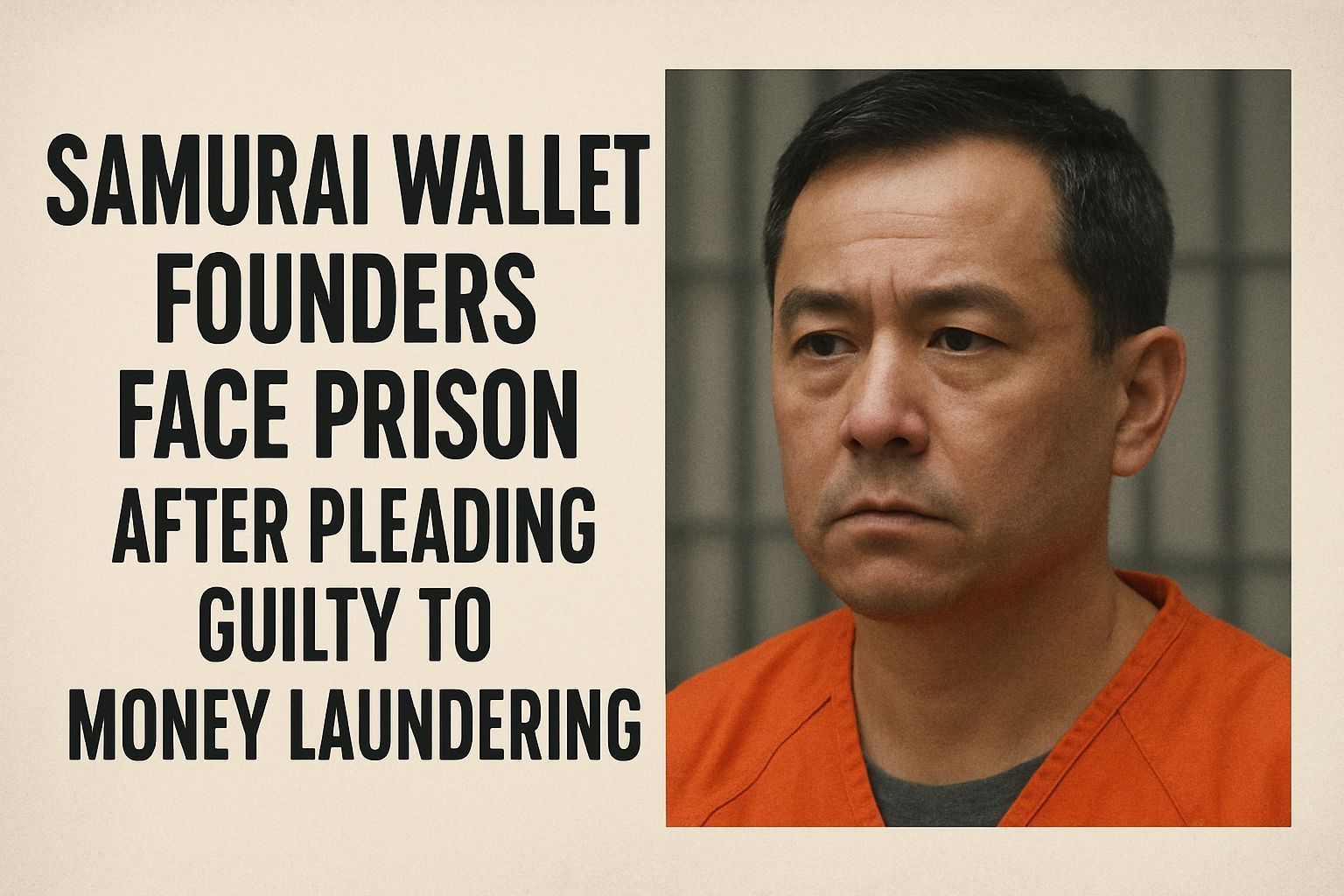
The story of the Samourai Wallet founders facing prison after pleading guilty to money laundering charges is more than just a courtroom drama-it’s a seismic event shaking the very foundations of the crypto world. Keonne Rodriguez and William Lonergan Hill, the brains behind one of the most privacy-focused Bitcoin wallets, are now at the center of a legal storm that could redefine how we think about financial privacy, open-source development, and the future of crypto regulation. As the U.S. government pushes for a maximum five-year sentence, the crypto community is left wondering: where do we draw the line between privacy and criminality?
If you’re an investor, a developer, or just someone who values financial freedom, this case is a wake-up call. The implications are far-reaching, and the stakes couldn’t be higher.
Key Takeaways:
Subscribe to our Social Media for Exclusive Crypto News and Insights 24/7!
- Samourai Wallet founders Keonne Rodriguez and William Lonergan Hill pleaded guilty to operating an unlicensed money transmission business and money laundering.
- U.S. prosecutors are seeking a maximum five-year prison sentence for both founders.
- Authorities claim the service laundered at least $237 million from 2015 to 2024, with fees totaling approximately 246.3 BTC (worth about $26.9 million).
- The case raises serious questions about the future of privacy tools in the crypto space.
- The sentencing is scheduled for November 6 and 7, 2025, in the Southern District of New York.
? The Rise and Fall of Samourai Wallet
Samourai Wallet wasn’t just another Bitcoin wallet. It was a beacon for those who believed in financial privacy and the right to transact without being watched. Launched in 2015 by Keonne Rodriguez and William Lonergan Hill, the wallet quickly gained a reputation for its advanced privacy features, most notably Whirlpool, a coin-mixing service designed to obscure transaction trails. Rodriguez once described Whirlpool as “like smelting gold”-you put your Bitcoin in, and it comes out in pieces that aren’t linked to the original source [4].
But what started as a tool for privacy soon attracted the attention of law enforcement. The U.S. Department of Justice alleged that the founders didn’t just create a privacy tool-they actively solicited criminal users on the dark web and marketed mixing as “Bitcoin money laundering” [1][2][3]. By 2024, Rodriguez and Hill were arrested, and in July 2025, they pleaded guilty to operating an unlicensed money transmission business and conspiracy to commit money laundering [4][5].
️ The Legal Case: What’s at Stake?

The prosecution’s case hinges on the idea that Samourai Wallet wasn’t just a byproduct of privacy-it was designed to facilitate money laundering from the start. According to the U.S. Attorney’s Office for the Southern District of New York, the service laundered at least $237 million between 2015 and 2024, with the founders collecting fees of about 246.3 BTC (worth around $26.9 million at current prices) [1][2][3]. The DOJ also claims that $100 million in illicit funds were laundered through the service [4].
The founders are now facing a maximum sentence of five years in prison under 18 U.S.C. §371, a law that covers conspiracy to defraud the United States [1][2][3]. Their sentencing is scheduled for November 6 and 7, 2025, and the outcome could set a precedent for how privacy tools are treated in the legal system.
? What This Means for the Crypto Market

This case is a turning point for the crypto industry. For years, privacy tools like Samourai Wallet have been a double-edged sword. On one hand, they protect users from surveillance and give people control over their financial data. On the other hand, they can be used for illicit activities, making them a target for regulators.
The prosecution of Rodriguez and Hill sends a clear message: privacy is no longer a shield against legal consequences. If you create a tool that can be used for money laundering, you could be held accountable-even if your intent was to protect privacy, not enable crime [4].
This could have a chilling effect on innovation in the crypto space. Developers may think twice before creating privacy-focused tools, fearing that they could be prosecuted if their software is misused. It also raises questions about the future of open-source development. If code can be treated as a criminal act, what does that mean for the principle of “code as speech”?
? Practical Tips for Investors and Users
If you’re an investor or user in the crypto space, here are a few things to keep in mind:
- Stay Informed: Keep up with regulatory developments. The legal landscape is changing fast, and what’s legal today could be illegal tomorrow.
- Diversify Your Holdings: Don’t put all your eggs in one basket. Spread your investments across different wallets, exchanges, and privacy tools.
- Use Reputable Services: Stick to well-known, regulated platforms whenever possible. While privacy is important, so is compliance.
- Be Cautious with Privacy Tools: Privacy tools can be powerful, but they can also attract unwanted attention from regulators. Use them wisely and understand the risks.
? Personal Insights: Privacy vs. Regulation
As a crypto analyst, I’ve always believed in the power of privacy. In a world where our every move is tracked, tools like Samourai Wallet are essential for protecting our financial freedom. But this case is a reminder that privacy comes with responsibility. If we want to keep these tools alive, we need to make sure they’re used for good, not for crime.
The prosecution of Rodriguez and Hill is a wake-up call for the entire crypto community. It’s not enough to create privacy tools-we also need to educate users about the risks and ensure that our software isn’t being used for illicit activities. Otherwise, we risk losing the very freedoms we’re trying to protect.
? The Bigger Picture: What’s Next for Crypto?
The Samourai Wallet case is just the beginning. As governments around the world crack down on crypto, we can expect more cases like this in the future. The question is: how will the industry respond?
Will we see a wave of innovation in privacy tools, or will developers retreat to safer, more regulated platforms? Will users demand more transparency and accountability from the tools they use, or will they continue to prioritize privacy above all else?
These are the questions that will shape the future of crypto. And as an investor, it’s up to you to decide where you stand.
? Final Thoughts: Where Do We Go From Here?
The story of Samourai Wallet is a cautionary tale about the risks and rewards of privacy in the digital age. As the founders face prison, the crypto community is left to grapple with the consequences of their actions. Will this case lead to a crackdown on privacy tools, or will it spark a new wave of innovation in the space?
One thing is clear: the fight for financial privacy is far from over. And as the legal landscape continues to evolve, we all need to stay informed, stay cautious, and stay committed to the principles that made crypto great in the first place.
? What’s Your Take?
Do you think privacy tools like Samourai Wallet should be protected, or should they be regulated like any other financial service? Where do you draw the line between privacy and criminality? Share your thoughts in the comments below.
Samourai Wallet founders face prison after pleading guilty to money laundering
Samourai Wallet money laundering charges
Samourai Wallet founders plead guilty
- https://www.chaincatcher.com/en/article/2217208
- https://www.binance.com/en/square/post/11-04-2025-samourai-wallet-founders-face-sentencing-for-money-laundering-charges-31918811302849
- https://www.therage.co/samourai-wallet-maximum-sentence/
- https://en.wikipedia.org/wiki/Keonne_Rodriguez
- https://www.justice.gov/usao-sdny/pr/founders-samourai-wallet-cryptocurrency-mixing-service-plead-guilty