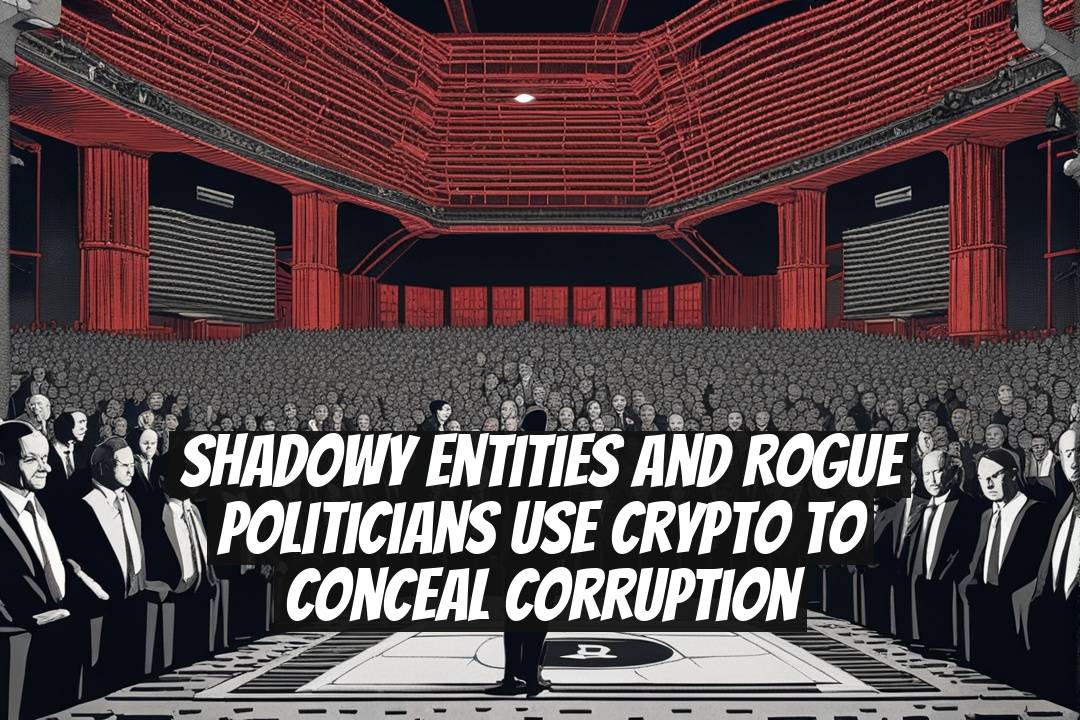
Shadowy Cartels in the Shadows: The Growing Menace of Crypto-Enabled Corruption ?
If you’ve ever watched a thriller where the villain hides his fortune in secret Swiss accounts, you’ll get a glimpse of how old-school corruption worked. Fast forward to today, and the plot has a digital twist: rogue politicians and shadowy entities are using cryptocurrencies to hide their tracks, moving illicit funds with the click of a button, and leaving traditional regulators scrambling behind the curve. The reality? The crypto market isn’t just a playground for tech enthusiasts-it’s increasingly a tool for the corrupt, a digital curtain behind which real-world scandals unfold[2][3].
This isn’t just theory-it’s happening right now. High-profile cases, recent law enforcement actions, and a flood of research all point to a troubling trend: crypto’s promise of privacy and decentralization is being exploited by those with power and bad intentions. But what does this mean for everyday investors, the integrity of the market, and the future of regulation? Let’s pull back the curtain-without the Hollywood special effects.
Key Takeaways ?
Subscribe to our Social Media for Exclusive Crypto News and Insights 24/7!
- Criminals and corrupt officials use crypto for obfuscating fund flows, money laundering, and concealing bribes.
- Regulators are playing catch-up, but recent crackdowns-like the FBI’s “Trojan Horse” crypto operation-show law enforcement is getting serious[1].
- Weak Know Your Customer (KYC) and Anti-Money Laundering (AML) policies at exchanges enable these schemes to flourish[4].
- Investors face risks from scams, manipulation, and regulatory backlash, but practical vigilance can help protect your assets.
- The crypto market’s maturity hinges on transparency, integrity, and public trust-threats that go far beyond price swings.
The Anatomy of Crypto-Enabled Corruption ?️️
Let’s start with the basics. Cryptocurrencies, by design, offer pseudonymity and cross-border ease. That’s great for privacy advocates and global commerce, but it’s a dream ticket for shadowy entities and rogue politicians looking to hide dirty money. These actors aren’t just random hackers in hoodies-they’re organized groups, corrupt officials, and even some “legitimate” businesses with less-than-clean hands.
Take the FBI’s undercover crypto operation as a recent example. In 2024, the feds created a fake token called NextFundAI to trap fraudulent actors, leading to arrests across borders and the seizure of over $25 million in crypto assets[1]. The operation exposed wash trading, insider manipulation, and the use of multiple wallets to create fake liquidity-a classic move for anyone looking to deceive investors and regulators alike. The irony? As soon as the FBI’s sting hit the news, a scammer launched an imposter token called “NexFund,” pumping and dumping it for a quick $127,000 payday within 24 hours[1]. If that doesn’t scream “Wild West,” I don’t know what does.
But the FBI’s action is just one piece. The Parity Wallet hacks, OneCoin Ponzi scheme, and the BTC-e exchange scandal are other real-world examples of how crypto’s privacy features have been weaponized for illicit gains[2][3]. Even NFTs, those trendy digital collectibles, are increasingly used for wash trading and money laundering, thanks to the anonymity of blockchain transactions[2]. It’s like watching a magician’s sleight of hand-except the disappearing act involves real money, and the audience is everyone invested in crypto’s future.
How Does This Play Out in the Real World? ?

So how do shadowy entities and rogue politicians actually use crypto to conceal corruption? They follow a playbook refined by years of financial crime, but with a digital twist:
- Step 1: Obfuscate the Source - Illicit funds are moved into intermediary services like mixers, darknet markets, or DeFi protocols, where tracing becomes exponentially harder[4].
- Step 2: Swap and Swirl - Funds are swapped between different cryptocurrencies, split across wallets, and sometimes even cycled through legitimate-looking ICOs or NFT projects[4].
- Step 3: Cash Out - Finally, the “clean” crypto is converted into fiat via exchanges with weak KYC/AML-often in jurisdictions where oversight is minimal[4].
- Step 4: Repeat - The process is repeated, layered, and sometimes even automated, making forensic tracing a nightmare for law enforcement.
What’s scary is that this isn’t just small-time scammers. Europol’s Spotlight Report highlights how organized crime groups and even state actors use these methods to move billions, with some exchanges processing $4 billion in illicit funds before being shut down[3]. The scale is mind-boggling, and the stakes for the crypto market are existential.
What This Means for the Crypto Market ?

If you’re an investor, developer, or just a curious bystander, you might be wondering: So what? How does this affect me? The answer isn’t just about headlines and handwringing. It’s about the foundations of trust, adoption, and regulation.
Market Manipulation and Scams

When shadowy entities manipulate prices, launch pump-and-dump schemes, or fake their own liquidity, they’re not just stealing from a few suckers-they’re poisoning the well for everyone. High-profile busts like the FBI’s sting on Gotbit and Saitama LLC show how deep the rot can go, with executives arrested and billions in fake valuations exposed[1]. The result? Investor confidence takes a hit, and the “crypto is a scam” narrative gains ground.
Regulatory Backlash
Every time a scandal breaks, regulators sharpen their knives. The EU, US, and other jurisdictions are ramping up KYC/AML requirements, targeting privacy coins, and even considering outright bans on certain crypto activities[3][4]. While some regulation is necessary for legitimacy, overreach could stifle innovation and push honest players into the shadows.
Reputation Risk
Let’s face it-crypto still has an image problem. For every legitimate project, there’s a headline about a rug pull, a hacked exchange, or a politician caught with their hands in the digital cookie jar. This reputational risk isn’t just bad PR; it’s a barrier to mainstream adoption, institutional investment, and even the development of real-world use cases.
Practical Tips for Investors: Stay Safe in the Shadows ?️
So what can you do to protect yourself as an investor? Here are some practical, no-BS tips to navigate these murky waters:
- Research, Research, Research - Don’t just FOMO into the next hot token. Look into the team, the project’s goals, and its compliance with regulatory standards.
- Beware of Too-Good-To-Be-True Promises - If a project claims insane returns with zero risk, run. Fast.
- Stick to Reputable Exchanges - Platforms with strong KYC/AML policies are less likely to be involved in shady business[4].
- Watch for Signs of Manipulation - Sudden, unexplained price spikes, fake trading volumes, and anonymous teams are red flags.
- Keep Up with News - Stay informed about regulatory changes, enforcement actions, and emerging scams. The crypto world moves fast, and ignorance isn’t bliss.
Personal Insights as a Crypto Analyst ?
As someone who’s watched this market evolve (sometimes with joy, sometimes with facepalms), I believe crypto’s biggest threat isn’t price volatility-it’s the loss of public trust. Every time a shadowy entity or rogue politician uses crypto to hide corruption, it’s a setback for everyone trying to build a better financial system.
But here’s the silver lining: The more transparent and accountable the crypto industry becomes, the harder it is for bad actors to operate. Projects that embrace openness, work with regulators, and prioritize user protection aren’t just doing the right thing-they’re securing their own future.
Final Thoughts: Where Do We Go From Here? ?
We’re at a crossroads. Crypto can either become a force for transparency and innovation, or a Wild West for the world’s worst actors. The choice isn’t just up to regulators or law enforcement-it’s up to all of us in the crypto community.
So here’s a question to leave you with: Are we willing to demand and build the kind of integrity that makes crypto a trusted part of the global economy, or will we let the shadows keep growing?
Keyphrase Links:
shadowy entities
rogue politicians
crypto conceal corruption
Source links:
- https://www.trmlabs.com/resources/blog/fbi-creates-token-project-in-trojan-horse-crypto-operation-that-seizes-25-million
- https://en.wikipedia.org/wiki/Cryptocurrency_and_crime
- https://www.europol.europa.eu/cms/sites/default/files/documents/Europol%20Spotlight%20-%20Cryptocurrencies%20-%20Tracing%20the%20evolution%20of%20criminal%20finances.pdf
- https://www.sanctions.io/blog/how-illicit-actors-launder-money-through-crypto-exchanges