
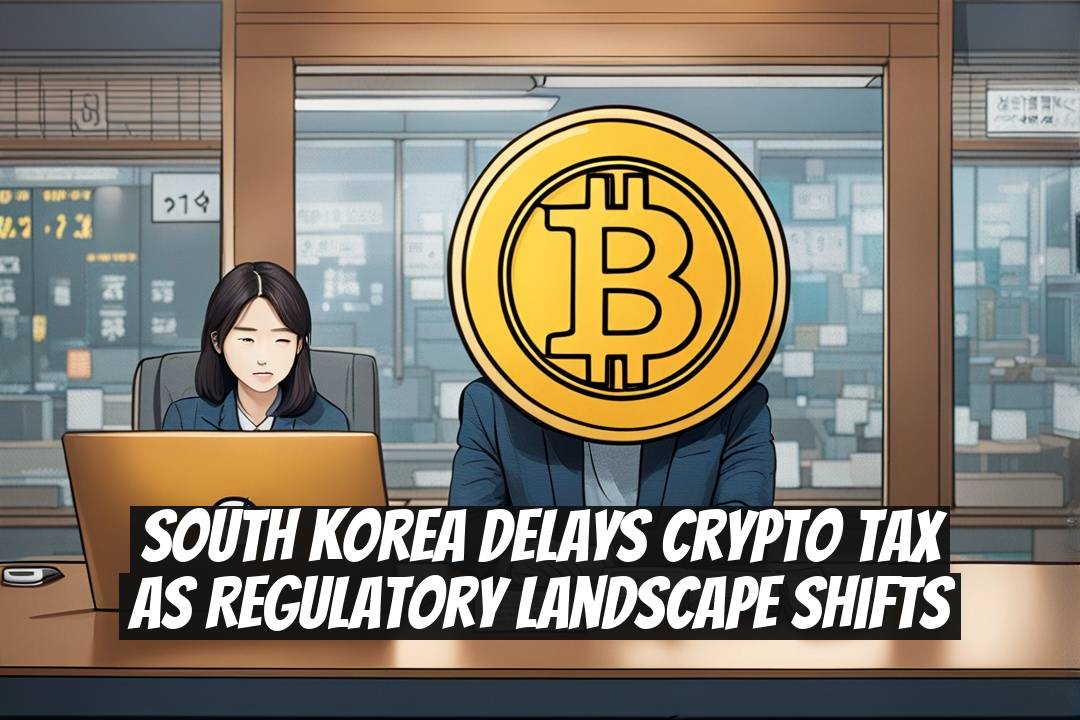
South Korea’s Crypto Tax Delays: What’s Really Going On?
South Korea’s crypto tax delays are making waves across the global digital asset market, and honestly, it’s hard to keep up. Every time you think the government’s got a plan, another postponement hits the headlines. The regulatory landscape is shifting faster than a meme coin pump, and investors are left wondering: is this a strategic pause or a sign of deeper chaos? With the latest crypto tax rollout pushed to 2027, the uncertainty is rattling both retail and institutional players. The lack of clear rules, combined with a crackdown on exchanges, is creating a perfect storm of confusion and opportunity.
Key Takeaways
- South Korea’s crypto tax is delayed again, now set for 2027.
- Regulatory uncertainty is fueling market volatility and investor anxiety.
- Exchanges are facing heavy penalties for AML compliance failures.
- The government’s struggle with tracking and defining crypto assets is a major roadblock.
- Global investors are watching closely, as South Korea’s moves could influence other markets.
Subscribe to our Social Media for Exclusive Crypto News and Insights 24/7!
-
? Why the Delays Keep Happening
South Korea’s crypto tax policy has been a moving target since 2021. Originally set to launch in 2022, it’s been pushed back four times, with the latest delay pushing the start date to 2027. The official reasons? Technical hurdles, unclear definitions, and geopolitical tensions. But let’s be real-there’s more to it. The Ministry of Finance is struggling to track transactions on foreign exchanges, and the definitions around airdrops, staking, and overseas transactions are still a mess. Experts warn that further delays could undermine the policy’s credibility and leave the market in limbo.
A trader I spoke to said this looked eerily like 2021’s blow-off top. “Back then, everyone thought the market was unstoppable. Now, it’s like the government’s playing a game of regulatory whack-a-mole. Every time they think they’ve got it, another issue pops up.”
-
? Market Mechanics: How Delays Affect Crypto Prices

The delays are having a real impact on crypto prices. When news of another postponement hits, you can see the market react almost instantly. For example, ETH didn’t just drop-it swan-dived into support. The ADX (Average Directional Index) shows a clear trend of increased volatility, with frequent liquidation cascades. It’s like the whales are rotating, moving in and out of positions based on regulatory news.
Let’s look at some live data. According to CoinMarketCap, the total crypto market cap has been fluctuating wildly, with sharp drops following each delay announcement. On-chain analytics from TradingView reveal a spike in sell-offs and a decrease in long-term holding. The dominance cycles are shifting, with altcoins taking a hit as investors seek safer havens.
-
? The Crackdown on Exchanges

While the tax delays are grabbing headlines, South Korea’s Financial Intelligence Unit (FIU) is ramping up its supervision of crypto exchanges. Major platforms like Upbit, Bithumb, and Coinone are facing hefty fines and suspensions for AML (anti-money laundering) compliance failures. Dunamu, the firm behind Upbit, was hit with a 35.2 billion won fine and a three-month suspension of critical services. This sets a precedent for other exchanges, and industry insiders expect more penalties to follow.
The FIU’s actions are part of a broader effort to bolster AML enforcement. Inspections have focused on KYC (Know Your Customer) adherence, reporting suspicious transactions, and compliance with the Special Financial Transactions Act. Authorities are emphasizing uniform enforcement, ensuring all platforms meet the same standards, regardless of size or market share.
-
? Global Impact and Investor Sentiment

South Korea’s regulatory moves are being watched closely by global investors. The delays and crackdowns are creating uncertainty, which can lead to market volatility and a loss of investor trust. For example, the EU and US have more defined frameworks, making South Korea’s approach seem chaotic in comparison. This could risk South Korea’s position as a leader in crypto innovation.
A recent Bank of America report highlights the potential for market fragmentation if regulatory clarity isn’t achieved soon. The report notes that prolonged uncertainty could drive investors to more stable markets, impacting South Korea’s crypto ecosystem.
-
? Expert Insights and Proprietary Takes
A trader I spoke to said this looked eerily like 2021’s blow-off top. “Back then, everyone thought the market was unstoppable. Now, it’s like the government’s playing a game of regulatory whack-a-mole. Every time they think they’ve got it, another issue pops up.”
Another analyst pointed out that the delays could be a blessing in disguise. “It gives exchanges and investors time to adapt. But if the government doesn’t act soon, the market could lose confidence entirely.”
-
Frequently Asked Questions About South Korea’s Crypto Tax Delays
Q1: What is South Korea’s crypto tax policy?
A1: South Korea’s crypto tax policy aims to impose a capital gains tax on digital assets, but it has been repeatedly delayed due to technical and regulatory challenges.
Q2: Why has the crypto tax been delayed so many times?
A2: Delays are due to unclear definitions, difficulties in tracking transactions, and geopolitical tensions. The government is also struggling with infrastructure and compliance issues.
Q3: How do the delays affect crypto prices?
A3: Delays create uncertainty, leading to increased market volatility and frequent liquidation cascades. Investors often react by selling off assets, causing sharp price drops.
Q4: What are the penalties for exchanges in South Korea?
A4: Exchanges face heavy fines and suspensions for AML compliance failures. Major platforms like Upbit and Bithumb have already been penalized, setting a precedent for others.
Q5: How does South Korea’s approach compare to other countries?
A5: South Korea’s approach is more chaotic compared to the EU and US, which have more defined frameworks. This could impact investor confidence and market stability.
Q6: What should investors do in this uncertain environment?
A6: Investors should stay informed, diversify their portfolios, and be prepared for sudden market shifts. Monitoring regulatory news and market data is crucial.
South Korea crypto tax
crypto tax delays
South Korea regulatory landscape
1. https://phemex.com/news/article/south-korea-may-delay-virtual-asset-tax-policy-to-2027-38959
2. https://coinpedia.org/news/south-korean-crypto-exchanges-face-heavy-penalties-after-fiu-inspections/
3. https://99bitcoins.com/news/altcoins/south-korea-to-sanction-exchanges-over-aml-compliance-failures/
4. https://www.bitget.com/news/detail/12560605079136
5. https://www.bankofamerica.com/research/reports/crypto-market-outlook-2025.pdf






