
From Crackdown to Green Light: Korea’s Crypto Mood Swing
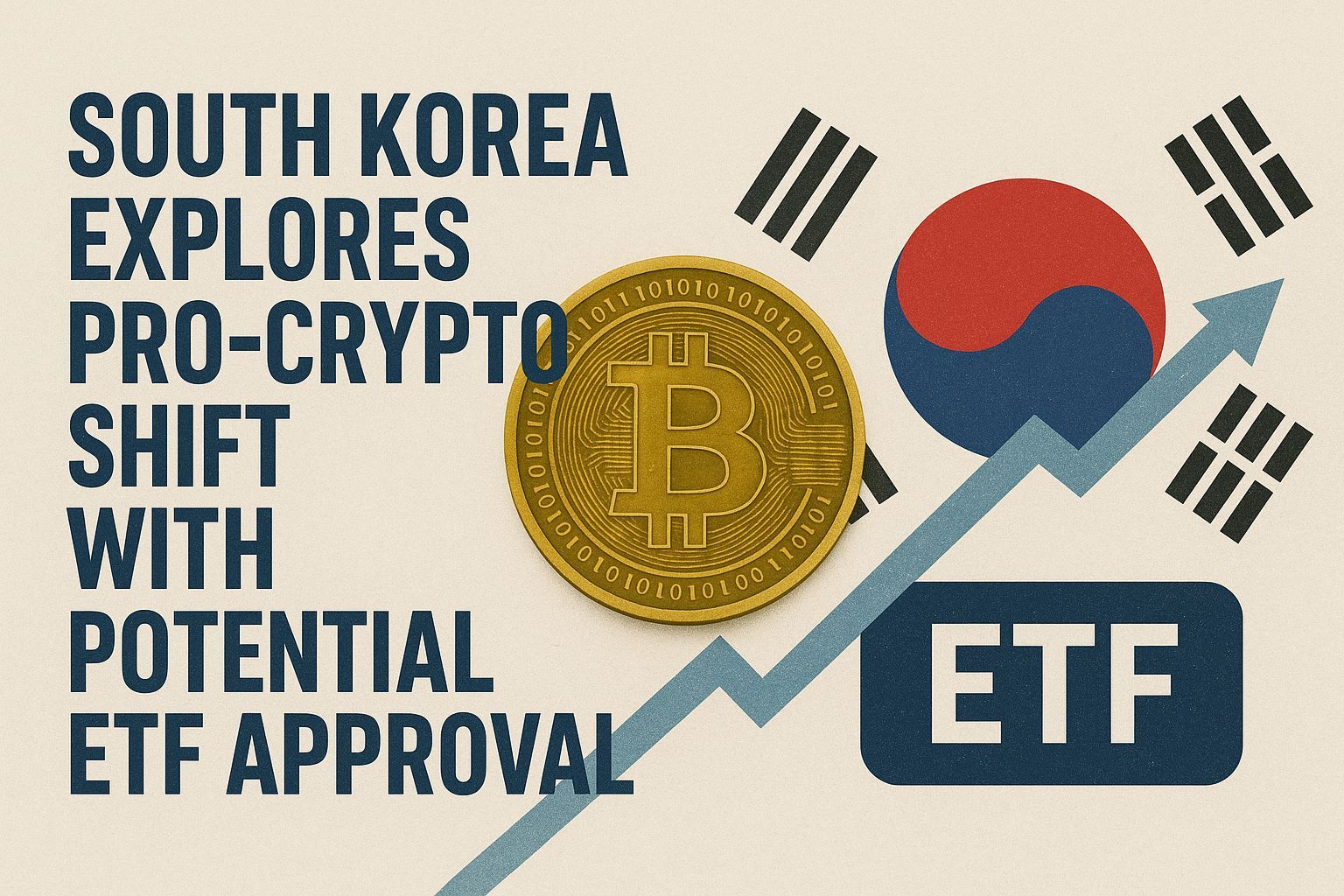
South Korea’s exploring a pro-crypto shift with potential ETF approval, and this isn’t just another headline - it’s a structural pivot baked into its official 2026 Economic Growth Strategy, pairing spot Bitcoin and crypto ETF plans with strict stablecoin regulation and blockchain-based government payments.[2][3][4] This is the first time Seoul is clearly signaling that crypto isn’t just something to clamp down on after Terra - it’s something to integrate into mainstream finance.[2][3]
Key Takeaways - Why This Korea ETF Story Actually Matters
- Spot Bitcoin and broader crypto ETFs are now on the roadmap, with domestic access expected in the 2025-2026 window depending on how fast regulators finalize rules.[1][2][3][5]
- FSC’s “Digital Asset Phase 2” legislation will bring a MiCA-style regime for stablecoins: 100% reserve backing, licensing, and redemption rights.[2][3][4]
- The shift is partly about keeping Korean capital onshore and competing with Hong Kong, Singapore, and the US as ETF hubs.[1][3][4][5]
- The government is positioning crypto and blockchain as core tools of fiscal policy and payments, not just speculative assets.[2][3][4]
- For markets, this sets up a classic “policy catalyst” narrative: regulatory clarity, new institutional flows, and potential dominance shifts once products list.
Subscribe to our Social Media for Exclusive Crypto News and Insights 24/7!
So What Exactly Is Korea Planning?
1. Spot crypto ETFs are moving from “no way” to “when, not if.”
Until recently, Korean law simply didn’t recognize Bitcoin or Bitcoin ETFs as eligible underlying assets, which made spot products a non-starter.[3][4] That’s now being reversed through amendments tied to the 2026 Economic Growth Strategy, with regulators explicitly targeting domestic spot digital asset ETFs.[2][3][4][5]
- The Financial Services Commission (FSC) has been tasked with opening the door for spot Bitcoin and broader digital asset ETFs, coordinated under that strategy.[2][3][4]
- One analysis notes that the first South Korean crypto ETFs could launch around 2026, once the legal and infrastructure framework is baked in.[1]
Bitcoin-focused outlets frame it bluntly: South Korea is preparing to approve spot Bitcoin ETFs as a deliberate policy shift, pairing regulated market access with tighter oversight of the rest of the digital asset stack.[3]
2. Stablecoins are getting the “too important to be sloppy” treatment.
The ETF push is not happening in isolation. It’s tied to “Digital Asset Phase 2” - a legislation package focused on stablecoins and market structure.[2][3][4]
Key elements:[2][3][4]
- Licensing system for stablecoin issuers.
- Minimum capital requirements and 100% reserve backing of outstanding tokens.
- Legal redemption rights for users.
- Oversight of cross-border stablecoin flows, especially for trade and remittances.
This is very clearly post-Terra policy design. Regulators repeatedly reference the 2022 Terra-Luna collapse, which wiped out roughly $40 billion, hit Korean retail hard, and exposed how unregulated “yield plus algorithm” can wreck an entire investor base.[3]
A market commentator in one report even called this shift “the first time the government has officially recognized virtual assets as legitimate financial and fiscal instruments rather than just speculative chips.”[2] That’s a big statement in a country where the Terra saga is still fresh in political memory.
Why Korea’s ETF Pivot Is a Big Deal for Market Structure
Let’s zoom out. What does a Korea spot Bitcoin / crypto ETF actually change in the real world?
1. Onshore vs offshore capital flows
Until now, Korean investors who wanted ETF-style BTC exposure had to look offshore. That often meant:[1][3]
- Foreign ETFs listed in the US or Hong Kong.
- Using offshore exchanges, often unregulated from a Korean legal standpoint.
By opening domestic spot ETFs, regulators are basically saying:
“Trade it here, in our market, under our surveillance - not out there.”
One analysis notes that this is partly about reducing capital outflows and pulling volume back onto Korean rails.[1][3] In other words:
- Less money leaking to offshore platforms.
- More fees, spreads, and liquidity retained in Korea Exchange (KRX) and local broker channels.[1]
The KRX has already signaled it’s ready to list crypto-backed ETFs and derivatives once the rules are finalized.[1] That’s your tell. Infrastructure’s waiting; regulation is the gating item.
2. Competing with Hong Kong, Singapore, and the US
Korea’s move is very explicitly benchmarked against:
- US spot BTC ETFs approved in Jan 2024 and ETH in July 2024.[5]
- Hong Kong spot BTC/ETH ETFs and later altcoin products like Solana, approved in 2024-2025.[5]
Reports stress that Seoul is looking directly at those markets as reference points for its own ETF design and regulatory guardrails.[4][5]
The strategic pitch is simple:[1][2][3][4][5]
- Hong Kong and Singapore are courting global capital with institutional-grade crypto infrastructure.
- Korea’s counter is: a huge, tech-savvy domestic market, established fintech infrastructure, and increasingly agile regulation.
If you’re an asset manager, this is catnip:
- Big retail base.
- Strong local trading culture.
- New regulated crypto rails that can slot cleanly next to equities / fixed income products on local broker platforms.
Institutional Money: From Zero to “Okay, Let’s Talk”

Reports consistently highlight one theme: institutional adoption.[1][2][3][4]
Analysts expect ETF approval to unlock:
- Pension funds dipping a toe via regulated products.[2]
- Corporate treasuries that want BTC/crypto exposure without touching exchanges or wallets.[2]
- Wealth managers bundling ETFs into balanced portfolios.
One article notes that spot ETFs in the US and Hong Kong have already pulled in billions of dollars of inflows, and Korea wants a slice of that.[3][5]
The logic is familiar:
- Institutions don’t want private keys.
- They don’t want exchange counterparty risk.
- They do want exposure to BTC and other majors as “digital gold” or high-beta macro assets.
Spot ETFs give them exactly that - and Korean regulators know it.
Risk Management After Terra: Korea’s New “Never Again” Doctrine

You can’t understand Korea’s ETF story without revisiting Terra-Luna.
In 2022, Terra’s collapse triggered roughly $40 billion in value destruction, and it wasn’t some abstract overseas thing - it was a Korean-born project with massive domestic exposure.[3]
Policy reaction today is clearly guided by that trauma:[3][4]
- Strict reserve requirements for stablecoins.
- Required redemption guarantees.
- Issuer licensing and capital buffers.
- Cross-border oversight to prevent systemic bleed via stablecoin rails.
At the same time, this new framework is being paired with blockchain-based government payment pilots, including:
- Deposit tokens (blockchain versions of bank deposits) linked to parts of the national treasury by around 2030.[4]
- Amendments to the Bank of Korea Act and National Treasury / National Bank management laws to support tokenized payments and settlements.[3][4]
So you’ve got a two-track message:
- “We’ll let you trade Bitcoin in an ETF.”
- “But we’re also building state-grade digital rails - and we’re doing it with strict rules, not vibes.”
Market Mechanics: What Could This Do to BTC & Crypto Cycles?
Let’s talk market structure rather than just headlines.
1. ETF flows and BTC dominance
When US spot BTC ETFs went live in 2024, they reshaped flows: heavy spot demand, significant increase in BTC dominance, and a new cohort of “slow money” buyers. Korea doesn’t have the same scale as the US, but:
- Korean retail has historically been hyper-active in alts, driving big moves in previous cycles (think “Kimchi premium” years).
- Introducing a regulated BTC ETF could channel a chunk of that speculative energy into a more “blue-chip” structure.
Analysts cited in coverage expect ETF approvals to “accelerate institutional participation”, including pension funds and corporates.[2] That kind of flow typically:
- Supports BTC dominance in early phases.
- Pulls in correlated demand for ETH and large caps once BTC sets the tone.
2. Leverage, volatility, and liquidation dynamics
Here’s where things get interesting:
- A regulated spot ETF is unlevered by design.
- But ETF inflows can fuel bullish sentiment, which in turn often pushes derivatives traders to crank up leverage on offshore venues.
You’ve seen this movie:
- Strong ETF inflows → narrative of “institutional wave” → funding rates spike → excessive leverage.
- Then: a sharp correction, liquidation cascades, and derivatives open interest gets flushed.
Korea’s domestic ETF might reduce onshore exchange degen behavior, but it won’t magically stop Korean traders from using offshore perpetuals. In fact, a solid domestic BTC trend could become a signal that leverage monkeys chase on global futures markets.
3. ADX, trend strength, and policy catalysts
When new ETFs launch in a market, you often see:
- Rising Average Directional Index (ADX) on daily / weekly BTC charts as trends strengthen.
- Strong directional price action as spot inflows outpace natural sell-side liquidity.
If Korea’s ETFs roll out in lockstep with global risk-on behavior, you can imagine:
- A classic “policy plus liquidity” trend, where ADX climbs while BTC grinds up on higher timeframes.
- Local news flow (e.g., KRX listing the first Bitcoin ETF) acting as additional short-term volatility catalysts.
None of this guarantees upside - but it creates a structure where sustained trend moves are more likely than in a purely retail, purely offshore environment.
How Korea Compares to Hong Kong and Singapore
Let’s break it down simply:
| Market | Status of Crypto Spot ETFs | Strategic Angle |
|---|---|---|
| United States | Spot BTC & ETH ETFs active since 2024 | Global liquidity hub, institutional benchmark |
| Hong Kong | Spot BTC, ETH, and later altcoin ETFs (incl. SOL) by 2025[5] | Bridge for China-adjacent and global capital |
| Singapore | More cautious on retail, strong institutional / infrastructure stance | Focus on regulated institutions and custody |
| South Korea | Planning spot digital asset ETFs as part of 2026 Economic Growth Strategy[1][2][3][4][5] | Deep domestic market, aggressive fintech, post-Terra rebuild |
One report emphasizes that while Hong Kong and Singapore focus on institutional-grade infrastructure, Korea’s edge is its tech-heavy domestic base and regulatory agility.[1]
It’s almost like:
- Hong Kong is pitching: “We’re your international gateway.”
- Singapore is pitching: “We’re your clean, institutional sandbox.”
- Korea is pitching: “We’ve got the traders, the tech, and now the rules - plug in.”
Retail Psychology: From Terra Trauma to Regulated Exposure
There’s a big psychological undercurrent to all this.
After Terra, Korean retail got burned hard. Many retail investors watched their savings evaporate in days. Regulators were dragged into the spotlight. That pain is driving today’s more structured, ETF-and-stablecoin-focused approach.[3][4]
One analyst comment in coverage basically captures the mood:
This is the first time Seoul is explicitly treating virtual assets as legitimate financial tools rather than just speculative hotspots.[2]
That’s subtle but huge. It reshapes how:[2][3]
- Banks talk about digital assets to clients.
- Treasury officials think about blockchain in public finance.
- Regulators justify allowing crypto rails at all.
For a Korean retail trader who sat through Terra, the message is:
- “We’re not banning this.”
- “We’re not letting another unregulated collapse slide either.”
- “If you want exposure, do it through structures we can supervise.”
What Should a Savvy Investor Be Watching Next?
If you’re thinking about how to trade or position around this trend, here’s what matters most from the sources:
- Legislative milestones
- Watch the progress of Digital Asset Phase 2 and Capital Markets Act amendments that allow crypto as ETF underlyings.[1][2][3]
- KRX announcements
- Any formal signal about listing timelines or candidate ETF issuers would be a major sentiment catalyst.[1]
- Stablecoin framework details
- Implementation of 100% reserve rules and issuer licensing could alter how Korean exchanges and fintechs structure on/off ramps.[2][3][4]
- Institutional rhetoric
- Pensions, insurers, and large asset managers talking openly about crypto ETFs in Korea would confirm that this isn’t just regulatory theater.
From a broader strategy point of view:
- A Korea ETF launch window around 2026 lines up with where many macro and crypto analysts expect the next major cycle or post-halving expansion to be maturing.[1][3][5]
- That means Korea’s move might not start the cycle - but it could extend it, provide fresh spot demand, and keep volatility alive while other catalysts fade.
Final Thought
Korea going from “Terra caution” to exploring a pro-crypto, ETF-enabled future is more than a local story. It’s another piece in the puzzle of crypto’s slow absorption into global capital markets - one region at a time, each with its trauma, rules, and angle.
If you’re tracking structural drivers, you don’t ignore:
- A G20 economy
- With a hyper-engaged retail base
- A history of driving altcoin manias
- And now, a roadmap to spot Bitcoin and crypto ETFs, fully wired into its official economic strategy.[1][2][3][4][5]
The whales ain’t sleeping, fam. They’re rotating - and increasingly, they’re doing it through regulated, headline-friendly wrappers.
South Korea crypto ETF
Bitcoin spot ETF
stablecoin regulation
- https://www.ainvest.com/news/south-korea-emerging-crypto-etf-market-investor-timing-strategic-positioning-asia-fintech-frontier-2601/
- https://www.kucoin.com/news/flash/south-korea-to-finalize-stablecoin-laws-in-q1-2026-and-approve-spot-crypto-etfs
- https://bitcoinmagazine.com/news/south-korea-to-approve-spot-bitcoin-etfs
- https://www.mexc.com/en-NG/news/443345
- https://bitcoinist.com/south-korea-bitcoin-spot-etf-targets-2026-rollout/
- https://www.cryptopolitan.com/south-korea-to-approve-spot-bitcoin-etfs/






