White House Stablecoin Talks: How Regulators and Crypto Industry Are Finally Getting on the Same Page
The Regulatory Thaw Nobody Expected
Here’s what’s happening: the White House, crypto industry leaders, and banking regulators are actually talking to each other. And not in that tense, gotcha-filled way you’ve grown used to. This shift signals something genuinely significant-the US stablecoin regulatory framework is moving from theory into live practice, and 2026 is shaping up to be the year everything changes[1].
The bipartisan passage of the GENIUS Act back in July 2025 planted the flag. But here’s where it gets interesting: the real work happens now. We’re not dealing with abstract policy anymore. We’re talking implementation, rulemaking timelines, and the actual mechanics of how stablecoins operate within a federally sanctioned framework[1][2].
Subscribe to our Social Media for Exclusive Crypto News and Insights 24/7!
Key Takeaways: Why This Moment Matters
- July 18, 2026 deadline: Federal agencies must publish implementing rules for US dollar-backed stablecoin issuers. Regulations go live six months later, by January 18, 2027[1].
- The stablecoin rewards standoff: Banks want to close the “loophole” allowing issuers to pay yield. The crypto industry is fighting to keep it. The White House is brokering conversations[4].
- Global implications are massive: US regulation becomes the template. What America does shapes how Europe, the Middle East, and Asia-Pacific develop their own frameworks[1].
- 100% reserve backing is mandatory: No fractional reserves. Stablecoins must be backed by US dollars or short-term Treasuries, with monthly public disclosures[2].
The Stablecoin Yield Wars: Banks vs. Crypto, and Why It Actually Matters
Let’s be real: this isn’t just regulatory theater. There’s a genuine economic turf war brewing here.
Banks are panicking. They’re concerned-legitimately-that if stablecoin issuers can offer yield (think: interest-bearing stablecoins), it’ll siphon deposits out of traditional banking. So they’re pushing hard for regulators to close what they call the “yield loophole.”[5]
The crypto industry? They’re not backing down. They see stablecoin yields as a core feature that makes their products competitive. And they’ve got a point-if you’re holding a stablecoin for liquidity, earning a little something beats earning nothing[3].
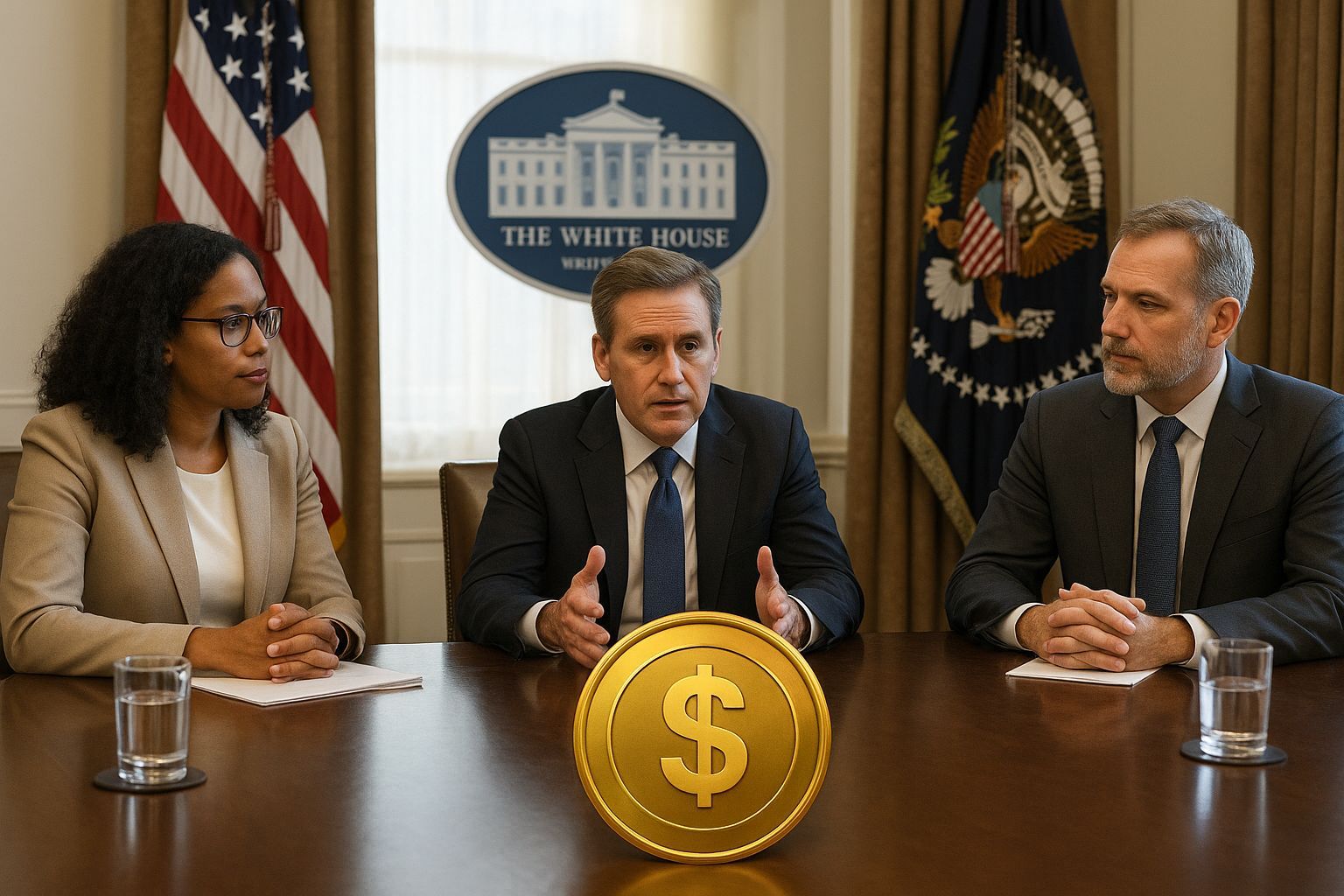
Here’s the thing: the White House is actually mediating this. In December 2025, the Blockchain Association met with administration officials to work through the rewards issue. This wasn’t a rubber-stamp meeting. This was actual negotiation-the kind where both sides show up expecting to give ground[4].
The crypto industry’s CEO, Summer Mersinger, called it “an important step forward in finding solutions to deliver bipartisan digital asset market structure legislation.”[4] Translation: “We’re not getting everything we want, but we’re being heard.” That’s progress in the regulatory space.
The Reserve Requirement Reality Check

The GENIUS Act isn’t messing around on reserves. Here’s what’s actually required:
- 100% liquid asset backing: Every stablecoin in circulation must be backed dollar-for-dollar by US dollars or short-term Treasury securities[2].
- Public monthly disclosures: Issuers must publish the composition of their reserves every single month[2].
- Strict marketing rules: No claiming government backing. No saying it’s federally insured. No lying about stability. The FTC will be watching[2].
For stablecoin issuers, this is expensive. It means compliance infrastructure, audit trails, and constant monitoring. But here’s the kicker: it also means trust. If you’re holding a stablecoin compliant with the GENIUS Act, you know exactly what’s backing it[1][2].
From a broader market perspective, this drives massive demand for US Treasuries. Every stablecoin issued requires short-term Treasury purchases. That’s fuel for the US dollar’s role as the global reserve currency[2]. It’s not coincidental that the White House sees this as part of “ensuring U.S. Dollar Global Reserve Currency Status.”[2]
Timeline Compression: What’s Actually Happening in 2026

This is where things get real fast. The rulemaking calendar is packed:
By July 18, 2026: The Treasury Department, FDIC, OCC, Federal Reserve, and FinCEN must all publish implementing rules for payment stablecoin issuers[1][5]. This isn’t optional. This is congressionally mandated.
Already in motion: The FDIC approved a proposed rule in December 2025 for how state-chartered banks can issue stablecoins through subsidiaries[3]. The OCC is continuing to grant national trust banking charters to crypto firms[1]. The lines between traditional banking and crypto are getting blurry by design[1].
Financial Crime Compliance: FinCEN is clarifying anti-money laundering obligations. We’re talking Travel Rule compliance, transaction monitoring, and new methods for detecting illicit finance. Here’s the crucial part: these US standards will likely inform FATF guidance and shape how other countries develop their frameworks[1].
The Global Spillover Effect (And Why You Should Care)

Once American stablecoins go live in January 2027, watch what happens globally. Companies in Europe, Asia-Pacific, and the Middle East will immediately feel pressure to launch compliant alternatives. They can’t afford to let American issuers dominate[1].
But here’s what’s more important: US regulatory guidance becomes the template. Not because other countries will copy it exactly, but because it’ll be the most comprehensive, first-mover framework. When regulators in London, Singapore, or Dubai are building their own rules, they’ll be looking at what America did and asking, “How do we adapt this?”[1]
Financial crime compliance is where this gets most influential. The way FinCEN structures AML requirements for stablecoins? That ripples globally[1].
Market Structure Legislation: The Bigger Picture Still Moving
This isn’t just about stablecoins. The White House is pushing forward on broader crypto market structure legislation. There are conversations happening around:
- Spot crypto trading clarity: The CFTC is focused on this[5].
- Tokenized collateral in derivatives markets: Allowing crypto to serve as actual collateral[5].
- Tax clarity: Representative Max Miller filed the Parity Act in December 2025, which seeks to create de minimus exemptions for small transactions (so your $5 latte doesn’t trigger a taxable event) and prevent crypto lending from being treated as taxable sales[5].
Miller believes Congress could pass a version of the Parity Act “by hopefully next August.”[5] That’s aggressive, but it signals momentum.
What This Means for Banks and Traditional Finance
Here’s something that caught a lot of people off guard: banks aren’t getting excluded from stablecoin issuance. They’re actually dominant in the framework.
Only authorized subsidiaries of banks or OCC-licensed entities can issue payment stablecoins[3]. This isn’t a crypto free-for-all. It’s a regulated banking model applied to stablecoins. Big banks can enter this space. Startups can too, but they need OCC licensing.
That’s why you’re seeing major announcements from US financial institutions about crypto custody, stablecoin issuance, reserve management, and tokenization projects. The OCC is actively granting trust banking charters to crypto firms[1]. The barrier to entry isn’t zero, but it’s lower than traditional banking-and it’s clear.
The Bigger Strategic Play: Making America the “Crypto Capital”
This isn’t just regulation for regulation’s sake. There’s a stated strategic objective: positioning America as the global crypto leader[2][6].
President Trump’s administration installed industry-friendly regulators who’ve already dropped investigations into crypto companies and made it easier for banks to hold crypto[5]. The GENIUS Act was explicitly framed as part of delivering on the promise to make America the “crypto capital of the world.”[2]
That’s not rhetoric. That’s policy direction. When you look at the Federal government’s working group recommendations, the message is clear: “adopt a pro-innovation mindset toward digital assets and blockchain technologies.”[6]
What does that mean practically? More announcements from US companies entering the stablecoin space. More capital flowing into crypto infrastructure. More talent moving into regulated crypto roles. The ecosystem gets deeper, more connected to traditional finance, and harder for other countries to compete with.
The Unresolved Question: Stablecoin Rewards
Here’s where the story isn’t finished yet. The banks and crypto industry are still negotiating over whether stablecoins can pay rewards (yield).
Banks want an outright prohibition. They’re arguing for amendments to include stablecoin reward restrictions[3]. The crypto industry is lobbying hard against this, pointing out that affiliates or third parties could theoretically offer rewards even if issuers can’t[3].
This isn’t a minor detail. If yields are allowed, stablecoins become more competitive with bank deposits. If they’re prohibited, stablecoins remain purely transactional. The outcome shapes the entire commercial viability of the product.
The White House meeting in December signals they’re trying to find middle ground[4]. But that middle ground hasn’t been found yet. This is one of the “key remaining issues.”[4]
What Happens Next: The Real Timeline
Right now (February 2026): Agencies are conducting public consultations. The rulemaking process is live. Industry is submitting comments. Lobbying is happening. Banks and crypto firms are both making their cases[1].
By July 18, 2026: Implementing rules must be published. This is when the actual mechanism of stablecoin issuance becomes clear-the exact requirements, the capital rules, the compliance procedures[1].
January 18, 2027: Regulations take effect. The first compliant US dollar stablecoins issued under the GENIUS Act can go live[1].
August 2026 (targeted): The Parity Act could pass, providing tax clarity[5].
August 2026: The CFTC’s “crypto sprint” is expected to wrap, addressing spot crypto trading and blockchain technology integration[5].
The Analyst’s Take: Why This Matters for the Ecosystem
What’s genuinely interesting here is that the regulatory process isn’t being imposed on the crypto industry. It’s being negotiated with it. The White House is bringing stakeholders together to work through actual disagreements[4].
That’s different. That’s not how financial regulation typically works. Historically, regulators write rules and industry adapts. Here, there’s actual dialogue.
The consequence? By 2027, you’re likely to see major US financial institutions enter the stablecoin market with compliant offerings. This isn’t the Wild West anymore. It’s the banking sector with blockchain rails. That’s bullish for stablecoin adoption because trust increases dramatically. It’s also competitive pressure on existing stablecoins to meet the same standards or lose market share.
The global implications are massive. Once the US framework is live, every other jurisdiction has to ask: “Do we adopt similar rules, or do we stay ahead of them?”[1]
The yield standoff remains the most contentious issue. But the fact that stakeholders are talking rather than fighting through regulation is progress. The outcome will define whether stablecoins become a tool for payments only or a genuine alternative to traditional deposit accounts.
- https://www.elliptic.co/blog/elliptics-2026-regulatory-and-policy-outlook-us-sets-the-pace
- https://www.whitehouse.gov/fact-sheets/2025/07/fact-sheet-president-donald-j-trump-signs-genius-act-into-law/
- https://www.klgates.com/Crypto-in-2026-The-Democratization-of-Digital-Assets-1-29-2026
- https://theblockchainassociation.org/statement-on-todays-white-house-meeting-on-market-structure-legislation/
- https://www.dlnews.com/articles/regulation/key-dates-for-us-crypto-regulation-in-2026/
- https://www.whitehouse.gov/crypto/