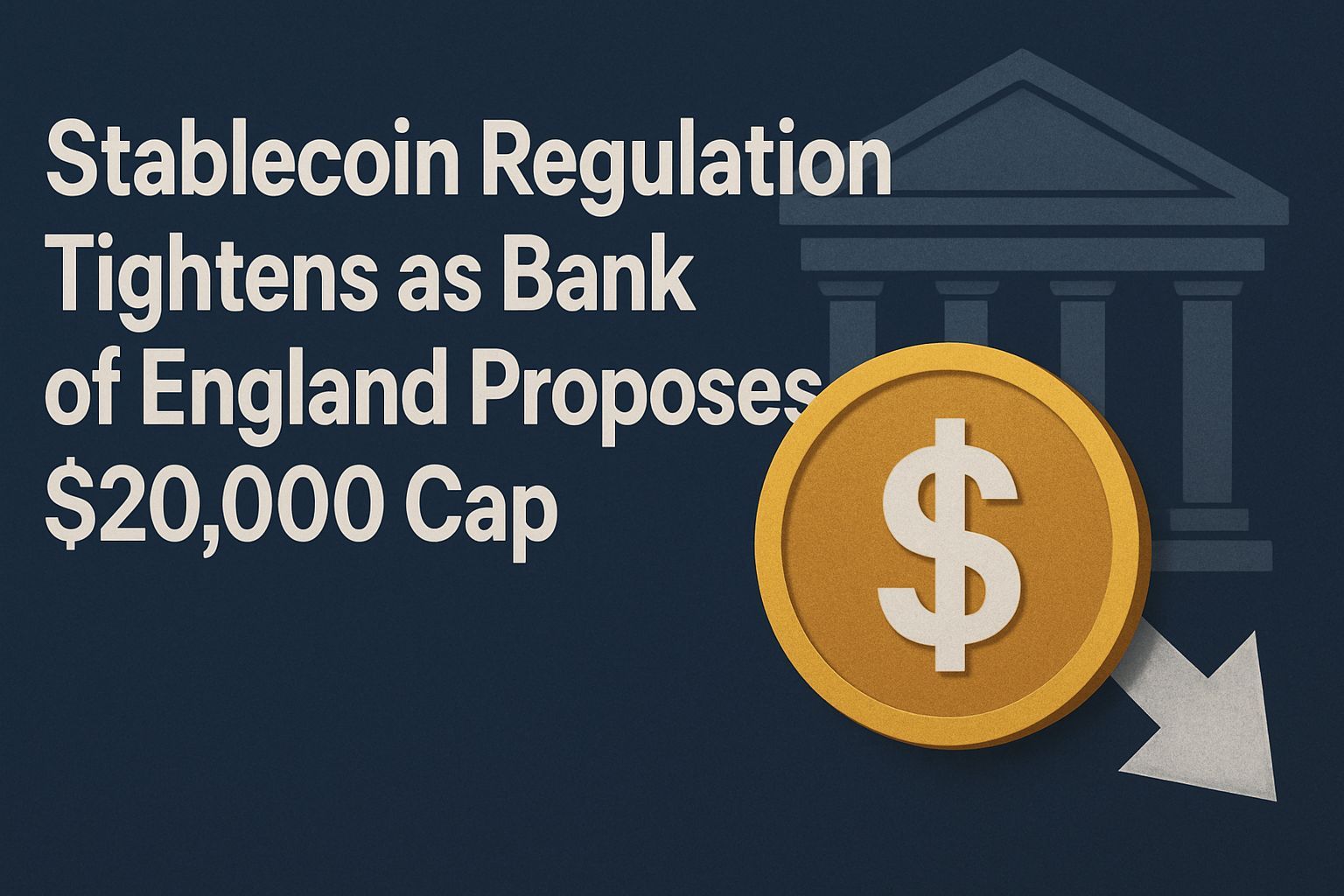
Could a £20,000 Cap on Stablecoins Be the Game-Changer Crypto Investors Didn’t See Coming?
If you’re diving into the crypto waters, especially stablecoins, recent moves by the Bank of England might just stop you mid-stroke. The Bank is proposing a £20,000 holding cap on sterling-denominated stablecoins, marking a significant tightening of stablecoin regulations in the UK. This is not just some regulatory tweak; it’s a pivotal moment shaping how crypto interacts with traditional markets and how investors should navigate this evolving landscape.
Key Takeaways: What You Need to Know About the Bank of England’s Stablecoin Cap
- The Bank of England proposes a £20,000 holding limit for individual investors on systemic sterling stablecoins.
- This move is part of a broader UK regulatory framework involving both the Bank of England (for prudential regulation) and the FCA (for conduct regulation).
- The cap aims to mitigate financial stability risks posed by systemic stablecoins, particularly during market stress events.
- The regulation targets "systemic stablecoins," those with a significant footprint capable of impacting the financial system.
- The Bank is also exploring how stablecoins could fit into wholesale financial markets and digital pound experiments.
- For investors, this means new limits on how much can be held, increasing the importance of diversification and compliance in crypto portfolios.
Subscribe to our Social Media for Exclusive Crypto News and Insights 24/7!
Let’s unpack why the Bank of England’s regulatory tightening isn’t just regulatory noise but a seismic shift with practical implications for you - the investor, the trader, or simply the crypto enthusiast trying to understand your next move.
? What’s Cooking at the Bank? Understanding the £20,000 Cap on Stablecoins
Stablecoins are digital assets pegged to fiat currencies like sterling, offering stability compared to the notorious volatility of cryptocurrencies like Bitcoin or Ethereum. However, their growing popularity, especially systemic stablecoins that could impact the wider financial system, has caught the Bank’s keen eye.
The proposed £20,000 cap limits individual holdings of sterling-denominated systemic stablecoins, a move designed to reduce systemic financial risks. Why? Because large-scale stablecoin holdings by individuals might, in a crisis, exacerbate bank runs or destabilize markets if too many convert to cash simultaneously.
The regulation emerges alongside the Bank and Financial Conduct Authority’s (FCA) joint framework that splits oversight - the Bank looks after prudential aspects (strength and safety of issuers), while FCA manages conduct (market fairness, consumer protection). This dual-guard approach aims at balancing innovation with security[1].
? Deep Dive: How Does This Affect the Crypto Market? Analyst Insights

From my vantage point as a crypto analyst, this cap is a double-edged sword.
On one hand, it adds a layer of safety for the financial ecosystem. By capping holdings, the Bank mitigates the risk of a sudden mass exodus from stablecoins back into fiat or bank deposits during turbulent times - a scenario which could ripple through the entire traditional financial system. It’s a preventative strike against potential contagion.
On the flip side, the cap may slow down the stellar growth of stablecoins as a mainstream crypto onramp in the UK. Investors accustomed to large allocations in stablecoins now have to rethink portfolio sizes and liquidity strategies. For high-net-worth and institutional investors, this means seeking alternative routes or diversifying into multiple stablecoins or other digital assets.
? Crunching the Numbers: What the Research Says About Adoption and Impact
The Bank’s analysis assumes around three systemic stablecoins with a 15% adoption rate, roughly equating to a £300 billion initial uptake before market stress. A reduced adoption rate could paradoxically increase volatility because lower pre-stress holdings can lead to sharper movements when confidence wanes.
Research also notes that stablecoins with backup access to the Bank of England’s lending facility (akin to a safety net) may see improved perceived safety. This safety net could soothe jittery investors but doesn’t eliminate the risks that prompted the cap in the first place.
Remember, this cap is specifically aimed at "systemic" stablecoins - those that can affect financial stability - not smaller, non-systemic crypto assets, which remain under FCA’s individual conduct rules[1].
? What Does This Mean for You as an Investor? Practical Tips to Navigate the Changes
Know Your Limits: Keep your stablecoin holdings below £20,000 if you’re trading or investing with sterling-denominated systemic stablecoins in the UK.
Diversify Your Crypto Portfolio: Don’t put all your eggs in one stablecoin basket. Spread allocations across different crypto assets to manage regulatory limits and reduce risk.
Stay Informed About Regulatory Updates: The crypto space is dynamic. Follow updates from the Bank of England and FCA to adjust your strategies preemptively.
Consider Alternative Stablecoins: Explore stablecoins issued in non-sterling currencies or non-systemic stablecoins, but be aware the FCA still regulates these for conduct.
Use Regulated Platforms: Stick with exchanges and custodians compliant with UK rules to avoid unexpected freezes or compliance headaches.
? Crypto Investors, Let’s Talk Emotions: Why This Regulation Might Feel Like a Blow, But Could Be a Blessing
I get it - hearing about a £20,000 cap feels like a leash on your crypto freedom. You may feel squeezed, worried about missing out on the ‘stablecoin boom,’ or frustrated with government intervention.
But remember: the crypto world loves chaos until chaos breaks your dream balance sheet. These regulations are akin to installing a seatbelt-not always comfortable but potentially life-saving when the road gets rough. The cap tries to prevent sudden liquidity crises by capping individual risk exposure, reducing systemic shocks that could wipe out more than just your portfolio.
Stablecoins’ promise of combining crypto benefits with fiat stability is only sustainable if confidence doesn’t crumble in moments of panic. The Bank of England is laying the groundwork to help stablecoins mature responsibly, nurturing long-term stability over short-term hype.
? Beyond the Cap: What’s Next for Stablecoins and the Digital Pound?
The Bank’s paper outlines more than just caps - it gestures toward integrating stablecoins within wholesale financial markets and advancing the idea of a digital pound.
This means stablecoins might evolve from retail instruments to pillars underpinning the UK’s future digital financial infrastructure. If so, these regulations could be the first building blocks for a hybrid ecosystem combining blockchain efficiency with central bank oversight.
? Personal Insights: How to Play It Smart in This New Stablecoin Landscape
The £20,000 cap is a reality check for pricey stablecoin speculators and a signpost for cautious crypto navigators.
- For newcomers, this is a great moment to dip toes into regulated crypto waters safely.
- For veterans, see this as a chance to rethink distributed risks and explore diversification creatively.
- For everyone, keep an eye on evolving digital currency regulations worldwide - they’ll shape the next decade of finance.
Crypto is a rollercoaster - and regulations like these are safety harnesses that let us enjoy the ride without flying off the tracks.
?️ Final Thought: Could Capping Stablecoin Holdings Ultimately Strengthen Crypto’s Future?
Stablecoins have exploded in popularity, but their unchecked growth raises financial stability questions. Limiting individual holdings might sound restrictive, but it forces the market to mature responsibly.
Will the £20,000 cap protect us or stifle innovation? Let’s keep asking questions, stay informed, and navigate these changes with open eyes-and wallets.
Explore more about these developments here:
stablecoin regulation
Bank of England stablecoin cap
crypto market impact stablecoins