Can Digital Money Really Change How We Bank and Invest? Let’s Dive In.
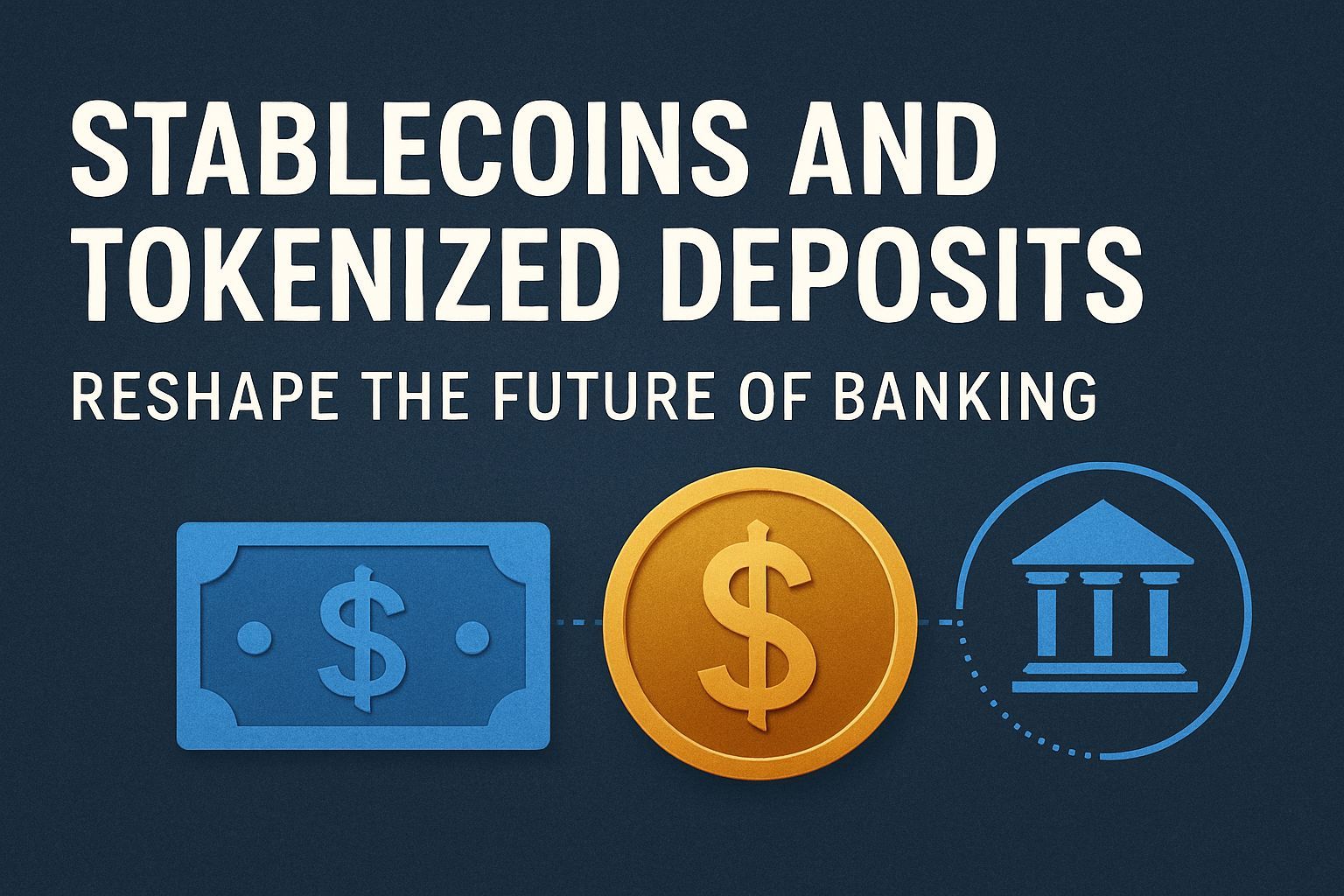
If you’ve been keeping an eye on the crypto space or financial innovation, you’ve probably heard the buzzing terms stablecoins and tokenized deposits. They’re not just flashy buzzwords-they’re shaking up the foundation of how banking might work in the near future. From seamless cross-border payments to programmable money, these innovations could redefine both the crypto market and traditional finance. Let’s unpack what stablecoins and tokenized deposits mean, how they reshape the future of banking, and what that means for you as an investor or enthusiast.
Key Takeaways ?
- Stablecoins are digital tokens designed to maintain a stable value, most often pegged to fiat currencies like the US dollar.
- Tokenized deposits represent traditional bank deposits converted into digital tokens while staying fully regulated and on the banks’ balance sheets.
- Banks are experimenting with multiple models: third-party stablecoins, bank-issued stablecoins, and tokenized deposits.
- The future lies in a hybrid approach allowing fast, secure, programmable settlement with clear regulatory oversight.
- This shift challenges the traditional payment infrastructure and could massively impact liquidity, cross-border payments, and financial inclusion.
- Early adopters gain significant advantages in operational efficiency, customer onboarding, and innovative financial products.
Subscribe to our Social Media for Exclusive Crypto News and Insights 24/7!
? What Are Stablecoins and Tokenized Deposits-and Why Should We Care?
Stablecoins, basically, aim to deliver the benefits of cryptocurrencies without the wild price swings. Think of them as your digital dollars or euros, but running on blockchain rails that promise speed and transparency. Tokenized deposits, on the other hand, are digital representations of your actual bank deposits, digitally “tokenized” but still secured and regulated by banks themselves.
Here’s the kicker: While stablecoins often come from third-party issuers (think USDC or Tether), tokenized deposits stay under the bank’s roof, ensuring the regulatory protections traditional banking customers expect. Banks issuing such deposits maintain full control over the tokens, allowing them to innovate within existing prudential frameworks, unlike most stablecoins issued externally[1][5][9].
To put it in simple terms: It’s like getting the speed and programmability of crypto money combined with the trust and security of good old banking deposits. And this is a massive deal for anyone who moves money around-whether you’re a trader, business owner, or a regular person sending remittances overseas.
? How Banks are Embracing Digital Money Models - The Three Roads Ahead

Based on real-world banking experiences, institutions face three broad strategic options to enter digital money:
| Model | Control Level | Speed to Market | Balance Sheet Impact |
|---|---|---|---|
| Third-party stablecoins | Low (issuer controlled) | Fast integration | Off balance sheet, less liquidity impact |
| Bank or consortium-issued stablecoins | Medium to high (shared control) | Moderate to slow setup | Mixed, dependent on issuing vehicle |
| Tokenized deposits | High (full bank control) | Fast with right tech | High - stays on balance sheet |
Most banks will mix and match these depending on customer needs, corridors, and evolving regulations[1].
Interestingly, tokenized deposits allow banks to fully “own” the digital money, preserving existing banking models while unlocking blockchain’s benefits. Banks can also experiment safely with tokenized money, leveraging existing infrastructure, all while delivering new services like real-time settlements and programmable transactions[6].
? The Crypto Market and Financial System Implications

You might wonder: how do these new digital assets actually affect the broader crypto universe?
First, stablecoins remain a dominant on-ramp for crypto markets. They facilitate trading, lending, and DeFi operations, acting as digital cash within the ecosystem. However, traditional banks entering with tokenized deposits offer a civic alternative that might pull some liquidity out of pure crypto and bring it back into regulated financial ecosystems[3].
Second, stablecoins and tokenized deposits accelerate cross-border payments-a historically slow and costly process. Recently, early pilot projects revealed tokenized deposits enabling instant payments for trucking companies, construction milestone releases, and supply chain settlements. Imagine the efficiency gains that could have globally[2][6].
With the GENIUS Act in place, stabilization becomes more achievable while maintaining compliance such as KYC and anti-money laundering practices. This pushes digital money towards mass institutional adoption and trustworthiness, previously big hurdles for crypto native solutions[3][8].
However, this momentum raises challenges:
- How will banks manage liquidity when customers prefer stablecoins or tokenized deposits over traditional cash?
- What regulatory frameworks are necessary to avoid financial fragmentation or conflicts between fiat and digital assets?
- Will stablecoins issued by third parties lose ground to bank-issued tokenized deposits?
Banks need to build flexible infrastructures capable of quickly adapting to these new money forms, or risk being left behind[4][5].
? Practical Insights for Investors and Financial Institutions

So, where does this leave you, if you’re an investor or financial stakeholder? Here are some practical pointers:
- Diversify exposure: Look beyond cryptocurrencies to stablecoins and bank-issued tokenized deposits, which might offer lower volatility and easier regulatory pathways.
- Follow regulatory developments: Keep an eye on evolving laws like the GENIUS Act, impacting how stablecoins and tokenized deposits operate legally and securely.
- Assess tech partnerships: Financial institutions should prioritize collaboration with experienced blockchain tech providers, ensuring smooth integration and compliance.
- Watch adoption in sectors: Industries like logistics, manufacturing, and payroll services showcase early tokenized deposit use cases that illustrate future growth opportunities.
- Focus on interoperability: Investments in platforms supporting cross-bank and cross-asset token transfers could unlock network effects.
For the everyday investor, understanding that tokenized deposits blend traditional banking safety with blockchain speed provides a less risky entry point compared to more volatile crypto assets.
? My Personal Take - Why This Matters Now
Imagine if your bank account wasn’t just a number in some database, but a living digital asset on a blockchain-programmable, transparent, and instant. That’s what tokenized deposits bring.
Stablecoins open up similar doors, but with the added unpredictability of third-party custody and occasional regulatory uncertainty. As a crypto analyst, I see tokenized deposits as the logical bridge between old finance and new digital realities. They allow banks to retain control, ensuring customer safety without sacrificing innovation.
It’s like upgrading your familiar old car with a self-driving electric engine instead of buying a totally new vehicle. Comfortable, reliable, but unexpectedly futuristic.
As more banks adopt these models, the line between crypto and traditional finance will blur, possibly making digital money as commonplace as your debit card is today.
? What’s Next? Are You Ready to Bank on the Future?
With stablecoins and tokenized deposits converging to reshape banking, one wonders: Will your next paycheck be delivered as a tokenized deposit, or will stablecoins dominate the digital cash space? More importantly, how will this new money impact your financial decisions and opportunities in an increasingly digital world?
Explore more on this topic here:
Stablecoins and tokenized deposits reshape the future of banking
Stablecoins
Tokenized deposits
Sources:
[1] https://fireblocks.com/blog/next-chapter-transaction-banking
[2] https://www.infinant.com/vantage-bank-and-custodia-announce-launch-of-tokenized-deposits-for-u-s-banks/
[3] https://www.moneyandbanking.com/commentary/2025/8/16/are-stablecoins-really-the-future-of-payments
[4] https://www.mckinsey.com/industries/financial-services/our-insights/the-stable-door-opens-how-tokenized-cash-enables-next-gen-payments
[5] https://www.finextra.com/blogposting/29767/banks-cant-treat-stablecoins-and-tokenized-deposits-as-just-another-payment-method
[6] https://bankingblog.accenture.com/sibos-2025-future-of-money
[8] https://www.cumanagement.com/articles/2025/08/how-stablecoins-and-tokenized-deposits-could-reshape-us-financial-services
[9] https://www.abeam.com/am/en/insights/090/