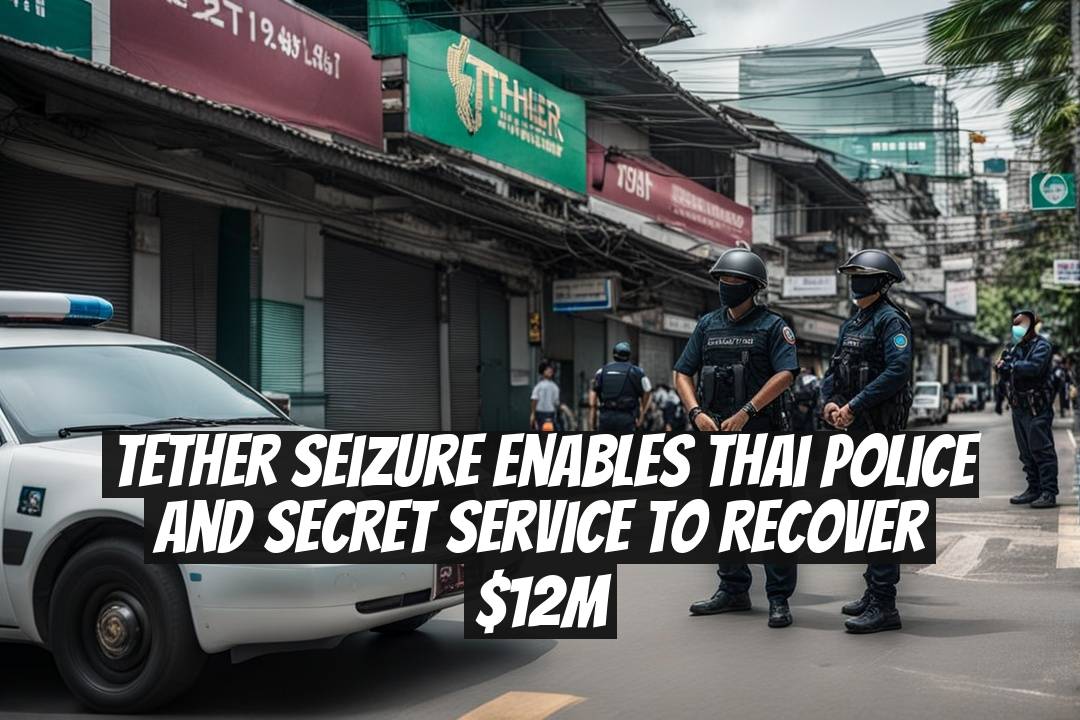
When Law Enforcement Met Blockchain: The $12M USDT Seizure That Changed Everything
? How International Cooperation is Reshaping Cryptocurrency Crime Prevention
The cryptocurrency world just witnessed something remarkable. Thailand and the United States joined forces in what’s becoming one of the most significant moments in digital asset law enforcement-recovering $12 million in USDT from a massive transnational fraud network. But here’s what really matters: this isn’t just another headline about crypto criminals getting caught. This is a watershed moment that reveals how blockchain transparency, international cooperation, and corporate responsibility are fundamentally transforming the way authorities combat digital asset crime.
If you’ve been following the crypto space, you know that stablecoins like USDT have faced their share of skepticism. Critics love to argue that cryptocurrency enables crime and evades law enforcement. Yet what just happened in Southeast Asia proves something entirely different-it shows that when the right institutions work together, blockchain actually becomes a powerful tool for justice. The $12M USDT seizure represents more than just frozen assets; it’s evidence of a new era where technology serves law enforcement rather than circumventing it.
Subscribe to our Social Media for Exclusive Crypto News and Insights 24/7!
? Key Takeaways: What You Need to Know
- International Operation Success: The Royal Thai Police and U.S. Secret Service executed a coordinated takedown of a sophisticated Southeast Asian fraud network, resulting in the seizure of approximately $12 million in USDT
- Massive Criminal Network Dismantled: The operation led to the arrest of 73 suspects, including 51 Thai nationals and 22 foreigners, with total asset seizures exceeding 522 million Thai Baht
- Tether’s Critical Role: The company provided essential technical assistance to track and freeze the fraudulent digital assets, demonstrating corporate responsibility in combating crypto crime
- Blockchain Transparency Advantage: This operation showcases how the immutable nature of blockchain enables law enforcement to trace and recover illicit funds more effectively
- Industry Precedent Setting: This seizure establishes new standards for how cryptocurrency companies should cooperate with law enforcement agencies across international jurisdictions
? The Operation That Shook Southeast Asia
Let me paint you the picture of what actually went down. The Royal Thai Police, specifically their Technology Crime Suppression Division (TCSD), didn’t go after this alone. They partnered with the U.S. Secret Service to take down what can only be described as a well-organized, multinational fraud operation sprawling across Southeast Asia. This wasn’t some small-time scam-we’re talking about a sophisticated network that had been operating undetected across multiple countries.
Here’s where Tether entered the story. Instead of staying on the sidelines, the company actively assisted authorities by providing crucial technical support. Think of it this way: traditional banking systems have built-in tracking mechanisms, but they’re often opaque to the public. Blockchain operates differently. Because every transaction is recorded on an immutable ledger, companies like Tether can work with law enforcement to trace the flow of digital assets in ways that were previously impossible with traditional currencies.
The operation’s scale was genuinely impressive. Authorities didn’t just freeze $12 million in USDT-they seized additional assets totaling over 522 million Thai Baht. The arrest of 73 suspects, including both Thai nationals and foreign operatives, suggests this was an organized, cross-border criminal enterprise with significant infrastructure and coordination.
? Understanding Blockchain Transparency: The Real Game-Changer
Let me break down why this matters for the broader cryptocurrency ecosystem. One of the biggest criticisms leveled against crypto has always been anonymity. People assume blockchain is untraceable. Actually, that’s a fundamental misunderstanding of how modern cryptocurrencies work, especially stablecoins like USDT.
Blockchain is actually pseudonymous, not anonymous. Every transaction is permanently recorded and visible to anyone who wants to look. This creates what we might call "transparent traceability." When someone moves $12 million in USDT through the blockchain, those movements leave a permanent digital footprint. Law enforcement agencies, with help from blockchain analysis companies and the cryptocurrency companies themselves, can follow that trail.
Tether CEO Paolo Ardoino highlighted this brilliantly when he stated that "blockchain transparency empowers law enforcement agencies to effectively combat criminal activities." He wasn’t just making a marketing pitch-he was articulating a fundamental truth about how the technology actually works. The same features that crypto enthusiasts praise for financial freedom are the same features that make it nearly impossible for criminals to hide in plain sight indefinitely.
This is the crucial insight: blockchain transparency is a double-edged sword. Yes, it provides financial sovereignty and resistance to censorship. But it also means that bad actors operating at scale will eventually be caught. The $12M USDT seizure proves this principle in action.
? International Cooperation: Building Bridges Across Borders

Here’s something that really struck me about this operation-it required genuine international cooperation. The Royal Thai Police couldn’t have done this alone. The U.S. Secret Service couldn’t have tracked these assets without the technical expertise of Thai authorities who understood the local criminal networks. And neither organization could have executed the seizure without Tether’s assistance in identifying and freezing the specific wallets involved.
This kind of collaboration is becoming increasingly important. Fraud networks don’t respect borders. Criminals naturally exploit gaps between different nations’ legal systems and law enforcement capabilities. The Southeast Asian fraud ring in this case was operating precisely because they believed that dispersing their operation across multiple countries would provide them cover.
What changed? Technology and coordination. When you have real-time communication between international agencies, when you have companies willing to work with law enforcement, and when you have blockchain analysis tools that can track cross-border transactions in minutes, suddenly borders become much less useful as a hiding place for criminals.
The implications here are significant. Tether’s track record speaks volumes-the company has cooperated with more than 290 law enforcement agencies across 59 different jurisdictions worldwide. In total, they’ve frozen over 3.2 billion USD in assets related to illegal activities. That’s not just a number. That’s evidence of a systematic approach to preventing criminal use of their stablecoin.
? What This Means for the Cryptocurrency Market

Now, let’s talk about what this actually means for cryptocurrency investors and the broader market. The $12M USDT seizure carries several important implications:
First, regulatory confidence is increasing. When law enforcement agencies around the world see that they can actually trace and recover cryptocurrency used in crimes, they become more willing to work with the crypto industry rather than against it. This reduces regulatory uncertainty, which has been a significant drag on crypto valuations and adoption.
Second, stablecoins are becoming more resilient. Critics have always attacked USDT specifically, questioning Tether’s reserves and suggesting the company enables crime. This operation is powerful evidence to the contrary. Tether actively combats criminal use. This actually strengthens the long-term viability of USDT as a stablecoin, because it demonstrates that the company takes compliance seriously.
Third, there’s a quality-of-life improvement for legitimate users. When bad actors get arrested and their assets are seized, it reduces the likelihood of your personal holdings being swept up in a broad regulatory crackdown. It also makes the legitimate cryptocurrency ecosystem more attractive to institutional investors who’ve historically been wary of crypto because of the criminal element.
Fourth, this establishes important legal precedent. How did authorities convince Tether to freeze these assets? What legal frameworks allowed the U.S. Secret Service to cooperate with Thai authorities? These questions have answers now, and those answers will shape how similar operations proceed in the future. The legal groundwork is being laid for systematic crypto crime enforcement.
?️ The Role of Corporate Responsibility in Crypto
One thing that often gets overlooked in discussions about this seizure is the role of Tether as a corporation. They didn’t have to cooperate. There’s no legal requirement in most jurisdictions forcing stablecoin issuers to help law enforcement trace and freeze assets. They could have dragged their feet, created bureaucratic obstacles, or simply declined to assist.
Instead, Tether acted decisively. Paolo Ardoino didn’t just authorize assistance-he publicly championed it. That’s significant. It sends a message to other cryptocurrency companies about what responsible corporate behavior looks like in this industry. It’s not about going along with regulators just to avoid trouble. It’s about recognizing that the cryptocurrency ecosystem’s long-term survival depends on ensuring that crypto can’t be used systematically for major crimes.
This is actually crucial for understanding the future of cryptocurrency regulation. If companies demonstrate that they can self-regulate effectively and that they’re genuinely committed to preventing criminal use, regulators will have less justification for heavy-handed interventions that could stifle legitimate innovation. The $12M USDT seizure is, in a sense, an investment in the industry’s regulatory future.
Think about it from a business perspective: Tether’s assistance in this operation probably cost them some money in terms of personnel time and technical resources. But the PR value alone-being able to point to this seizure as evidence of their commitment to preventing crime-is worth far more. They’re building trust with regulators, law enforcement, and honest users simultaneously.
? Practical Implications for Cryptocurrency Users and Investors
So what should you actually do with this information? Here are some practical takeaways:
If you’re a cryptocurrency user: Be aware that the blockchain is transparent. That doesn’t mean you have no privacy-there are legitimate privacy tools and techniques you can use. But understand that if you’re using cryptocurrencies for illegal purposes, you’re taking a genuine risk. Law enforcement is getting better at tracing transactions, and international cooperation is improving rapidly. The odds of getting caught are increasing.
If you’re an investor: Look for cryptocurrency companies that demonstrate strong compliance practices. Companies like Tether that work proactively with law enforcement and regulatory authorities are likely to have smoother regulatory paths and less uncertainty around future crackdowns. When evaluating a cryptocurrency project, consider whether the team behind it is taking compliance seriously. This could be a significant competitive advantage.
If you’re considering entering the crypto space: Understand that the industry is maturing. The days when crypto was primarily associated with illicit activity are ending. Law enforcement is becoming more sophisticated. Regulatory frameworks are becoming clearer. This is actually good news for long-term investors, because it removes a major source of uncertainty and potential black swan regulatory events.
Regarding stablecoins specifically: USDT’s willingness to cooperate with authorities might seem like a reason to avoid it, but it’s actually the opposite. A stablecoin used primarily by criminals would eventually face severe regulatory restrictions. USDT’s compliance approach makes it safer for mainstream adoption, which is ultimately what drives value in a stablecoin.
? Looking Ahead: The Future of Crypto Law Enforcement
We’re witnessing the emergence of a new normal in cryptocurrency law enforcement. The $12M USDT seizure isn’t an outlier-it’s a data point in an emerging trend. Let me explain what I think is coming:
More sophisticated blockchain analysis tools. The technology for analyzing blockchain transactions is improving rapidly. What took investigators months a few years ago now takes days or even hours. This trend will continue, making it increasingly difficult for criminals to hide large-scale operations.
Expanded international cooperation frameworks. Organizations like INTERPOL and Europol are developing specific protocols for cryptocurrency crime. Bilateral agreements between countries are becoming more common. The operation that resulted in the $12M USDT seizure is likely to become a template for future operations.
Corporate compliance requirements becoming stricter. As Tether demonstrated what’s possible, regulators will expect more from other cryptocurrency companies. Failing to cooperate with law enforcement will become a liability that affects regulatory approval, licensing, and market access.
Bifurcation of the cryptocurrency market. We’re likely to see a clear separation between "compliant" cryptocurrencies and projects that resist regulatory oversight. The compliant projects will have clearer paths to institutional adoption and regulatory approval. The others will face increasing marginalization.
Mainstream adoption acceleration. Ironically, by making cryptocurrency safer from a crime perspective, these law enforcement successes actually accelerate mainstream adoption. Parents will be more comfortable if their kids invest in Bitcoin. Companies will be more comfortable holding USDT reserves. Governments will be more willing to explore central bank digital currencies.
? The Bigger Picture: Crypto’s Coming of Age
There’s something almost poetic about the $12M USDT seizure happening right now, in November 2025. The cryptocurrency industry is at a crossroads. For years, we’ve debated whether crypto can mature into a legitimate asset class or whether it’s fundamentally tainted by association with illicit activity.
This operation suggests the answer: cryptocurrency can absolutely mature into something legitimate and socially beneficial. The same technology that enables censorship resistance and financial freedom also enables law enforcement to catch criminals and recover stolen assets. These aren’t contradictory properties-they’re just different facets of the same transparent, immutable ledger.
The $12M in recovered USDT will likely be returned to victims of the fraud scheme. Those funds might go to individuals who lost their life savings to scammers, who thought they were making legitimate investments but were actually financing organized crime. That’s not a trivial thing. That’s real money that will help real people recover from real harm.
From a market perspective, this operation is actually bullish for cryptocurrency long-term. It removes uncertainty. It demonstrates that the technology can coexist with law enforcement rather than being fundamentally opposed to it. It shows that companies can profit while still doing the right thing.
? Key Lessons for the Crypto Ecosystem
Let me crystallize what we should take away from the $12M USDT seizure:
- Transparency is a feature, not a bug. Blockchain’s permanent record is powerful for catching criminals
- International cooperation works. When authorities collaborate across borders, organized crime becomes significantly harder
- Corporate responsibility matters. Companies that proactively assist law enforcement build trust and stability
- Technology is evolving faster than crime. Modern analysis tools make large-scale cryptocurrency fraud increasingly difficult to sustain
- Regulatory clarity is coming. This operation provides precedent for how future cryptocurrency crime cases will be handled
Final Reflection: What Does This Mean for You?
Here’s what I want you to think about: If cryptocurrency is becoming a tool that law enforcement can use effectively to catch criminals, does that change how you think about the asset class? Does knowing that $12 million in stolen funds can be traced, frozen, and potentially returned to victims make you more or less confident in cryptocurrency’s future?
The answer you give might say a lot about what kind of investor or user you want to be in this ecosystem.