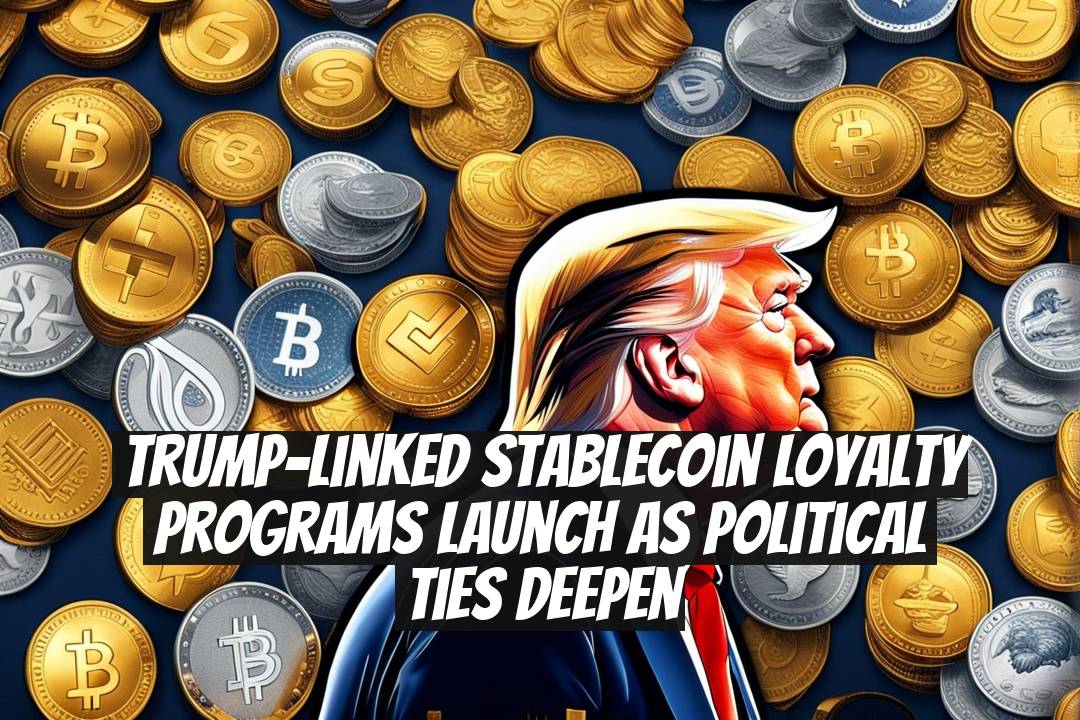
Can a Politically Charged Stablecoin Loyalty Program Shake Up Crypto? ?
When you think about stablecoins and loyalty programs, politics might not be the first thing that comes to mind. But with Trump-linked stablecoin loyalty programs launching as political ties deepen, the crypto world is buzzing like never before. This intersection where politics meets digital currency isn’t just a headline-it’s a potential game-changer. Investors and crypto enthusiasts find themselves wondering: what does this mean for the market, and more importantly, how could it impact us in real terms?
Let’s unpack the launch of the USD1 stablecoin loyalty program by World Liberty Financial (WLFI), a firm linked to former U.S. President Donald Trump, and what its deeper political associations imply for the overall crypto ecosystem.
Key Takeaways: What You Need to Know About Trump-Linked Stablecoin Loyalty Programs ?
Subscribe to our Social Media for Exclusive Crypto News and Insights 24/7!
- WLFI’s USD1 stablecoin loyalty program rewards users for trading, staking, and holding USD1, similar to airline miles or hotel points.
- Strategic partnerships with major exchanges like HTX and Bitget aim to boost liquidity and market engagement.
- The loyalty program is designed to cultivate real-world utility through gamified incentives.
- Political ties introduce regulatory scrutiny and raise questions about governance and long-term project viability.
- This development may influence market dynamics for stablecoins and create a new breed of politically affiliated crypto assets.
? The USD1 Loyalty Program: Crypto Meets Classic Rewards

At its core, the USD1 loyalty program launched by WLFI is a digital echo of the rewards schemes you’ve seen in traditional businesses. Users earn points by trading, staking, or simply holding the USD1 stablecoin on partnered platforms, including HTX and Bitget[1][2][3]. Think of it like frequent flyer miles, but instead of earning perks in the air, you are earning rewards within the crypto sphere.
This structured points system encourages greater engagement with USD1 by incentivizing multiple activities-trading volume, staking to generate yield, or holding balances. WLFI’s approach reflects a growing trend in stablecoins: engaging users beyond basic transactions through gamification to build stickier consumer bases[2].
In practice, if you’re a trader or investor, participating in this program means every transaction or staking action could bring you rewards, potentially increasing your returns not just from the stablecoin’s price stability, but from bonus loyalty yields-an appealing proposition.
? Political Connection: A Boon or a Bane for Crypto Markets?

The most eyebrow-raising aspect, of course, is the Trump affiliation with WLFI’s USD1 stablecoin[1][4]. While political ties can amplify visibility and media attention, they simultaneously invite regulatory scrutiny. Crypto projects with clear political links often find themselves under microscopes for governance risks, compliance, and legitimacy-especially in the U.S., where crypto regulation is still evolving.
From a market analyst’s perspective, these ties could affect the project in several ways:
- Regulatory Risk: The U.S. government and securities authorities might subject WLFI to greater oversight, potentially complicating operations or program expansion.
- Investor Sentiment: Supporters of Trump might rush in, while opponents may avoid political crossover crypto assets, causing polarized market behavior.
- Governance Questions: Transparency and project direction could be questioned if political agendas crowd out sound financial strategy.
In short, investors need to monitor political developments closely as they could significantly impact USD1’s market acceptance and liquidity[1][4].
? Impact on the Crypto Market: What This Means for Stablecoins
Stablecoins are the backbone of modern DeFi and crypto trading, providing a "safe harbor" from volatility. WLFI’s program adds a new wrinkle by merging stablecoin usage with loyalty incentives, potentially driving user stickiness in an otherwise crowded stablecoin marketplace[3].
Potential effects include:
- Increased Adoption: Rewarding users for governance activities might encourage wider acceptance and everyday use of USD1.
- Market Liquidity: Partnerships with exchanges like HTX seek to boost trading volumes and liquidity, important for stability and usability.
- Competitive Pressure: Other stablecoin issuers may follow suit, launching their own rewards programs and driving innovation around user incentives.
- Real-World Utility: The gamification aspect can push stablecoins beyond trading and into payments or DeFi uses, expanding crypto’s reach.
However, the key to success will be sustained participation and clear regulatory frameworks[2][3]. Without consistent user engagement or permissible regulatory environments, such programs risk fizzling out like many past crypto loyalty initiatives.
? Partnerships on Board: Building a Robust Ecosystem

The collaboration between WLFI and exchanges like HTX is more than symbolic. HTX has positioned itself as a leader in digital asset innovation by backing projects offering tangible value to users[2]. By integrating the USD1 Points Program, HTX provides infrastructure and access to a global user base, leveraging mutual benefits:
- Wider reach for USD1 holders to trade and stake.
- Enhanced liquidity through active market participation.
- A testing ground for new DeFi applications incorporating stablecoins.
This strategic alignment signals that loyalty rewards are becoming a viable tool to attract both retail and institutional participants, which is crucial to the stablecoin’s long-term sustainability[2].
? Practical Tips for Investors Considering Trump-Linked Stablecoin Loyalty Programs
If you’re contemplating diving into this politically linked crypto wave, here’s how to approach it wisely:
- Understand the Risks: Keep tabs on political developments and regulatory news affecting WLFI and USD1.
- Evaluate Loyalty Rewards: Calculate how the loyalty points enhance your effective yield or transaction value.
- Use Trusted Exchanges: Engage only through well-established exchanges like HTX and Bitget to minimize counterparty risk.
- Stay Alert to Market Sentiment: Be aware that political polarization may create volatility or liquidity fluctuations.
- Diversify Your Crypto Portfolio: Don’t rely solely on USD1 or politically affiliated tokens; balance risk with other stablecoins and assets.
- Watch for Expanding Ecosystem Use: Monitor DeFi protocols that integrate USD1 to maximize potential earning opportunities.
? My Two Cents: Is This the Dawn of Politically Charged Stablecoins?
In my view, WLFI’s USD1 loyalty program is an intriguing experiment at the crossroads of politics, finance, and technology. It exemplifies how crypto innovation no longer operates in a vacuum but dances with broader societal narratives. This intersection could drive mainstream awareness but bears inherent risks from politicization.
For the crypto market, this means more than just a new stablecoin rewards program-it could be the start of an era where political branding becomes a factor in asset value and credibility. Whether that’s good or bad depends on your perspective and risk appetite. As an investor, stay informed, be cautious, but don’t dismiss the potential growth opportunities from these evolving loyalty structures.
Are we witnessing a crypto revolution where political identity and digital currency value intertwine more tightly than ever? And what does this mean for the future of decentralized trust and governance in crypto?
Trump-linked stablecoin loyalty programs
USD1 stablecoin loyalty program
crypto market impact stablecoins
Sources:
[1] https://www.ainvest.com/news/world-liberty-fi-launches-usd1-loyalty-program-boost-adoption-2508/
[2] https://www.ainvest.com/news/htx-partners-wlfi-launch-usd1-points-loyalty-program-2508/
[3] https://www.coinspeaker.com/world-liberty-financial-unveils-loyalty-points-to-usd1-stablecoin-holders/
[4] https://www.mitrade.com/au/insights/news/live-news/article-3-1020634-20250807