
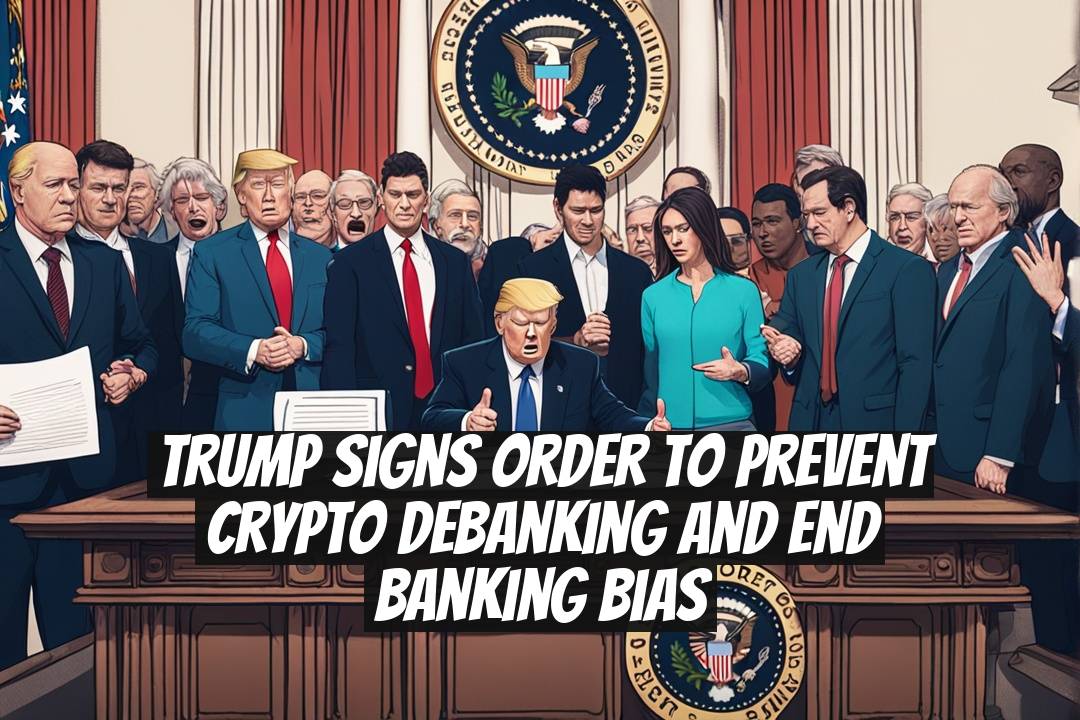
Trump’s Bold Move Against Crypto Debanking: What It Means for Your Wallet
If you’ve been watching the crypto space lately, you probably caught wind of the news: President Trump just signed an executive order aimed at preventing crypto debanking and ending banking bias. This isn’t just another headline - it’s a game-changer for digital assets and anyone who’s been sidelined by banks cutting off their financial lifelines. Banking bias, especially when it targets the crypto industry, has been a thorn in the side of innovators and investors alike. So, what’s really going on, and how might this steer the crypto market next? Let’s unpack it.
Key Takeaways
- Trump’s executive order mandates federal regulators to crack down on politicized or biased debanking practices targeting crypto users and others.
- It orders the removal of “reputational risk” as a justification in bank examinations, aiming to prevent financial services denial simply based on industry or political viewpoint.
- Federal agencies have 120 days to review past debanking actions and take remedial steps including fines or referrals to the Attorney General.
- This executive order brings new hope to the crypto ecosystem, historically vulnerable to banking restrictions and financial gatekeeping.
- Early market responses and on-chain analytics suggest cautious optimism but highlight lingering risks in liquidity and dominance cycles.
Subscribe to our Social Media for Exclusive Crypto News and Insights 24/7!
? What’s This “Crypto Debanking” Drama All About?
Alright, let’s rewind a bit. Crypto debanking means banks refusing to open or maintain accounts for crypto companies, traders, or even certain industries on political or ideological grounds. Banks may shut you down or freeze your funds just because they want to avoid “reputational risk” - a vague, catch-all reason that’s been weaponized against legit crypto players.
Trump’s new executive order, signed August 7, 2025, slapped a big “No Entry” sign on that nonsense. The White House is telling federal regulators to remove ‘reputational risk’ language from bank supervisory guidelines and crack down on politically motivated banking cutoffs[1][2]. Banks can no longer scapegoat reputation over solid risk metrics to deny accounts to crypto or other frowned-upon sectors.
I talked to Jess Turner, a crypto market strategist, who said, “Honestly, that move caught everyone off guard. It’s the first time we’re seeing real muscle aimed at forcing banks to stop playing gatekeeper politics. Could be a much-needed breath of fresh air for exchange liquidity and startup fundraising.”
? Market Lens: What Does This Mean for Crypto Prices?

Crypto markets don’t just respond to protocols and tech upgrades. Banking access is life or death when it comes to liquidity flows - you can’t move your coins if your bank blocks your fiat on or off ramps. Let’s glance at some fresh market data.
As of now, Bitcoin dominance hovers around 45%, while Ethereum clings near 20%. These dominance cycles matter because they hint at where the big money flows. When BTC dominance spikes, altcoins usually get the cold shoulder, and vice versa.
The last big debanking wave in late 2023 saw a heavy hit on smaller tokens. Many investors stuck to BTC - the perceived safe haven - as alt coins got hit with wider banking blockades. TradingView’s ADX indicator showed rising trend strength for BTC at that time, signaling a strong move as alt liquidity dried up. Now, with Trump’s order aiming to restore fair banking, we might see a more balanced dominance cycle rebalance favoring the alt-season crowd.
One savvy trader remarked, “You’ve seen this before, right? BTC teasing breakout then faking out. With banking barriers off the table, that dance might finally settle into a smooth waltz, not a jittery tap.”
️ History Lesson: Debanking Hits Harder Than You Think
Back in mid-2022, I held ADA through a brutal 60% dump when banks started cutting off crypto custodial firms. It was rough - the project they launched was solid, but the banks’ cold shoulder turned safe bets into shaky ground overnight. That taught me one thing: you don’t just fight market volatility - sometimes, you fight financial infrastructure itself.
Trump’s move might not fix all the cracks immediately, but it’s a major step in plugging liquidity cascades triggered by these banking blackouts. Remember liquidation cascades? When forced sellers push prices down so fast they trigger margin calls, selling off even more? Removing biased banking blockades helps prevent these domino effects by preserving access and capital flow.
? What Regulators Are Up To and Why It Matters
The executive order (EO) instructs federal banking regulators - the OCC, FDIC, and Federal Reserve - to:
- Strip “reputational risk” from their exam handbooks and stop using it to pressure banks to weaponize financial exclusion.
- Review and remediate any past policies or actions that led to politicized debanking.
- Compel Small Business Administration-regulated lenders to reinstate denied clients.
- Set up strategies tackling unfair banking denial nationwide[2].
Congress is already on board, with efforts to cement these policies into law. U.S. Congressman Andy Barr has introduced related bills aiming to make sure the EO’s momentum doesn’t fizzle out[3].
Banks have no choice but to adjust fast or face fines, consent decrees, and legal referrals. It’s a regulatory shakeup - and in crypto’s cutthroat world, policy shifts can ripple through prices and projects faster than a Twitter rumor.
? Deeper Dive: On-Chain Analytics & Institutional Insights
Looking under the hood, on-chain metrics tell us interesting things about this new environment:
- Exchange inflows/outflows: CoinMarketCap data shows exchanges have started seeing increased inflows this week, suggesting users feel a little freer to move funds amid banking assurances.
- Stablecoin supply trends: USDC and USDT supplies have stabilized after months of cautious contraction-typically a liquidity stress barometer.
- Wallet activity: Active addresses on Ethereum and Bitcoin networks ticked upward, hinting that traders expect continued market action rather than an exit.
Even Bank of America’s recent research on crypto banking stresses that smoothing functional banking relationships is crucial for sustained digital asset growth, especially during macro headwinds[1].
? The Whale Factor: Big Players Are Watching
The whales ain’t sleeping, fam. They’re rotating their dominance quietly, perhaps betting big on reduced bank-induced friction. When such high-profile policy interventions hit, large holders tend to shift gears in anticipation of wider market participation.
A trader I spoke to said this looked eerily like 2021’s blow-off top scenario - when regulatory clarity suddenly made room for massive inflows - except this time, the catalyst is fairer banking access, not just loose monetary policy.
So yeah, Trump’s order isn’t a silver bullet. But it might’ve turned the tide for crypto’s long, uphill battle against financial exclusion. And that? That’s pretty exciting for anyone who’s ever felt the sting of debanking - from startups to savvy retail investors. Imagine holding SOL through another banking blockade run - how much smoother could that ride be with this new regulatory backdrop?
You’re now armed with the latest in policy, market mechanics, and analytics. What’s your next move? Bet on a bullish bounce fueled by renewed access or stay cautious while the bureaucratic dust settles?
For more detailed strategies, do dive into crypto debanking, banking bias crypto, and crypto market dominance.
- https://www.sidley.com/zh-hans/insights/newsupdates/2025/08/president-trump-signs-fair-banking-executive-order-directing-financial-regulators-to-remedy
- https://www.steptoe.com/en/news-publications/president-trump-signs-executive-order-directing-review-of-alleged-debanking.html
- https://barr.house.gov/press-releases?id=6F466939-2187-4E0E-8F53-3AA04B989152
- https://www.nelsonmullins.com/insights/blogs/the_vault/fintech/the-digital-assets-market-report-navigating-the-trump-administration-s-crypto-policy-roadmap






