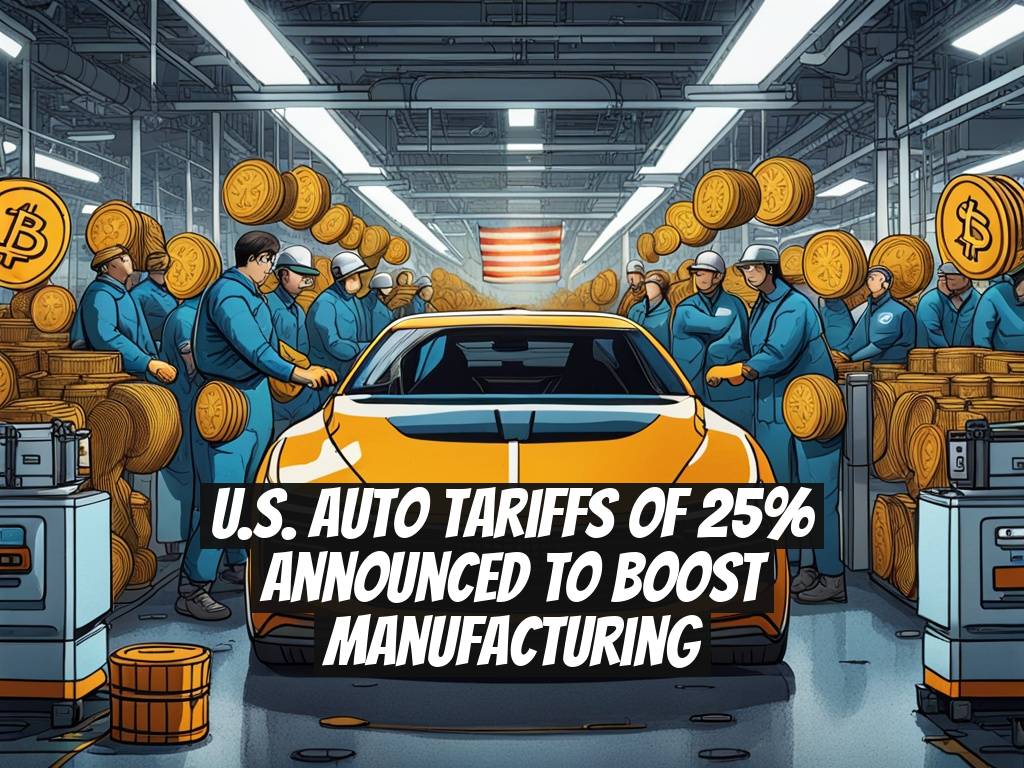
? What Do New Tariffs Mean for the Crypto Market? Let’s Dive In!
Key Takeaways:
- A massive 25% tariff on non-U.S. manufactured cars could reshape the automotive marketplace.
- Concerns arise about inflation, market volatility, and potential job losses in the U.S. auto industry.
- Crypto investors should keep an eye on how traditional markets react to these changes, as they can indirectly influence crypto volatility.
- The interplay between political decisions and market reactions could serve as an insightful guide for crypto investment strategies.
Hey there! So, I’ve been thinking a lot about the recent news surrounding the U.S. auto tariffs and what it could mean for us in the crypto universe. Picture this: President Trump just declared a hefty 25% tariff on cars that are made outside the U.S., aiming to ramp up local manufacturing. Now, you might be wondering, "What does that have to do with mycrypto investments?" Well, let’s unpack this together!
Subscribe to our Social Media for Exclusive Crypto News and Insights 24/7!
First, let’s talk tariffs. Trump argues that these tariffs are not just a tax hike, but something that could simplify supply chains and help reduce the national debt over time. I mean, sounds appealing, right? But here’s the kicker: tariffs could lead to rising car prices and even disrupt the global auto industry. And if you’re like most Italians (myself included), that has the potential to put a strain on our wallets. Higher car prices could squeeze consumer spending, and we all know that when consumers hold back, it impacts broader economic trends-including our beloved cryptocurrencies.
Now, I can feel some of you rolling your eyes, thinking, “This is just another political game.” But hear me out! These kinds of economic shifts can ripple through markets. For instance, as consumer confidence wanes and prices increase, we could see a boost in inflation-something that not only affects the automotive sector but also translates to the crypto market. Increasing inflation often leads investors to look toward assets like Bitcoin, gold, or other cryptocurrencies as safe havens. So, monitoring how these tariffs affect inflation rates could alert us for the next wave of crypto investment opportunities.
Additionally, consider this: The tariffs are already making waves in the stock market, with shares of U.S. automakers taking a nosedive. When traditional markets experience volatility, we often see a corresponding reaction in the crypto space. It’s like watching a dance where one partner leads; if stock prices are jittery, crypto could follow suit. So, if you plan to invest, keep your finger on the pulse of these changes.
Now, true, Trump’s move has ignited a wave of criticism from foreign leaders, with many claiming it’s "bad for businesses" and could lead to job losses in the auto industry. And just think about it: what happens when people start losing jobs and feeling economic pressure? Well, fewer people will have capital to invest in crypto! So, the potential knock-on effects are vast and complex.
So, what’s a savvy young investor to do? Here are a few practical tips:
Stay Informed: Keep up with economic news. The more you know about shifts in tariffs, trade policies, and inflation, the better you’ll be at predicting market movements.
Diversify Your Investments: Just like you wouldn’t put all your eggs in one basket, try not to concentrate your investments solely in cryptocurrencies. Consider traditional assets and startups too; they can provide a cushion when things get volatile.
Use Technical Analysis: Look at the price shifts in response to news events. If you spot patterns, you could get a leg up on investing strategically when the market is unpredictable.
- Join a Community: Engaging with fellow investors can provide fresh insights. Communities can be found on platforms like Reddit, Telegram, or Discord, where others share their interpretations of market movements.
You know, it can be a wild ride watching how these global events unfold. I often find myself pondering how intertwined our financial systems really are. It’s amazing how a decision about car tariffs can impact not just the auto industry but crypto markets as well.
To wrap this up, let’s dig deeper into a thought-provoking question: How can we, as young and passionate investors, better adapt our strategies in a world where geopolitics and economic policy constantly shake up our markets?
What are your thoughts? I can’t wait to hear them!