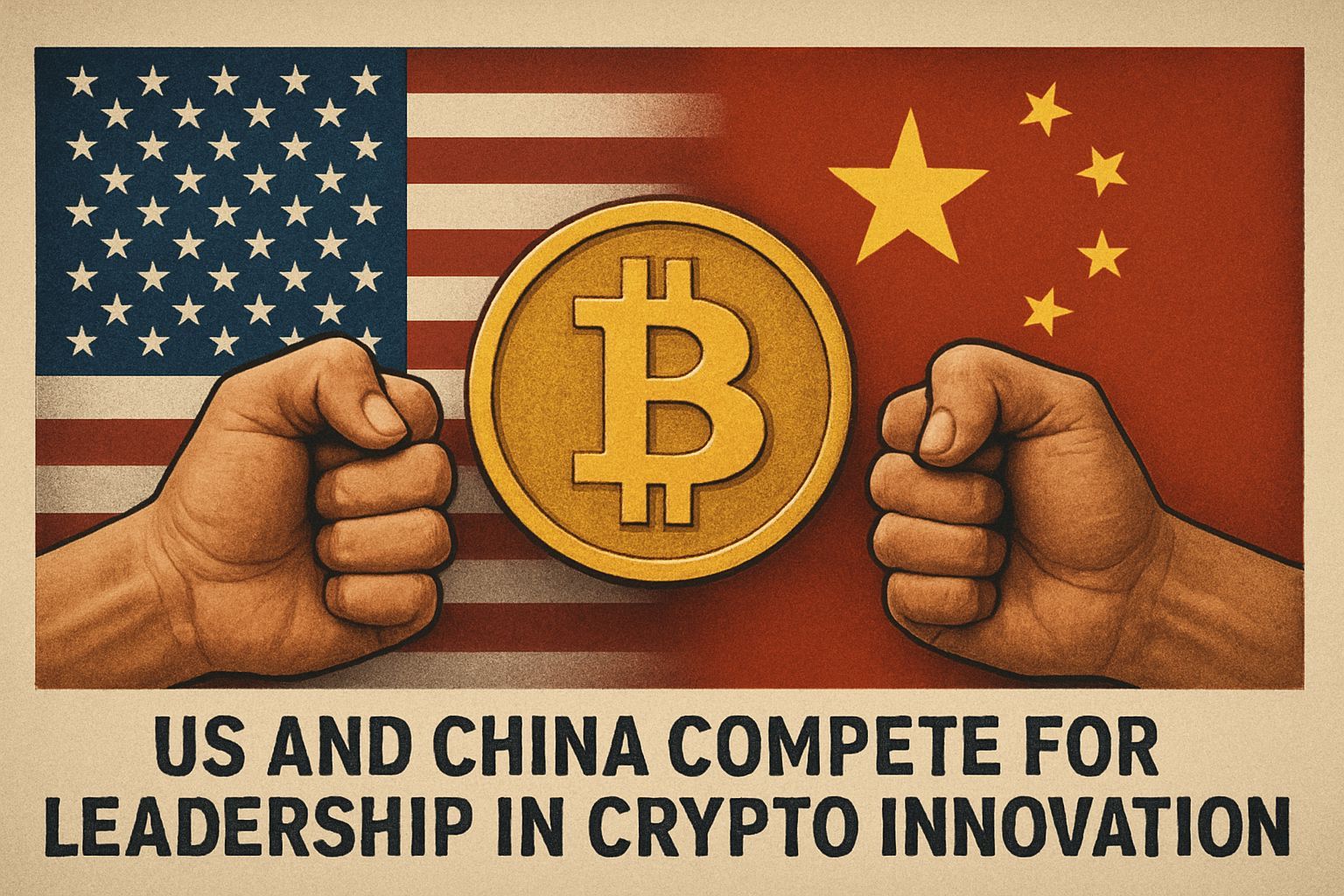
Clash of Titans: The US and China Sparring for Crypto Crown
The battle for leadership in crypto innovation between the US and China is heating up like never before. From Beijing’s push for the digital yuan to Washington’s aggressive stance on stablecoins and crypto regulation, the race isn’t just about technology - it’s geopolitics wrapped in blockchain code. Whether you’re a seasoned hodler or a crypto-curious investor, understanding this rivalry gives you a front-row seat to the future currency wars and market shakeups ahead. Buckle up - this one’s about more than just moonshots and dips.
? Key Takeaways
- China’s e-CNY aims to chip away at the US dollar’s overwhelming global dominance through digital finance-a multipronged play focused on cross-border trade and supply chains.
- The US retains a lead in Bitcoin holdings and stablecoin innovation but faces regulatory hurdles and growing geopolitical pressures.
- Hong Kong emerges as a strategic crypto innovation hub, blending Chinese state ambitions with global fintech norms.
- Market dynamics, including liquidity cascades and dominance cycles, reveal how crypto markets react intensely to geopolitical moves.
- Expert traders note eerie similarities between current crypto volatility and the 2021 blow-off top, fueled by monetary policy jitters and US-China tensions.
Subscribe to our Social Media for Exclusive Crypto News and Insights 24/7!
? China’s Digital Yuan: More Than Just a Currency
China’s digital yuan (e-CNY) isn’t some mere fintech fad-it’s a calculated chess piece in Beijing’s grand plan to create a multipolar currency system that chips away at the dollar’s global hegemony[1]. The People’s Bank of China has been quietly powering up projects like the Shanghai-based international operation center and integrating the digital yuan into supply-chain financing and cross-border payment pipelines, especially linking mainland China with Hong Kong. That $8 billion projected usage in 2025? Not chump change.
Hong Kong’s recent landmark stablecoin regulations crystallize this effort. Through stringent licensing laws rolled out by the Hong Kong Monetary Authority (HKMA), Hong Kong is positioning itself as the crypto innovation bridge between East and West[5]. This softening of China’s previously hardline anti-crypto stance-especially contrasting mainland’s broad bans since 2021-signals Beijing’s nuanced approach: control, but channel innovation smartly.
Despite all this, the dollar still laughs loudly in the background. Back in 2022, the greenback accounted for 88% of global FX transactions and nearly half of cross-border liabilities, while the yuan’s footprint hovered around a slim 7%[1]. The e-CNY isn’t ready to dethrone Uncle Sam just yet, but Beijing is playing the long game.
?? US Response: The Stablecoin Surge and Bitcoin Power Plays

The US ain’t just playing defense. On the contrary, crypto innovation here is turbocharging, especially with dollar-backed stablecoins gaining traction. Policy-makers and fintech leaders are racing to expand their digital dollar footprint to maintain the US’s grip on global digital finance[1].
Data tells a story of tight competition: the US currently holds around 198,000 BTC (roughly $21.3 billion), while China’s grip is close behind with nearly 194,000 BTC valued similarly[3]. That’s close enough to ignite some serious competitive fire. During a recent "60 Minutes" sit-down, former President Trump didn’t mince words - warning that “China’s getting very big into Bitcoin and crypto right now” and stressing America must keep its crown as digital finance king[2][3]. It’s a high-stakes push that echoes military-grade intensity.
Yet, the US crypto market isn’t immune to volatility shocks reverberating from trade tensions. The recent OCT 2025 tariffs on Chinese tech exports caused tremors across digital assets, exacerbating liquidation cascades reminiscent of 2021’s dramatic Bitcoin blow-off top. One trader I chatted with remarked, “This feels like déjà vu - BTC teasing a breakout only to tank hard - the same adrenaline rush and fear we saw in late 2021.” It’s a wild rollercoaster ride out there, fam.
? Market Mechanics: Dominance, ADX, and the Whale Dance

Let’s geek out a bit. The crypto market’s pulse amid this geopolitical drama can be measured through dominance cycles and indicators like the Average Directional Index (ADX). Usually, BTC dominance spikes when geopolitical or macroeconomic uncertainty hits, signaling a “flight to safety.” Ethereum’s recent price action, failing repeatedly at key resistance around $2,100, perfectly illustrates this tug-of-war. ETH didn’t just drop last week - it swan-dived into critical support levels, setting off a cascade of liquidations in DeFi lending pools.
Meanwhile, the whales? They’re far from dormant. According to on-chain analytics from Glassnode and TradingView, large holders have been rotating capital between BTC and stablecoins, preparing for big swings depending on regulatory newsflow and geopolitical headlines. “The whales ain’t sleeping, fam. They’re rotating,” one analyst quipped during last week’s market pulse check.
A quick glance at liquidation data from Bitfinex reveals spikes right after the US tariff announcements, highlighting how directly political currents surge through crypto markets - causing volatility spikes, margin calls, and those gut-punch price drops the pros sometimes live for, the rest just scream at their screens[2].
? What’s Next? Navigating the Crypto Crossfire

Here’s where it gets juicy. The US-China clash in crypto isn’t some sideshow - it’s the center ring for future financial leadership. The stakes are huge: control over digital monetary infrastructure means leverage over global commerce, influence in emerging digital economies, and the setting of global financial rules.
Imagine holding SOL through that crash caused by tariff news-brutal, right? But this whole saga shows why diversification matters, and why timing market moves around geo-political developments might just save your portfolio’s bacon.
Expect to see:
- More stablecoin regulatory frameworks emerging globally, influenced heavily by US and Chinese policies.
- Further efforts by China to integrate e-CNY in international trade corridors beyond Belt and Road countries.
- US fintech firms innovating aggressively to keep dollar-backed stablecoins relevant and compliant.
- Increased volatility as the two countries tussle, with market mechanics amplifying liquidations and price swings.
Crypto’s future is a messy, exhilarating dance of tech, policy, and power. But remember - every crash is a lesson, every pump a story. Back in 2022, I held ADA through a brutal 60% dump - painful but eye-opening about hodling discipline and reading macro narratives. The same grit will be needed now.
?️ Expert Take
David Sacks, a big name in crypto investment, recently said: “Crypto isn’t just a market; it’s the future industry. The US must reclaim its lead or risk paying dearly in economic and geopolitical capital.” That about sums it up. The tussle is more than tokens and trades-it’s a war to define the world’s financial DNA for decades.
The US-China Crypto Leadership Race FAQ: Dive Deeper into the Digital Currency Showdown
Q1: What’s driving China’s push for the digital yuan?
A1: China aims to reduce reliance on the US dollar, expand financial influence globally via trade and infrastructure projects, and modernize its payment systems using the e-CNY. It’s part tech innovation, part geopolitical strategy[1][5].
Q2: How does US crypto innovation compete with China’s efforts?
A2: The US leads in Bitcoin holdings and stablecoin tech, with strong fintech ecosystems and regulatory efforts to maintain this edge. But it faces challenges due to geopolitical tensions and market volatility linked to US-China trade[1][3].
Q3: Why do crypto markets get so volatile during geopolitical tensions?
A3: Political events trigger uncertainty, causing traders to shift between assets (e.g., BTC dominance rises). This movement can cause liquidation cascades and rapid price swings, amplified by leverage and market sentiment[2][3].
Q4: What role does Hong Kong play in the US-China crypto race?
A4: Hong Kong acts as a testing ground for crypto regulation and innovation under Chinese oversight but with global fintech norms, making it a unique bridge that could influence broader adoption and policy[5].
Q5: How should investors navigate this complex crypto landscape?
A5: Diversify portfolio exposure, watch geopolitical developments closely, and understand market mechanics like dominance cycles. Don’t let short-term dips scare you - every crash has its lessons and opportunities.
Bitcoin
Stablecoins
Crypto Market Volatility
- https://thediplomat.com/2025/07/who-will-rule-crypto-the-china-us-battle-for-global-financial-leadership/
- https://markets.financialcontent.com/wral/article/breakingcrypto-2025-11-4-trump-sounds-alarm-on-chinas-crypto-ambitions-sparks-geopolitical-jitters
- https://thecryptobasic.com/2025/11/03/trump-china-is-getting-very-big-into-bitcoin-u-s-must-stay-number-one/
- https://chinaus-icas.org/research/trumps-crypto-ambition-populism-economic-strategy-and-the-competition-for-digital-future/
- https://info.arkm.com/research/crypto-in-china-a-2025-guide-to-the-crypto-landscape