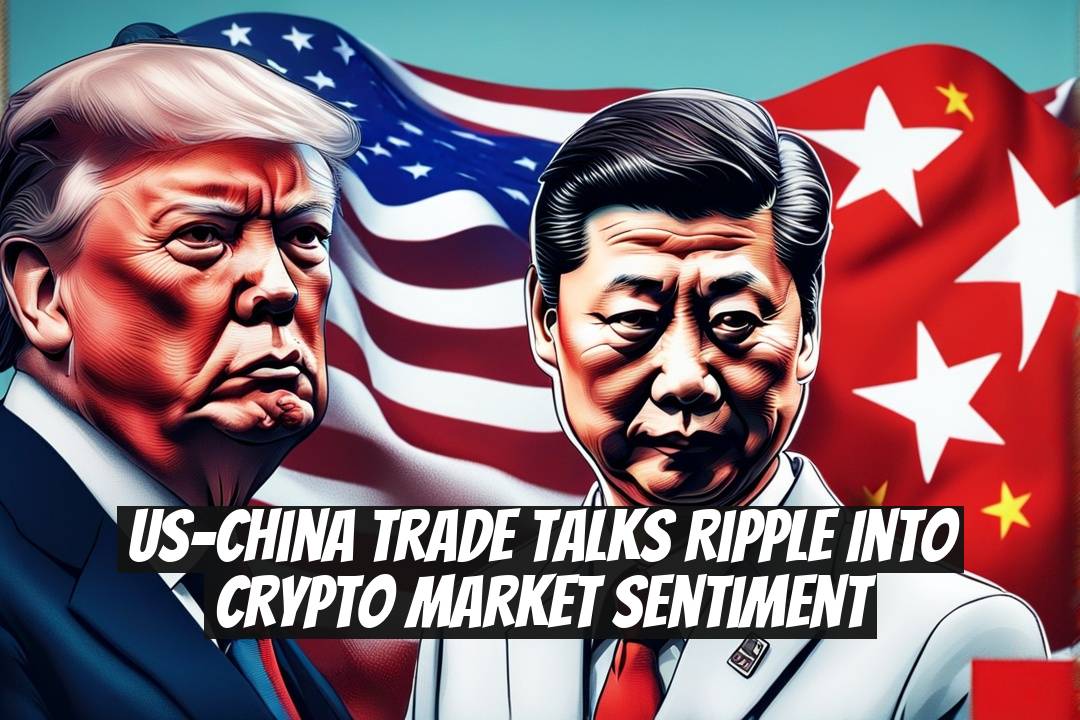
If US-China Shook Hands, Would Bitcoin Toast? ?
You know that awkward moment when your digital wallet and your anxiety about global politics conspire together? Well, welcome to the ever-twisty world of crypto-a space where US-China trade talks can make you richer quicker than a well-timed meme or, just as easily, wipe out your stack overnight. When Treasury Secretary Scott Bessent confirmed the US and China struck a “framework” deal to put the brakes on those threatened 100% tariffs, Bitcoin jumped over 1.8% in a single day, while Ethereum enjoyed a spike above $4,040[1]. The total crypto market cap, which had been taking body blows, suddenly sprang back to life, hitting $3.88 trillion as investor confidence returned[1].
But here’s the kicker: the drama on October 10, 2025, saw Bitcoin nosedive over 10% in hours, wiping out more than $200 billion in crypto market cap-just because President Trump floated the idea of harsher tariffs on China[1][2]. The S&P 500 lost $1.2 trillion in a fraction of an hour, and crypto exchanges were flooded with forced liquidations, especially on platforms like Binance[1]. The market, it turns out, is still firmly lashed to the mast of geopolitical risk and macroeconomic policy-something every crypto investor (and yes, we’re talking to you, HODLer) needs to keep in mind.
Key Takeaways ?
Subscribe to our Social Media for Exclusive Crypto News and Insights 24/7!
- Trade Talks = Market Whiplash: US-China trade negotiations directly influence crypto market sentiment, with positive news bringing rallies and negative news triggering sharp sell-offs[1][2].
- Tariff Threats Spark Volatility: Trump’s October 10 tariff announcement caused a $200 billion crypto market crash, with Bitcoin down 10% and Ethereum down 15% in a single day[2].
- Crypto’s Macro Sensitivity: Unlike stocks or bonds, crypto reacts quickly-sometimes brutally-to geopolitical noise, especially when it involves the world’s two largest economies[1].
- Investor Survival Kit: Tracking Bitcoin dominance, RSI, and crypto heatmaps can help navigate the storm; diversifying and using stop-losses becomes crucial in these choppy waters[2].
- Supply Chain Ripple Effects: China’s rare earth restrictions and US tech export controls can disrupt mining, EVs, and solar, adding another layer of risk for crypto-linked industries[2][3].
The Big Ripple Effect: How US-China Trade Talks Move Crypto ?
When Washington and Beijing sit down, the world watches-and crypto markets react in real time. It’s not just about tariffs on sneakers or soybeans. The October 10, 2025, shock was a masterclass in market panic: traders faced $19.31 billion in liquidations, and 75% of the top 100 crypto assets slipped into the red[2]. The sell-off wasn’t random: mining and China-linked tokens got hammered hardest, showing just how vulnerable blockchain is to supply chain disruptions and policy shifts.
But here’s the twist: Bitcoin’s dominance actually jumped about 3%, as scared money flocked to the original crypto safe haven[2]. Sound familiar? It’s a pattern we’ve seen before-during the 2018 trade war and the 2020 COVID crash-when uncertainty sends traders scurrying for cover under the Bitcoin umbrella. And yet, as the US and China moved toward a tentative truce, the rebound was swift, hinting at a market desperate for stability, but still jittery as a cat in a room full of rocking chairs.
Breaking Down the Market Mood: Crypto’s Emotional Rollercoaster ?

Crypto doesn’t just track the news-it amplifies it, turning geopolitical tension into market theater. When Trump’s tariff threat hit, the Bitcoin RSI (Relative Strength Index) plunged to 28-deep into oversold territory, a level last seen during the darkest days of 2018 and 2020[2]. That’s the kind of move that either tempts bottom-fishers or scars timid investors for life.
And let’s talk about market breadth: a crypto heatmap turned almost entirely red, with losses exceeding 10% for three-quarters of major assets[2]. That’s not a correction; that’s a full-blown panic attack. But as the US and China inched toward a deal, the mood shifted. Suddenly, traders started whispering about “buying the dip” and “macro reversals.” The lesson? Crypto sentiment is fickle, but it’s also opportunistic, waiting for any hint of geopolitical calm to bounce back.
Supply Chain Snafus and the Crypto Mining Pinch ️
Trade wars aren’t just about tariffs-they’re about who controls the tech that keeps the world (and crypto) running. When China slapped export controls on rare earth magnets, the ripple effect hit everything from electric vehicles to F-35 fighter jets-and, yes, crypto mining rigs[3]. These magnets are essential for the motors used in mining hardware, and with supply chains in flux, miners faced delays, higher costs, and squeezed margins.
The US response? Trump’s proposed 100% tariffs on Chinese goods, set to kick in November 1, 2025, unless the two sides could find a way out[3]. The prospect sent shivers through the markets, with crypto, mining stocks, and green tech all tumbling in unison[2]. For investors, this is a wake-up call: crypto isn’t just a digital asset-it’s deeply entangled with physical supply chains and global trade policy.
Trading Through the Noise: Practical Tips for Crypto Investors ?️

So, how do you survive-and even thrive-when the US and China are playing trade policy ping-pong with your portfolio? Here are a few battle-tested strategies:
- Watch the Dominance: When Bitcoin’s market share spikes, it’s often a sign that fear is driving traders to the “safe” crypto. Use this as a sentiment indicator-not a buy signal, but a clue[2].
- RSI as Your Compass: An oversold RSI (below 30) can signal a potential rebound, but don’t catch a falling knife. Pair it with other indicators before diving in[2].
- Heatmap Reality Check: If most top assets are bleeding, it’s probably not the time for heroics. Wait for the storm to pass before chasing gains[2].
- Diversify the Pain: Spread your bets beyond crypto. Metals, stocks, and even stablecoins can cushion the blow when the market goes haywire.
- Stop-Loss Discipline: Set clear exit points. Forced liquidations are brutal-don’t let your portfolio become a statistic[2].
- Stay Informed, Stay Nimble: Follow US-China headlines, but don’t overreact to every tweet. Sometimes, the best trade is no trade at all.
Personal Insights: The Crypto Analyst’s Living Room Chat ?️
If we were sipping coffee and talking shop, I’d tell you this: crypto’s sensitivity to US-China drama is a double-edged sword. On one hand, it means volatility-sometimes gut-wrenching, “why did I check my phone” volatility. On the other, it creates opportunities for those with patience, discipline, and a sense of humor about the whole circus.
The recent rollercoaster is a reminder that crypto isn’t an island. It’s plugged into the global economy, for better or worse. Goldman Sachs CEO David Solomon called the last 50 years of US-China trade policy “a mistake,” urging a more thoughtful approach[3]. For crypto, that means more uncertainty ahead-but also more chances to profit from the chaos, if you’re prepared.
Here’s a confession: I’ve watched traders panic-sell at the bottom and FOMO-buy at the top more times than I can count. The real skill isn’t predicting the news-it’s managing your emotions when the news hits. That’s where the money’s made (or saved).
The Lingering Question: Will Crypto Ever Decouple? ?
So, here’s the million Bitcoin question: will crypto ever truly decouple from traditional markets and geopolitical risk? Right now, the answer’s a resounding “not yet.” Every trade talk, tariff threat, or supply chain snag sends shockwaves through Bitcoin, Ethereum, and the rest. That might frustrate the die-hard decentralization crowd, but for traders, it’s just the reality of the game.
As you navigate this wild ride, remember: the market’s mood swings are as much about psychology as they are about policy. The next time US and China sit down to talk, ask yourself: am I ready for the ripple-and can I ride it to the other side?
Clickable Keyphrases for Further Reading
crypto market volatility
US-China trade talks
Bitcoin dominance
Sources
[1] https://beincrypto.com/us-china-trade-negotiation-crypto-market-impact/[2] https://phemex.com/blogs/2025-crypto-crash-what-happened-how-to-navigate-next
[3] https://www.foxbusiness.com/media/goldman-sachs-ceo-calls-decades-us-china-trade-policy-a-mistake-sees-progress-trump-xi-talks