
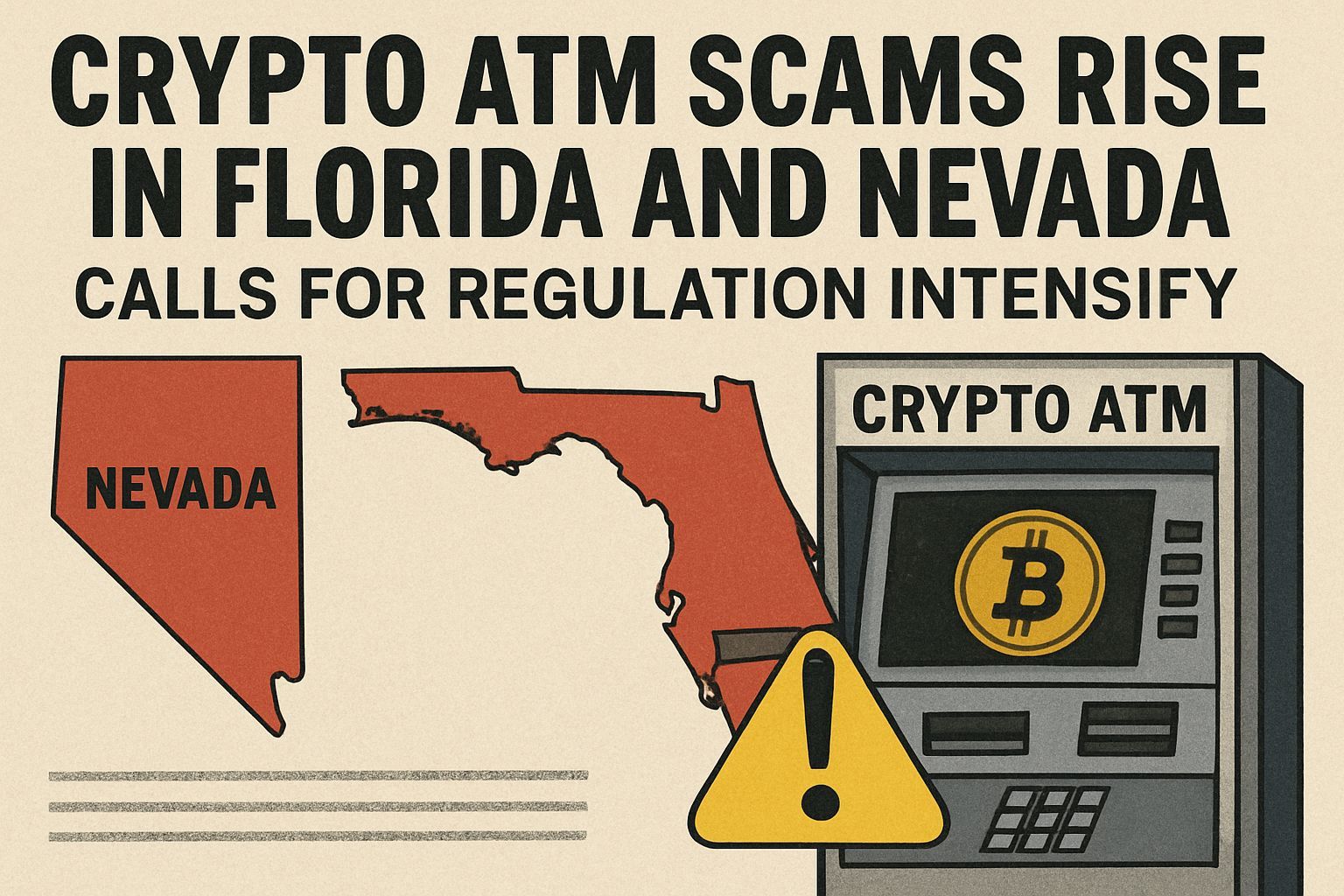
Why Crypto ATM Scams in Florida and Nevada Are Setting Off Alarm Bells ?
If you thought crypto scams were just phishing emails or shady apps, think again. Crypto ATM scams have surged dramatically in hotspots like Florida and Nevada, pushing calls for harder regulation into overdrive. In 2024, reported losses from these scams hit nearly $250 million nationwide, doubling from the previous year, with swindlers exploiting the very machines meant to make crypto buying easier[3][4]. Florida and Nevada stand out-not only for the volume of these ATMs but for the rising flood of fraud reports tied to them, shaking consumer trust and raising tough questions about oversight.
Key Takeaways
- Florida and Nevada have seen an alarming rise in crypto ATM scams, with hundreds of machines operating under murky licensing conditions.
- Scammers impersonate officials and coerce victims into loading cash into these ATMs, then vanish with the funds.
- Lack of specialized regulatory frameworks leaves enforcement agencies scrambling; Nevada’s Financial Institutions Division licenses operators but cannot pursue fraud cases.
- Experts warn the situation mirrors past crypto market blow-offs, pointing to systemic vulnerabilities.
- On-chain analytics and trading indicators reveal vulnerable moments that scammers exploit during volatility.
- Calls for layered regulations and real-time blockchain monitoring are intensifying from law enforcement and market analysts alike.
Subscribe to our Social Media for Exclusive Crypto News and Insights 24/7!
? The Anatomy of the Crypto ATM Scam: How Cash Vanishes in Plain Sight
Picture this: an average Joe gets a frantic call from someone claiming to be the IRS - or maybe it’s law enforcement - saying their bank account got hacked. The kicker? The “official” demands immediate payment via a crypto ATM to "protect" their money.
This is exactly the - unfortunately - classic setup. The victim is coached to buy bitcoin or other cryptocurrencies at an ATM kiosk that looks like your everyday bank machine. But here’s the catch: crypto ATMs don’t link to bank accounts. You’re feeding cash into a machine, which converts it to crypto on a blockchain, and the scammer’s wallet gets credited instantly[3][4].
In Nevada, there are nearly 500 crypto ATMs, mostly clustered in Clark County[1]. But here’s a dirty little secret: the state records list only 428 registered machines, creating a murky landscape where unregistered kiosks may operate unchecked - prime hunting ground for scammers[1]. The Financial Institutions Division licenses these operators under their money transmitter laws, but they’ve got no teeth for criminal fraud enforcement. That responsibility lies elsewhere, leaving a regulatory gap that scammers exploit[1].
Florida isn’t far behind, with crypto complaints rising sharply. Citizens filed nearly 20 crypto-related complaints per 100,000 people, highlighting a growing and painful sting to everyday users[6].
? Market Mechanics & On-chain Clues: When Scams Hit & Why They Get Worse

Look, crypto markets are a beast of cycles, dominance shifts, and liquidation cliffs. Scammers are cashing in on these patterns with precision. Analysts are buzzing about scenarios eerily reminiscent of 2021’s blow-off top, when high volatility and hype drew in tons of impatient investors.
In these moments, technical indicators such as the Average Directional Index (ADX) spike, signaling a strong trend but also an environment ripe for violent moves. Liquidation cascades can wipe out leveraged positions rapidly, creating confusion and distraction that bad actors love to exploit[7].
As one trader I chatted up put it: “This felt like deja vu from ’21-people panicking, offshore calls, and crypto ATMs becoming the perfect exit ramp for scammers.” Back in 2022, I held ADA through a 60% dump - brutal experience - but it taught me to watch volatility, because when the market’s wild, scams thrive on the chaos.
? Data Dive: Numbers That Paint a Scary Picture

- Losses reported via crypto ATM scams nationwide: $247 million in 2024 alone - a rough 99% jump from 2023[3][4].
- Reports to FBI involving crypto ATM scams: Almost 11,000 in 2024. Older Americans disproportionately targeted[3][5].
- Nevada’s unregistered ATM discrepancy: Hundreds of machines, state shows fewer licensed-than-actual ATMs, creating legal grey zones[1][2].
- Florida complaints: 19.61 crypto-related complaints per 100,000 residents in 2025 - highest in the nation by some accounts[6].
- Wyoming data snapshot: Smaller scale but telling - 30 reported fraud instances with losses averaging $27,477 each, mostly unregistered kiosk victims[5].
? Regulation: Why It’s Lagging & What’s Next?

Right now, crypto ATMs in Nevada and Florida fall under state money transmitter licensing. But let’s be clear: that’s like putting a band-aid on a broken bone. The agencies can’t pursue scamsters directly since many cases cross multiple jurisdictions or originate overseas. Plus, machine operators have only weak obligations to police fraud risk[1][5].
The FBI’s Crypto Crime Report 2025 zeroes in on this gap, advocating for layered approaches to detection:
- Real-time blockchain analytics partnered with law enforcement.
- Mandated KYC (know your customer) checks at ATMs-not just voluntary disclaimers.
- Clearer licensing rules specific to cryptocurrency transactions.
- Consumer education campaigns to spotlight common scam patterns earlier[7].
Experts note jurisdictions with progressive crypto frameworks - those combining on-chain transparency with strict operator audits - suffer less fraud. The challenge? Mass adoption and convenience often outpace regulation.
? Live Market Snapshots: Why Pay Attention
Here’s where it gets juicy for investors:
- BTC dominance may dip during scam spikes as fearful retail exits[7].
- Look at ADX and RSI on TradingView: surging ADX (above 30) signals trending markets, but when RSI becomes overbought (>70), watch for pumps followed by rapid drops-the chaos that scammers thrive on.
- Liquidation cascades tracked via on-chain analytics from Glassnode or Chainalysis can show when leveraged longs are wiped out, a typical cocktail for panic-driven crypto ATM rushes.
Did you notice ETH swan-diving below key support during the recent pump? The whales ain’t sleeping, fam. They’re rotating their coins while the retail crowd freaks out and scams rise in the background.
? My Two Sats: What This Means If You’re Holding
Crypto ATMs, in many ways, are double-edged swords - they democratize access but also open new doors for fraud. If you’re thinking of buying from one:
- Always double-check the machine’s licensure and physical security.
- Be skeptical of any “urgent” phone calls about your finances.
- Use reputable exchanges for large transactions instead.
- Keep an eye on market signals. When volatility spikes, scammers get bolder.
- Never trust unsolicited tech support or government calls demanding crypto payments.
I remember when the project they launched was solid but the lack of investor education dug a hole for scammers to bury people’s savings.
? Real Talk: The Human Cost
Consider Fran Bates - an 85-year-old from Texas who lost over $40,000 after a scammer convinced her to use a crypto ATM for “safe keeping.” She trusted a voice on the phone, only to realize the horror after the money was gone - instant, untraceable, and brutal[4].
Or that older gentleman caught on security footage near a Clark County convenience store, likely moments before becoming a victim to a scam[2]. It’s not just numbers on a page - it’s real people getting burned by loopholes in regulation and public awareness gaps.
? Deep-Dive FAQ on Crypto ATM Scams in Florida and Nevada: What You Need to Know
Q1: What exactly are crypto ATM scams, and how do they work?
A1: These scams involve fraudsters convincing victims-often via fake calls-to deposit cash into cryptocurrency ATMs. The cash is converted to crypto and sent to scammers’ wallets, with little chance of retrieving the funds.
Q2: Why are Florida and Nevada hotspots for crypto ATM scams?
A2: Both states have a dense network of ATMs, some operating without proper licensing, and sizable populations vulnerable to scams, especially older residents. Regulatory gaps and discrepancies in machine registration compound the issue.
Q3: How do regulators currently address crypto ATM scams?
A3: Crypto ATMs are licensed as money transmitters, but enforcement against fraudsters is limited. Agencies like Nevada’s Financial Institutions Division can act only against license violations, leaving fraud prosecution to law enforcement agencies with jurisdictional challenges.
Q4: Can on-chain analytics help in preventing or investigating these scams?
A4: Yes. Blockchain’s transparency allows investigators to track suspicious wallet transactions. Coupled with AI-powered fraud detection tools, this aids law enforcement in disrupting scams and potentially recovering funds.
Q5: What should investors or everyday users do to protect themselves?
A5: Verify ATM legitimacy, never heed unsolicited urgent calls, prefer reputable exchanges, and stay alert during volatile market phases when scams tend to spike.
Q6: Are there signs in the crypto market itself indicating an increase in scam risk?
A6: Spikes in volatility, high ADX readings indicating strong trends, and liquidation cascades can create fearful environments that scammers exploit to pressure victims into rushed decisions.
crypto ATM
blockchain security
cryptocurrency regulation
- https://news3lv.com/news/local/discrepancies-in-nevadas-crypto-atm-numbers-raise-concerns-amid-rising-scam-reports
- https://www.youtube.com/watch?v=ZAr7814EcpE
- https://www.fingerlakes1.com/2025/10/13/bitcoin-scam-crypto-atm-fraud-2025/
- https://abcnews.go.com/US/bitcoin-atms-increasingly-scammers-target-victims-critics/story?id=126305810
- https://wyoleg.gov/InterimCommittee/2025/S19-20250922S19-20250922CryptoATM2Overview.pdf
- https://www.aol.com/news/florida-sees-surge-crypto-scams-181038828.html
- https://www.police1.com/investigations/crypto-investment-scams-are-on-the-rise






