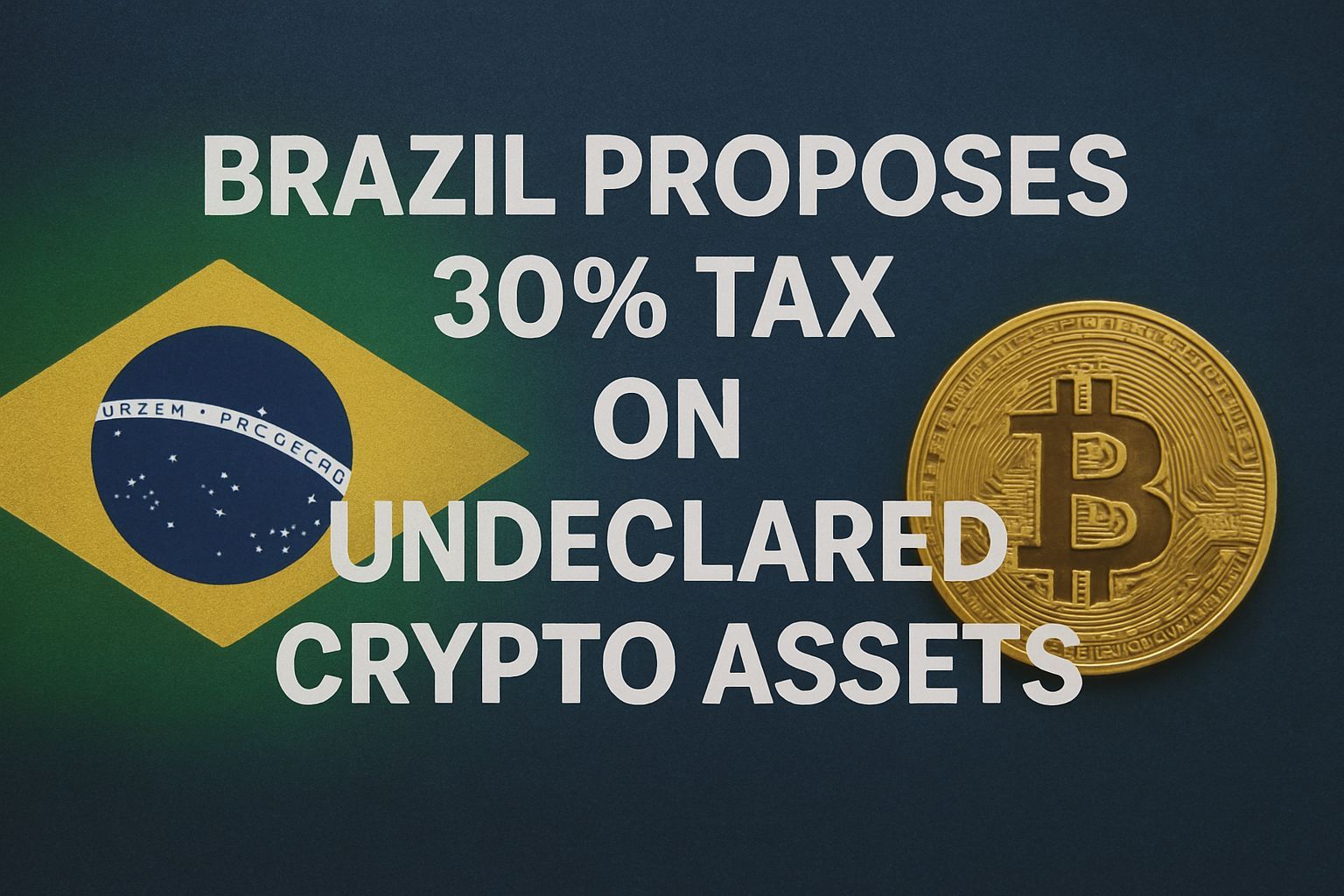
Could a 30% Tax on Undeclared Crypto Assets in Brazil Change Your Investment Game?
Imagine you’re chilling with your crypto portfolio, suddenly Brazil drops a bombshell: a 30% tax on undeclared crypto assets, including your beloved Bitcoin and altcoins. Sounds like a plot twist, right? But this is exactly what’s happening, and if you’re invested or interested in Brazil’s crypto scene, you need to hear this out. So, what does this new tax law entail? How might it shake the crypto market? And, more importantly, what should investors like you do next to stay ahead?
Let’s dive into this compelling situation as your friendly neighborhood crypto analyst, breaking down Brazil’s proposed tax law, its ripple effect on digital assets, and practical tips for navigating this new terrain.
Key Takeaways - What You Absolutely Must Know About Brazil’s New Crypto Tax ?
Subscribe to our Social Media for Exclusive Crypto News and Insights 24/7!
- Brazil plans a 30% tax on undeclared cryptocurrencies, splitting into a 15% capital gains tax and a 15% penalty fine for assets not previously reported.
- This applies to crypto holdings’ market value as of December 31, 2024, affecting owners from casual investors to heavy traders.
- The initiative is part of a broader effort by Brazil to formalize and regulate undeclared assets across the board, including real estate and vehicles.
- Brazil’s crypto market is booming, with transaction volumes soaring 109.9% annually, mainly driven by stablecoins.
- Smaller crypto investors face removal of previous tax exemptions, with a uniform 17.5% tax now proposed on all crypto transactions.
- The move may increase government revenue but could also trigger market shifts, pushing some traders toward unregulated avenues.
- Practical advice includes timely asset declaration, consulting tax professionals, and adjusting investment strategies to align with new laws.
? Brazil’s Bold Move: What’s Behind the 30% Tax Proposal on Undeclared Crypto?
Brazil’s National Congress recently gave the green light to Bill 458/21, setting up a Special Regime for Asset Update and Regularization (REARP). This bill allows investors with undeclared or undervalued digital assets to come clean by paying a 30% total tax on those assets’ market value as of December 31, 2024. Sounds steep? Well, it’s split into two parts: a 15% capital gains tax plus a 15% fine for prior noncompliance.
This isn’t just about crypto - the law tackles an array of undeclared assets, from real estate to vehicles. Still, the spotlight is on cryptocurrencies given Brazil’s rapidly growing crypto market. Blockchain analysis shows Brazil hitting over R$1.7 trillion in transaction volume in just one year, more than doubling from previous years - a clear sign digital currencies are capturing serious attention[1].
Why a one-time tax? The government sees it as a mix of catching tax evaders and integrating crypto earnings into official financial frameworks to solidify Brazil’s fiscal health and compliance[1][3].
? What It Means for Brazil’s Booming Crypto Market - And You
Brazil’s crypto ecosystem is thriving, fueled mainly by stablecoins used for everything from remittances to regular commerce[1]. But the tax shake-up signals a cautionary message: the age of ignoring crypto tax compliance could be coming to an end.
- More transparency, less hiding: Crypto investors who never declared their holdings now face a choice - pay up or risk severe penalties.
- Potential market chill: While the tax aims to catch undeclared assets, it could also dampen trading enthusiasm or push some investors to alternative, unregulated markets.
- Boost to government revenue: Brazil hopes to tap into a previously opaque asset pool, following global trends where governments collect billions from crypto taxes[4].
- Impact on small traders: The removal of prior tax exemptions for smaller crypto players, replacing it with a flat 17.5% tax on all transactions, might hurt grassroots investors and stifle innovation[2].
Imagine you’re a Brazilian crypto fan: this tax means you cannot just “HODL and pray.” Active reporting becomes mandatory, or you face fines that could seriously eat into your profits.
? The Fine Print: Understanding the Tax Components and Deadlines

- What’s taxed? Undeclared bitcoin and other cryptocurrency holdings bought or earned but not reported on previous income tax returns.
- Tax amount? 30% total - divided into a 15% capital gains tax on the market value and a 15% penalty fine.
- Market valuation date: December 31, 2024.
- Additional asset classes: Includes real estate, vehicles, and securities but at a lower update rate of 4%.
- Current legislative status: Bill passed the lower house, now returning to the Senate for final vote, so still time to prepare[1][3].
? Practical Tips: How to Navigate Brazil’s 30% Crypto Tax Proposal

Since this bill could become law soon, here’s how savvy investors can stay ahead:
- Start documenting your crypto assets now: Gather transaction history, acquisition costs, and dates to build a clear reporting record.
- Engage with tax professionals: Crypto taxation is complex - a certified accountant or tax lawyer can guide you through regularization.
- Evaluate whether to take the tax amnesty: For those with significant undeclared holdings, paying the 30% may be cheaper than penalties or future audits.
- Consider portfolio adjustments: If you trade frequently or hold small amounts, reassess how the new uniform tax rates might affect profitability.
- Stay updated on legislative changes: The bill is in the Senate stage - versions might shift, so keep watching official news sources.
- Explore legal tax optimization: Look at other asset declarations, potential write-offs, or timing of sales to minimize tax impact.
The crypto market rewards those who act timely, not reactively.
? Deeper Dive: How Brazil’s Crypto Tax Compares Globally
Globally, governments are scrambling to nail crypto tax regulations. The U.S. IRS, for example, collected over $38 billion in crypto taxes in 2024, with increased audits and stricter reporting demands[4]. Brazil’s move reflects this trend but with a harsher penalty component on undeclared assets.
Argentina taxes crypto income at 35%, slightly higher than Brazil’s proposed 30%, showing a strong Latin American fiscal approach to digital assets[4]. Removing Brazil’s previous $6,320 exemption and applying a flat 17.5% tax on all transactions signals a significant tightening that could push some traders out of regulated environments[2].
If you’re watching emerging markets, Brazil’s aggressive tax stance may serve as a blueprint or warning for other nations looking to cash in on growing crypto popularity.
? Personal Insights: Why This 30% Tax Could Be a Crypto Game-Changer in Brazil
Here’s the real talk: Brazil is sending a loud message - crypto is no longer a wild west playground for undeclared earnings. This tax pushes digital assets into mainstream economic infrastructure, signaling growing government control but also increased legitimacy.
For investors, it’s a wake-up call to embrace compliance rather than evade it - because the consequences (combined tax plus fines) are too steep to ignore. While some might view this as discouraging, it could boost market confidence long term by cracking down on shadow holdings and leveling the playing field.
That said, Brazil’s tax approach may drive short-term headaches: small players may exit, innovation might slow, and unregulated markets could attract riskier activities. But regulation in crypto is a double-edged sword - it matures the market but often leaves volatility in its wake.
As a crypto enthusiast, I’d say it’s wise to see this tax initiative as an invitation to professionalize your investments. Taxes are part of the game - better to play smart and legal.
? What Is Your Take? Are You Ready to Embrace Crypto Tax Compliance or Brace for the Market Shift?
Brazil’s bold crypto tax proposal isn’t just about dollars and cents - it’s about reshaping how digital assets blend with real-world economies. As an investor or crypto lover, this could be your moment to reflect: Will you step up with transparency and strategy? Or will you hold out, risking heavy penalties and market exclusion?
This debate strikes at the heart of crypto’s future: balancing innovation with regulation. So, what choices will you make in Brazil’s evolving crypto landscape?
Brazil Proposes 30% Tax on Undeclared Crypto Assets
Brazil Crypto Tax Proposal
Crypto Tax in Brazil
Sources:
- https://www.cryptotimes.io/2025/11/02/brazil-proposes-30-regularization-tax-for-crypto-holders/
- https://www.ainvest.com/news/brazil-17-5-crypto-tax-threshold-removed-sparking-debate-october-deadline-nears-2507/
- https://blockchair.com/news/brazil-crypto-tax-bill-proposes-30-levy-on-undeclared-crypto-assets-9441e354dc2d82b2
- https://coinlaw.io/crypto-taxation-laws-statistics/
- https://coinledger.io/blog/brazil-crypto-tax