
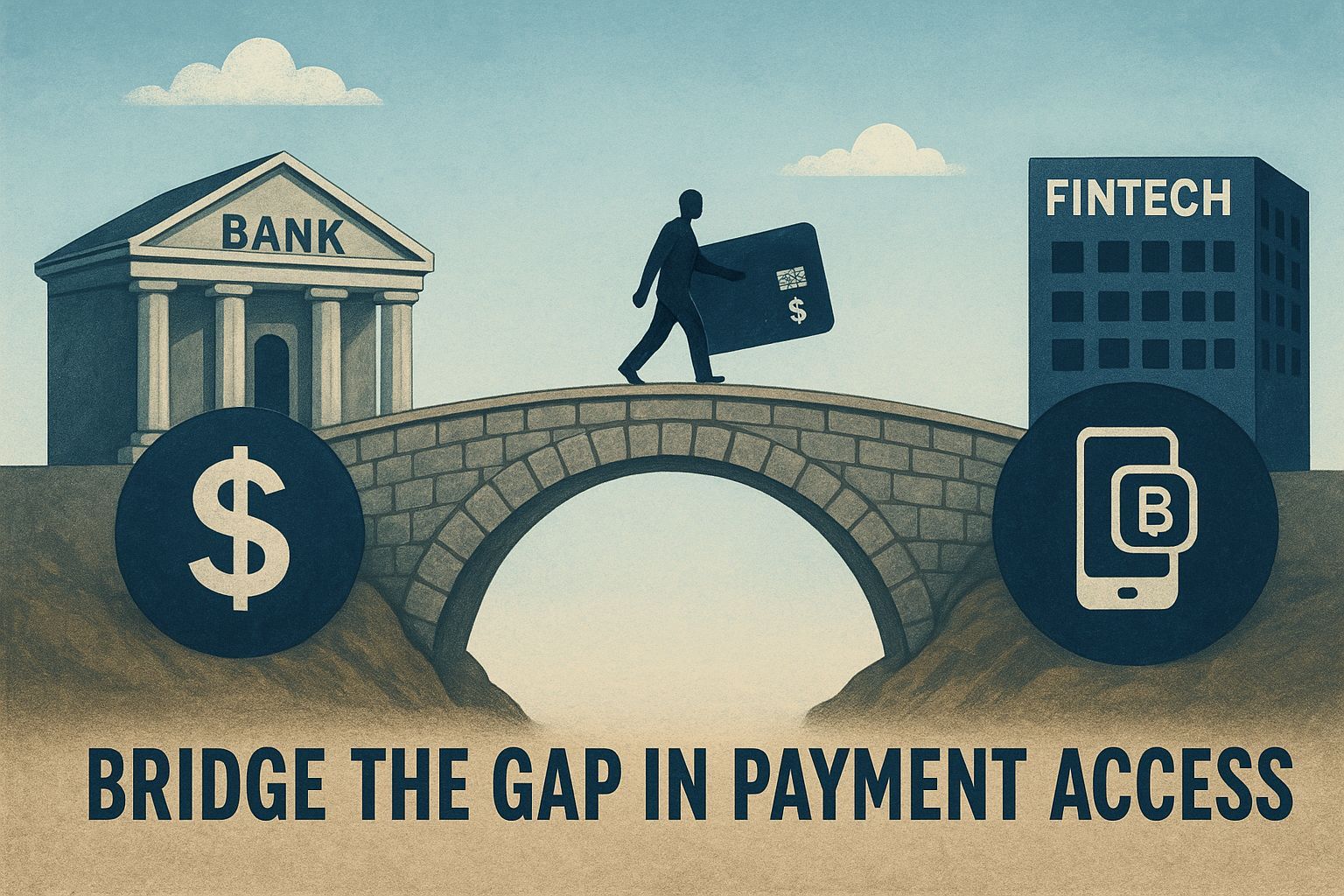
Banks and Fintechs: Teaming Up to Finally Make Payments Less of a Headache
Global banks and fintechs bridge the gap in payment access - yeah, it’s happening, and not a moment too soon. Picture this: you’re trying to wire cash across borders, and it takes days, costs a fortune, or just vanishes into the ether. That’s the old world. Now, heavy hitters like Visa, J.P. Morgan, and central banks are linking arms with fintechs to flip the script on cross-border payments, making them faster, cheaper, and way more accessible[1][2][3].
Key Takeaways from the Frontlines
- Partnerships are the new black: Banks bring compliance muscle; fintechs bring the speed. Only 2% of banks have full interoperability, but 92% see it’s the future[1].
- Stablecoins steal the show: Thanks to regs like the U.S. GENIUS Act, they’re morphing into legit payment rails, especially for emerging markets[2].
- Real-time revolution: 58% of U.S. banks on RTP and FedNow - multi-rail setups for that always-on vibe businesses crave[1].
- G20 push: Interoperability projects like Nexus are live soon, slashing costs by up to 90% vs. cards[5].
Subscribe to our Social Media for Exclusive Crypto News and Insights 24/7!
Why Collaboration Beats Competition Every Time
Hey, remember when fintechs were the scrappy rebels taking swings at slowpoke banks? Those days are fading fast. Phil Goldfeder, bigwig at the American Fintech Council, nails it: “We have to stop thinking in terms of traditional players versus the future ones, and instead find ways to bridge those gaps.” Banks handle the regulatory heavy lifting and consumer protection, while fintechs whip up slick products for access nobody dreamed of before[3]. It’s coexistence, not cage match. Softjourn’s guide couldn’t agree more - fintechs should “leverage partnerships to access established infrastructure and compliance expertise,” turning rivals into rocket fuel for seamless cross-border flows[1].
Think about it: Jennifer Fowler from the Financial Stability Board drops truth bombs on G20 targets - faster, low-cost, transparent payments. “We’ve made progress, but end users aren’t reaping the benefits yet.” Implementation’s the bottleneck, but with Swift’s digital ledger plays and BIS’s Project Nexus linking fast payment systems, we’re inching toward real-time glory[5]. Wise is already crushing it, partnering with 90+ banks for instant global reach - 80% of their payments hit “instant,” 88% in 24 hours[5].
Stablecoins: The Crypto Angle Crypto Savvies Can’t Ignore

For you crypto heads, this is where it gets juicy. Visa’s 2026 predictions? Stablecoins hit their stride. Pegged to fiat, they’re ditching wild speculation for trusted infrastructure, supercharging cross-border and emerging markets. U.S. GENIUS Act just greenlit the party, with Visa backing 130+ stablecoin-linked cards in 40 countries. Swap your USDC for coffee at Starbucks? Done. Settle on Visa’s net with USD/EUR stables like any currency? Scaling now[2]. No more fiat-crypto silos - seamless bridges via Visa wallets. It’s like stables finally got VIP access to the global payment club.
Central banks echo this: 93.8% prioritize payment innovation with fintechs. Suptech and AI next, but DeFi? Barely 3.1% care. Payments first, always[4]. You’ve seen stables pump volume during fiat friction - imagine them as the backbone when borders bite.
The Interoperability Hurdle - And How They’re Jumping It

92% of banks get it: networks gotta talk. But only 2% have deployed. Brutal stat, right? Enter ISO 20022 standards and Nexus - connecting domestic rails for frictionless cross-border[1][5]. North America’s multi-rail lead (RTP + FedNow) sets the pace, delivering A2A payments 90% cheaper with instant data[1]. J.P. Morgan’s watching payments “eat the world,” with trends like these exploding over the next decade[7].
Analogy time: It’s like upgrading from dial-up to fiber. Businesses demand resilience - one rail down? Switch. No sweat.
Open Banking and Regs: The Glue Holding It Together

Goldfeder’s stoked on CFPB’s open banking rule dropping soon - fee-free data for consumers? Game-changer[3]. Regulators playing nice too, issuing joint guidance. No more discord cracks for bad actors. Europe’s got digital payments booming via EMIs and PIs, spurring everyone to digitize[6].
Wrapping the Trends - 2026’s Payment Shift
Cash? It’s bending, not breaking - 2026 marks the first year half of global consumer payments use cards, fueled by tap-to-pay eating micro-transactions[2]. Visa teams with WeChat Pay, M-Pesa, Mercado Pago - local flair, global scale. For fintechs, it’s adapt or get left: collaborate, interoperate, innovate[1].
Bottom line? Global banks and fintechs aren’t just bridging gaps - they’re building highways. Payments access levels up, costs plummet, speed surges. For crypto folks, stables are your Trojan horse into this. Smart money’s watching.
- https://softjourn.com/insights/cross-border-payments-guide
- https://corporate.visa.com/en/sites/visa-perspectives/trends-insights/2026-predictions.html
- https://thefinancialbrand.com/news/banking-trends-strategies/banks-fintechs-partnership-phil-goldfeder-195013
- https://www.centralbanking.com/benchmarking/fintech/7974989/payment-innovation-is-top-fintech-research-priority
- https://wise.com/gb/blog/cross-border-payments-trends-2026
- https://www.bis.org/review/r260209f.htm
- https://www.jpmorgan.com/insights/payments/trends-innovation/payments-are-eating-the-world






