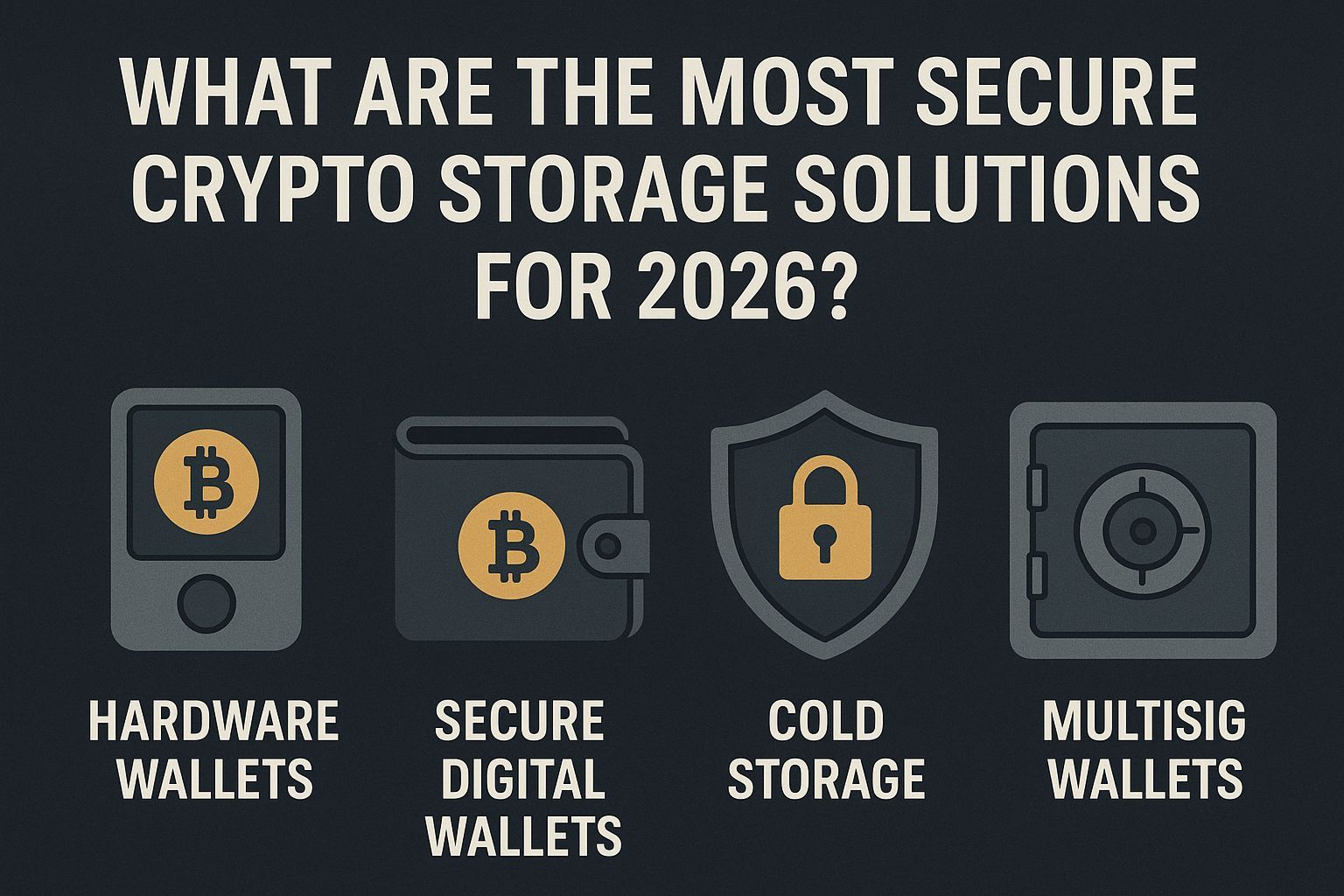
The Cold Storage Reality Check: What Actually Keeps Your Crypto Safe in 2026
Your Keys, Your Rules-But Only If You Store Them Right
Let’s be real: if you’re serious about hodling crypto long-term, keeping your assets on an exchange or in a hot wallet is basically asking for trouble. The security landscape in 2026 has matured considerably, and the options have gotten both more sophisticated and more accessible. But here’s what actually matters when you’re deciding where to park your digital wealth.
Key Takeaways
Subscribe to our Social Media for Exclusive Crypto News and Insights 24/7!
- Hardware wallets dominate consumer cold storage due to their balance of security, usability, and recovery options
- Institutional players are shifting toward Multi-Party Computation (MPC) and geographically distributed vault systems
- The secure element chip technology in modern devices is now EAL6+ certified-the same standard used in passports
- Most hardware wallets support 1,000+ cryptocurrencies simultaneously through hierarchical deterministic (HD) structures
- Recovery via seed phrases beats paper wallets in every practical scenario
Hardware Wallets: The Sweet Spot Between Fort Knox and Convenience
Here’s the thing about hardware wallets-they’ve basically become the gold standard for individuals who want serious security without needing a degree in cryptography. Devices like the Ledger Nano series and Trezor models work because they do one job exceptionally well: they keep your private keys completely offline, isolated from any internet connectivity.[1]
The magic happens in something called a secure element chip. Think of it as a tamper-proof fortress living inside your wallet. This isn’t standard computer hardware-it’s specifically engineered to resist both remote attacks and physical tampering.[4] Even if a bad actor physically got their hands on your device, extracting that seed phrase? Practically impossible. That’s the real security flex here.
What makes hardware wallets genuinely attractive in 2026 isn’t just the security theater-it’s the practical engineering:
- PIN protection and passphrase encryption layer on top of the chip security
- Multi-cryptocurrency support means you’re not juggling ten different devices for your portfolio
- Seed phrase backups let you recover everything if your device gets lost or destroyed
- On-device transaction preview so you actually see what you’re signing before committing to it[2]
Compare that to paper wallets, and you’ll see why hardware wallets have won the long game. Paper wallets are theoretically more isolated, sure. But they’re vulnerable to water damage, physical loss, accidental disposal-basically every mishap that could happen to a piece of paper. Recovery options? Often nonexistent. Hardware wallets handle backup and restoration with actual structure through mnemonic seeds, making the whole recovery process reliable instead of a nightmare.[2]
The Institutional Playbook: When Millions (or Billions) Are at Stake

Now, if you’re running an institution or managing serious capital, the game changes completely. Consumer hardware wallets aren’t scaling to that level. This is where enterprises shift to a different beast entirely.
Vault-Based Systems are the fortress approach. We’re talking geographically distributed secure vaults-multiple physical locations, multiple authorization requirements, comprehensive audit trails, and insurance coverage backing the whole operation.[1] It’s not just security; it’s accountability and compliance all woven together.
Then there’s Multi-Signature Architecture, which works like a checks-and-balances system for your keys. Instead of one private key controlling everything, you need multiple separate keys to authorize transactions. An M-of-N scheme gives flexibility-maybe you need 3 of 5 keys to approve a move. This dramatically reduces the risk from insider threats or a single key getting compromised.[1]
But here’s where it gets really sophisticated: Multi-Party Computation (MPC). This technology distributes key material across multiple parties so there’s no single point of failure. Ever.[1] Institutions maintain control without relying on one key holder. For enterprise-grade needs, this is the architecture that’s becoming standard.
Take Cobo as a real-world example. They’ve built an 8-year breach-free track record by integrating four wallet technologies-Custodial Wallets with 3-tier storage, MPC Wallets with distributed key management, Smart Contract Wallets, and Exchange Wallets-supporting 3,000+ tokens across 80+ blockchains.[1] That’s the scale and sophistication institutions actually need.
The Multi-Crypto Reality: One Wallet, Hundreds of Assets
You don’t need separate hardware wallets for Bitcoin, Ethereum, Litecoin, and whatever else you’re holding. Modern cold wallets use something called hierarchical deterministic (HD) wallet structures with standardized derivation paths. Translation: a single device generates and manages multiple blockchain addresses securely, all without ever exposing private keys to the internet.[2]
This simplifies portfolio management massively. You reduce the surface area for mistakes, maintain consistent security across your entire position, and don’t need a drawer full of devices. Some wallets even integrate with companion software or apps for enhanced functionality-token swaps, staking-while keeping those private keys locked offline the entire time.[2]
What Security Certification Actually Means in 2026

You’ve probably seen “EAL6+ certified” mentioned. That’s legitimately important. This is the same level of protection used in passports.[5] Devices like Tangem have passed audits from independent Swiss security firms (Kudelski Security) and international laboratories (Riscure).[5] The hardware design and verification standards have shifted noticeably over the past two years-this isn’t your 2020 cold storage setup.[2]
The Practical Security Habits That Actually Matter
Here’s what the data shows separates people who sleep well from people who don’t:
Prioritize security over convenience for long-term holdings. If you’re moving assets regularly, that’s a different calculation. But if you’re stacking for years, accept the inconvenience.[1]
Buy directly from manufacturers. This isn’t paranoia-it’s basic operational security. Third-party sellers introduce risk you don’t need.[4]
Implement geographically distributed backups. Your seed phrase shouldn’t live in one place. Your backup shouldn’t either.[1]
Stay current on firmware updates. Hardware wallets get security patches. Ignoring them is how you end up being the cautionary tale.[2]
Understand what you’re protecting. If you’ve got $500 in crypto, a hardware wallet might be overkill. If you’ve got six figures, it’s non-negotiable.[1]
The Bottom Line
Cold storage in 2026 isn’t some fringe, technical-only option anymore. The infrastructure’s mature. The devices are user-friendly. The security standards are verifiable. Whether you’re a retail hodler protecting mid-five-figure positions or an institution moving nine figures, there’s a solution that actually works without requiring you to take unnecessary risks.
The real question isn’t “should I use cold storage?” It’s “which cold storage option fits my actual situation?” That answer depends on your capital size, your technical comfort level, and your appetite for managing recovery procedures. But whatever your answer is, sitting on an exchange or hoping a software wallet is “secure enough” isn’t it.